NYSERDA-Funded Hemp Materials Testing Will Expand Opportunities, Firms Say
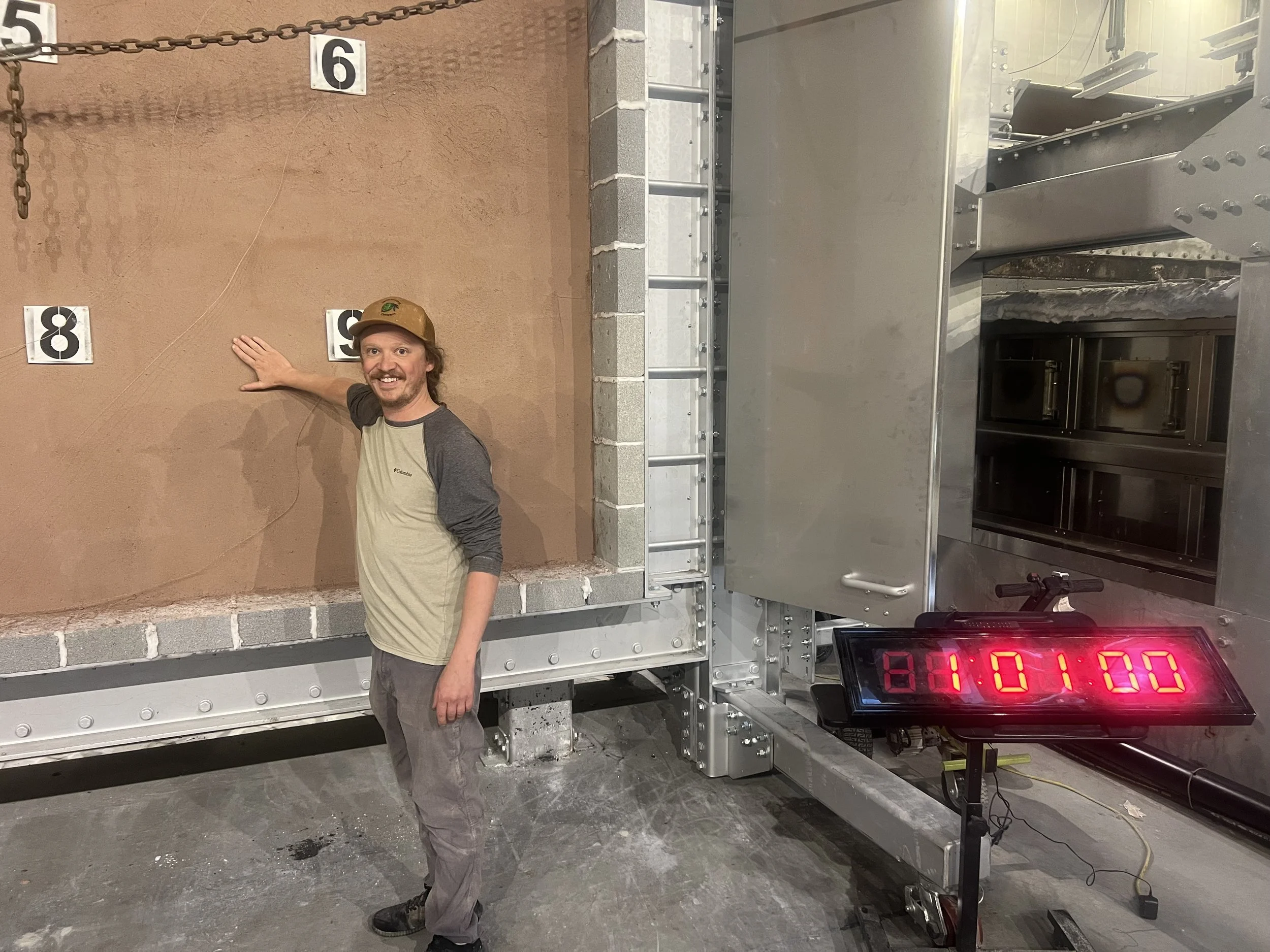
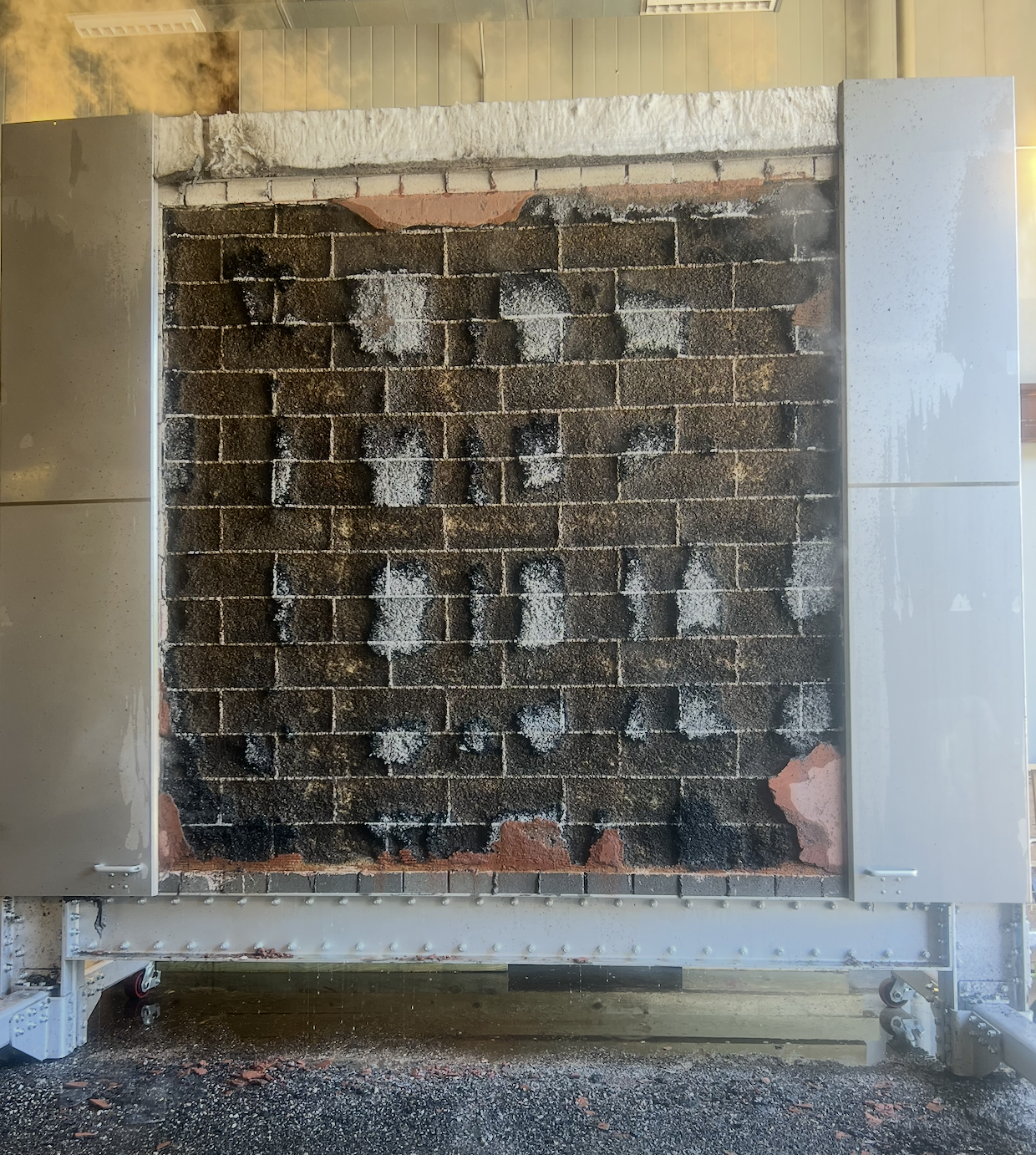
Phelan Dalton of CO-based Hemp Building Company touches a hempcrete block wall after 1-hour fire testing to show that heat did not spread through the blocks. Photo courtesy of Phelan Dalton

By Jean Lotus
Over the past year, nine hemp-based building material manufacturers got the chance to take part in a program the US hemp industry has needed for a long time: the creation of standardized, third-party test data required by U.S. building codes and permitting agencies.
The program, funded by a New York State Energy Research and Development Authority (NYSERDA) award of more than $1.1 million, has been generating results that could help clear hurdles between hemp insulation and mainstream US construction.


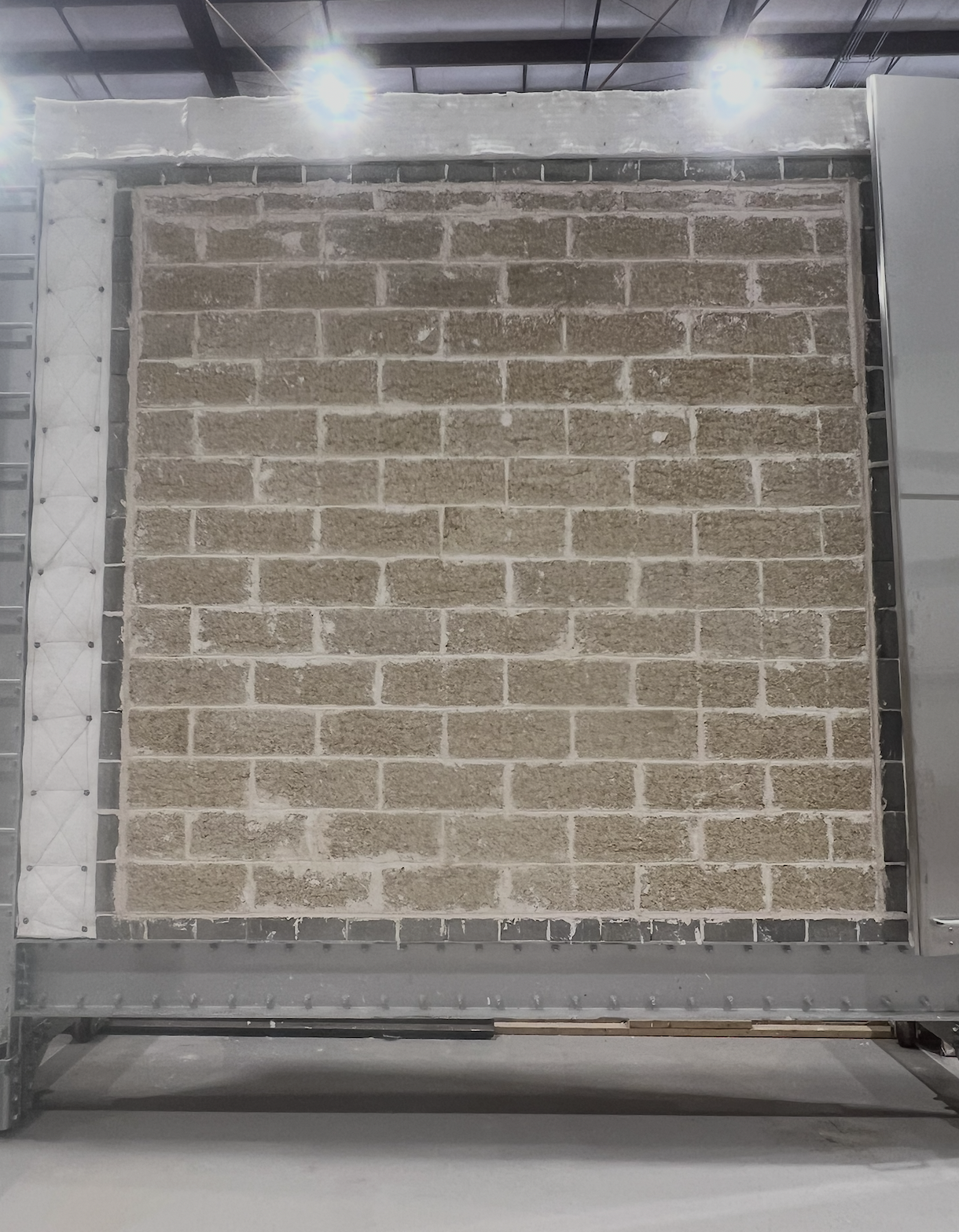
Results (not yet published) are encouraging: Two-hour fire testing of hemp-lime wall panels and fire-testing of 4 ¾” hempcrete blocks means that hempcrete has passed a benchmark necessary to insulate multi-story buildings and internal partition walls. Other moisture, R-value, compressive strength, seismic and flame-spread test results will fill in the gaps for the wider construction industry, participants hope.
This is a wider scope than covered by the 2024 International Residential Code Appendix BL model codes, which permit the use of hemp-lime in dwellings up to two stories in regions of low seismic risk prescriptively without engineering. (Regions of high risk and taller buildings still fall under the code, but require an engineered design).
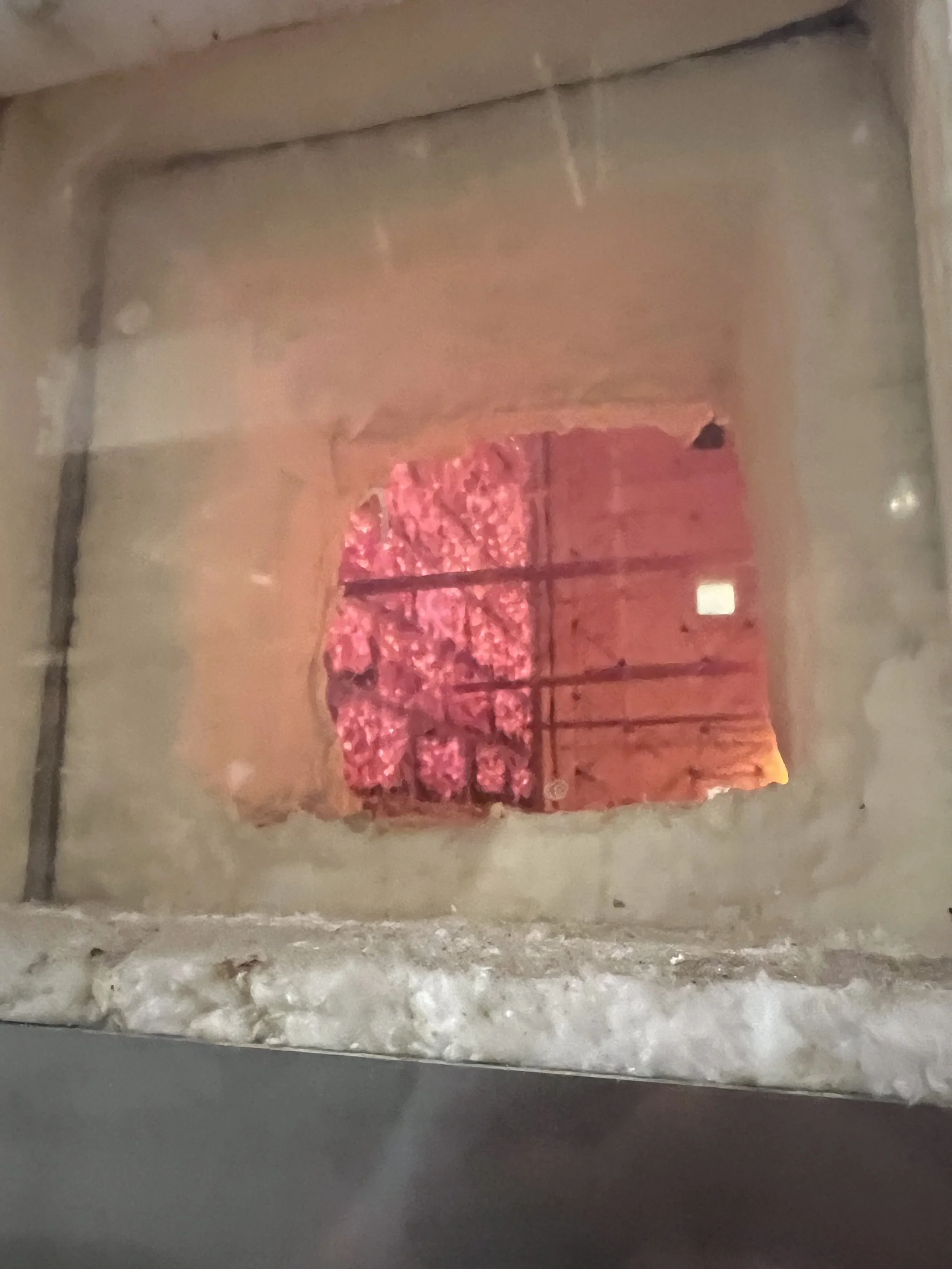
Hemp insulation materials tested at Home Innovations underwent fire testing at 1400 degrees Fahrenheit to certify flame resistance under ASTM E114. Photo courtesy of Phelan Dalton
A Broad Definition, By Design
Testing was performed by MD-based Home Innovation Research Lab, an independently run subsidiary of the National Association of Home Builders. Rather than limit the study to hempcrete, Home Innovation deliberately widened the categories of materials that could be tested, a company spokesman said.
"We broadened the scope early on because we recognized that a lot of the ... manufacturers were doing different formulations," John B. Peavey of Home Innovation, told HempBuild Magazine. Peavey noted some companies use hemp-lime blends while others work with mycelium or other materials. The team settled on the term "hemp building insulation products," or HBIP (a category broad enough to cover any formulation using hemp as its main ingredient).
Within that category, Home Innovation organized products into four types: spray-applied, block, board, and panel (structural).
Manufacturers were required to have a hemp-based product already on the market and to agree to share their results anonymously in a published report meant to protect proprietary formulations while still producing an industry-wide dataset. NYSERDA provided matching funds for the testing.
Join our FREE online community here



Who Qualified
According to Home Innovation's Tynica Stefun, nine companies are currently participating in Phase 1 testing: Delaware-based Hemp Block International/USA; Colorado companies Hemp and Block and Hemp Building Company; Pennsylvania-based Americhanvre Cast Hemp, California non-profit Indigenous Habitat Institute; Michigan-based Hemp for Humanity; Wisconsin-based Sativa Building Systems and Idaho based Hempitecture, Inc. Netherlands-based Dun Agro Hemp also tested products. Two more companies may still join before the books close, the testing company said.


Why the Data Matters
The US hemp construction industry is accustomed to pointing to decades of European hempcrete performance data, but builders have a specific American problem: US code officials generally will not accept European test results.
Home Innovation's Sarah Armand explained that the company exists to remove exactly this kind of barrier, offering "product testing, building science research, market research, and green certification" under US standards.
European hemp-lime research, much of it dating to work at the University of Bath and elsewhere since the 1980s, is simply not recognized in the USA, which demands costly protocols like ASTM E119 fire testing. This barrier explains why hemp construction materials in Europe build 100+ unit apartment buildings and yet single family homes in the United States are subject to skeptical local building department officials.
Check Out Our FREE International Hemp Construction Suppliers Map


Pennsylvania-based Americhanvre has already pushed to close part of that gap. The company’s ASTM E119 fire results have been submitted for the hemp-lime appendix now at the comment stage for the 2027 International Residential Code. But that single binder-and-hemp system doesn't establish performance for the category as a whole.
The NYSERDA-funded testing is designed to do that with a range of results across nine manufacturers and multiple product types so, as Peavey said, "you can have great confidence that it's representative of more than one manufacturer," rather than resting on any single company's data.
Testing Widens Scope for Hemp-Lime Projects
Hemp Building Company’s Phelan Dalton said testing TecnoCanapa hemp blocks (distributed by the Colorado company) opened doors for bigger projects.
“We received a one-hour fire rating on a 4 3/4 inch hemp-lime wall with plaster [under ASTM E119] and a zero-flame spread score [under ASTM E84],” Dalton said. Those results opened possibilities with using the blocks for internal partition walls in larger multi-story buildings, Dalton said.


Phase 1 Is Winding Down
Phase 1 covering market research and laboratory testing will wrap up in March 2027. A life-cycle-analysis benchmark, aimed at demonstrating carbon-neutral or carbon-negative performance for the material class, has already been met using published LCA work already completed by several manufacturers, Home Innovation said. A labor-time study comparing installation speed against conventional products is beginning this month, with two manufacturers so far agreeing to donate material for that testing.
Both the US Hemp Building Association and the Hemp Building Institute are expected to distribute the findings once published, they said.
Phase II beginning in 2027 will feature one product in a retrofit multistory project somewhere in NY state.


High-Performance Construction Materials
Meanwhile, the companies participating in the tests are hoping that results will be eye-opening for architects and builders in the conventional construction industry.
“The NYSERDA testing is the kind of work that needs to get done to shift hempcrete (in the United States) from a weekend fun project to [a material that fits] professional building standards,” said Lisa Sundberg of Indigenous Habitat Institute. “ We're with the Big Boys now. And they're gonna get a good taste of the superpowers of hempcrete and get blown away,” she added.


Please Support Our Classified Advertisers
(To find out more about advertising CLICK HERE).
Publications
NOW AVAILBLE! Hemp Building Directory 2026 - Guide to the International Hemp Building Industry
Hempsteads: Architectural details for hemp-lime construction, by Timothy Callahan
Architects/Design Pros/Engineers
Next Genesis Design brings natural materials into high-performance building systems and healthy homes. White Salmon, WA
Bio-based Engineering and Design at Crownjade Design & Engineering, Greeley, CO
Experienced Natural Building Engineering Services from Verdant Structural Engineers, CA
Green Builders
Naturalia Construction, Colorado-based Sustainable Construction with Hemp
Design and build your hempcrete home in Colorado’s front range with Healthy Hemp Homes
Aaron Grail Construction, No. Cal: The intersection of art, design and performance
Evolve Construction: Providing healthy, sustainable, housing for future generations. Northern CO
Hemp Building Research and Training
Hemp Build School online and IRL for Homeowners and Professionals
Follow the Hemp Casita from Right Coast Hemp to learn more about building with hemp.
Hemp Hurd (shivs)/Hemp Fiber/ Hemp Microfiber
CannaVision, Fort Worth, TX: Home of the Pulsewave Hemp Processor
Riverdale Hemp Gin producing hemp raw materials in the Central Valley (CA)
IND HEMP: Supporting Farm Families and Rural Communities with Natural Materials Processing
E3 Agriculture: Texas plant-based materials for construction, industry, and agriculture.
East Coast Hemp Supply: Your source for hemp building materials in NC
Prairie Band Ag. Hemp Hurd Cultivating a future rooted in nature. Holton KS
Hempcrete installers/Insulation subcontractors
Americhanvre Cast Hemp: Supplies, Equipment, Experienced Hempcrete Installation
Hemp Build Network: We Make Building with Hemp Possible, New Braunfels, TX
Hemp Building Company: Hempcrete installation, supplies Lafayette, CO
Victura Hemp: Spray-applied hemp installation in New England
Hemp Batt Insulation/Supplies
Lime Binders, Plasters and Mineral Paints
US Heritage Group: Experienced Hemp Building Binder Suppliers
Hemp and Block, LLC- Hempcrete Binder
Earthaus specialty lime plasters for the health & beauty of authentic mineral finishes
Silacote Environmentally Safe Inorganic Paints (CA and Canada)
Magic Minerals hemp-lime catalyst: Proven success. Made in USA
Machine Manufacturing Companies
Quadra Concrete robotics and specialty machines in France and Phoenix, AZ USA
Hemp Wall Panel Products
Preorder your hempcrete tiny house from Sativa Building Systems
Panel solutions from Homeland Hempcrete
Hemp Hardwood and Flooring:
Hemp Blocks