Hempcrete Homecoming on Pine Ridge Reservation
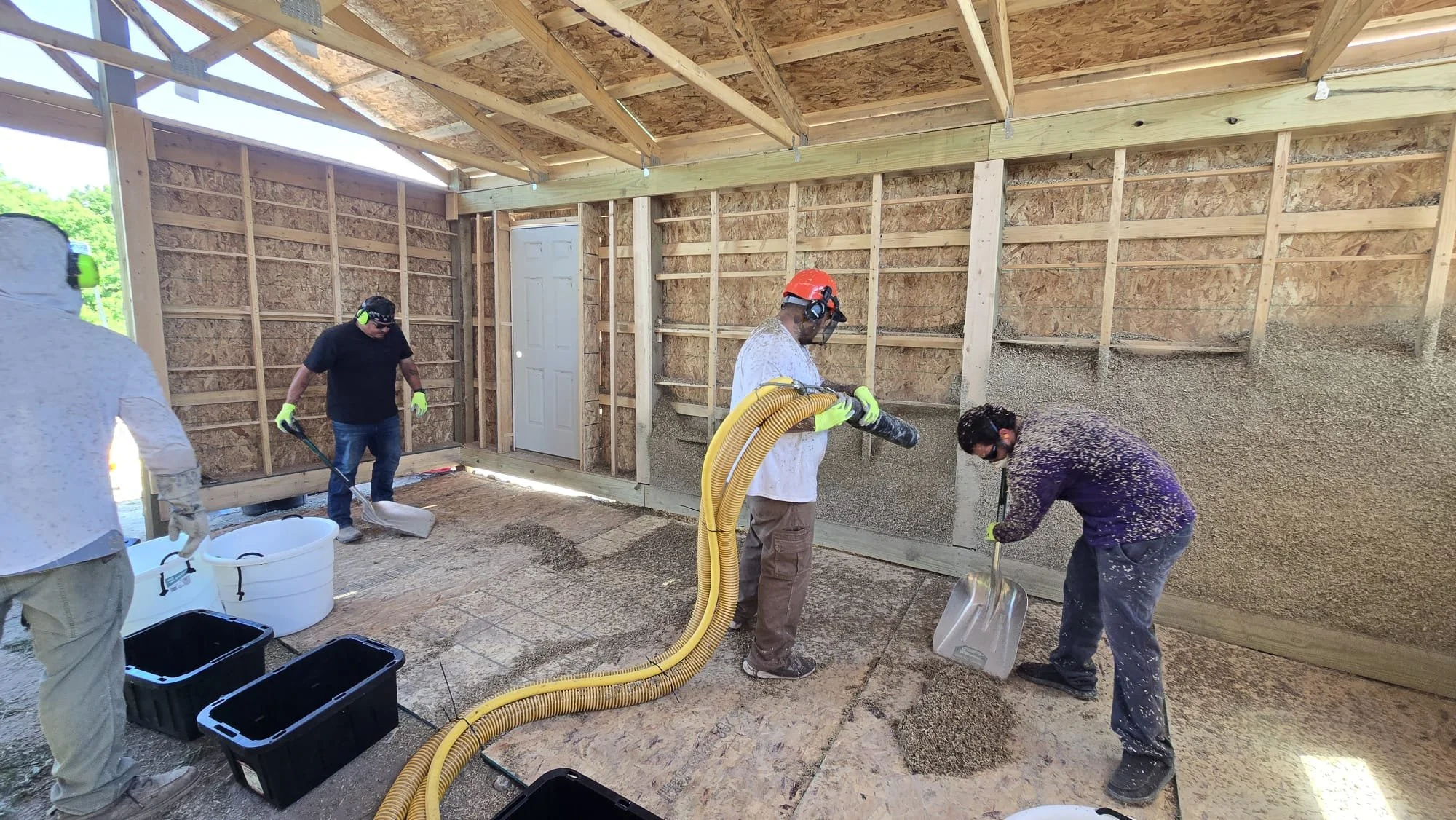
Duane Stover (white shirt) sprays hemp-lime during the hempcrete workshop this July on the Pine Ridge Reservation. Photo by Dionne Holmquist

By Jean Lotus
Almost two decades after a pioneering hempcrete structure was built near the Pine Ridge Reservation in South Dakota, members of the Oglala Sioux Tribe’s Makoce Agriculture Program learned how to spray hempcrete this summer.
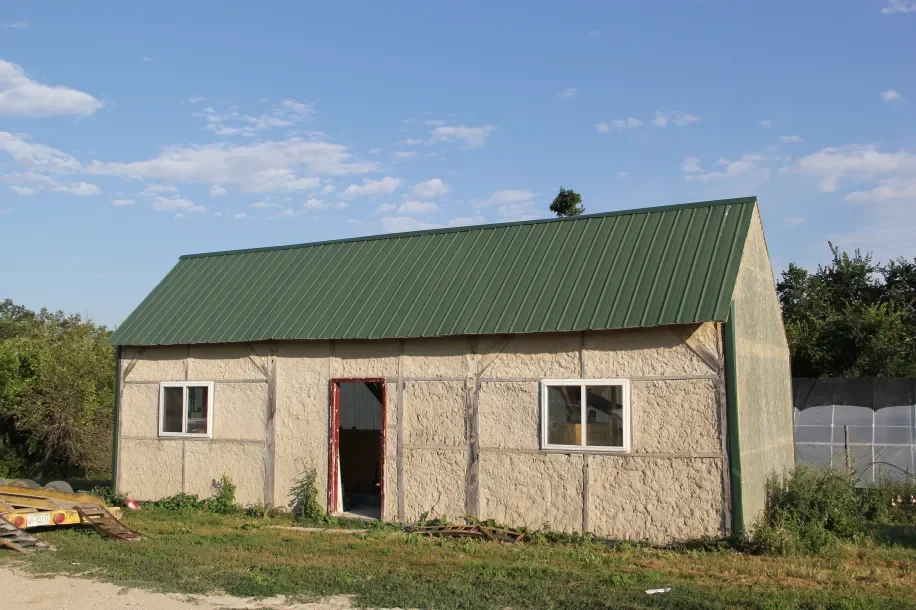
On July 7-10, Cameron McIntosh of Americhanvre Cast Hemp of Allentown, PA, hosted a “train the trainer” workshop to spray hemp-lime insulation into the walls of a 24-by-24-foot shop and garage on their farm a few miles outside Pine Ridge village using the company's Ereasy spray system.
A crew from the Makoce Agriculture Program sprayed hemp-lime insulation, a mix of hemp hurd, lime binder and water into a framed cavity on the building's exterior walls.


It was a modest project: one outbuilding, not a house. But it marked a return to hemp construction on the Oglala Sioux Tribe's reservation, where Alex White Plume, now in his early 70s, built one of the first hemp houses in the United States in Manderson, SD in 2008 — and where White Plume's earlier attempts to grow industrial hemp were shut down three times by federal drug agents.
The Training
Brandon Brave Heart, Makoce Agriculture's director of operations, said the crew had seen a hempcrete spray demonstration at the Lower Sioux reservation during the 13th Hemp Building Symposium in Morton, MN. The tribe bought an Ereasy sprayer and a Mud Hog mixer soon after. Getting the mix right on the plains took some adjustment, he said. Temperatures during the workshop topped 100 degrees (Fahrenheit).
"We kind of struggled a bit at first getting the ratio of the hurd and binder and water mixture just right to where it would apply and stick," Brave Heart said, adding that the crew had to add more water than expected because of the dry conditions. The result, in the early days of the training, was rebound — sprayed material bouncing off the wall instead of adhering.
The crew built a lattice of 1-by-2 furring strips roughly 18 inches on center, framed out about nine inches from the wall, to create a cavity for the spray application and keep the wet material from slumping.
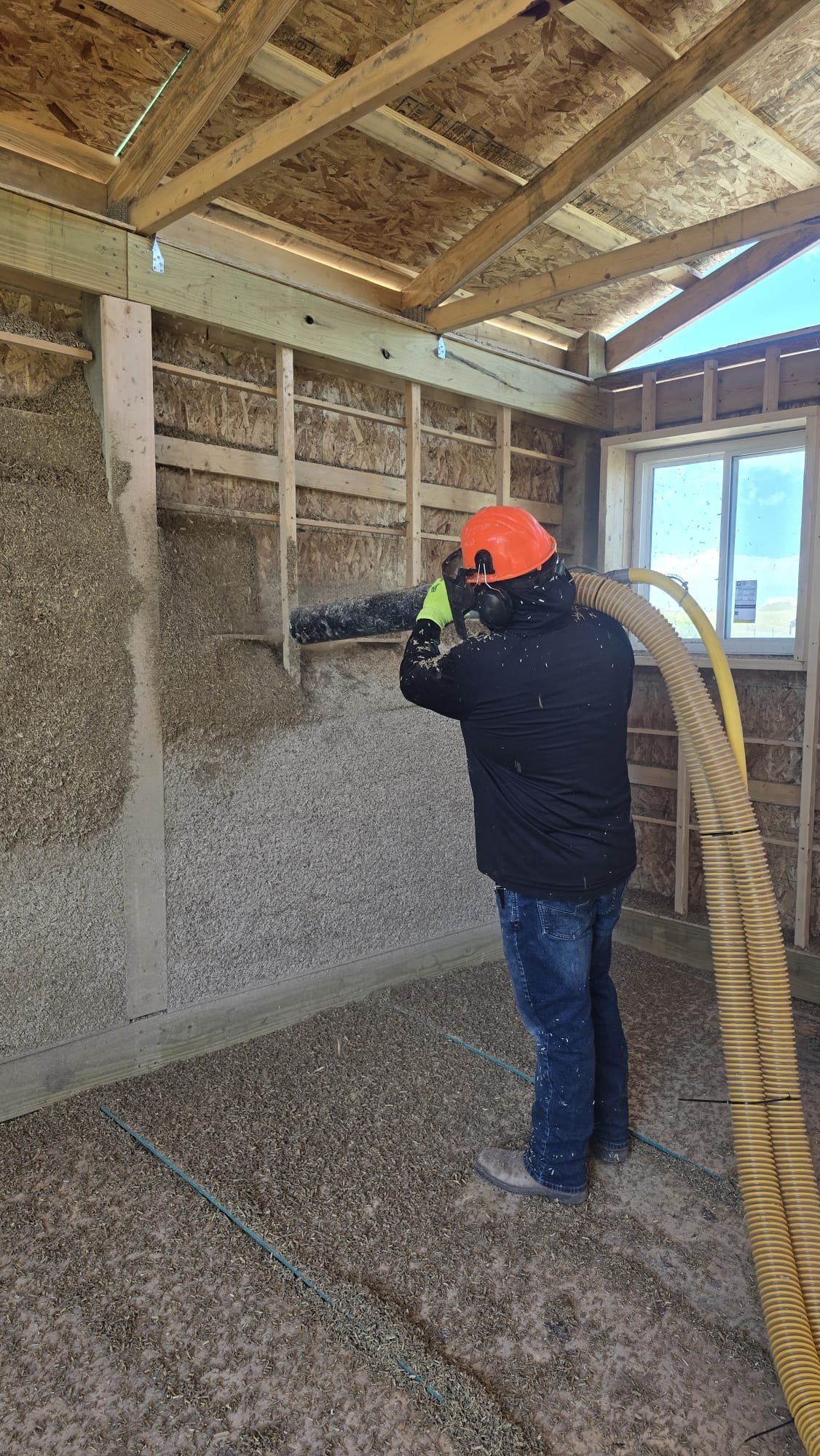
A workshop participant sprays hempcrete into the wall of a shop/garage of the Makoce Agriculture Program. Photo courtesy of Dionne Holmquist


Brave Heart said one moment stood out: rain fell on a section of wall shortly after it was sprayed, and the water "immediately wicked out" without damaging the application. "The wall didn't crumble, it didn't hold the moisture, it completely wicked outward," he said.
The shed is now sheathed, tar-papered and roofed, and Brave Heart said the crew will let the hempcrete cure for about six weeks before screeding the walls flat, running electrical work and likely finishing with lime plaster.
Check Out Our FREE International Hemp Construction Suppliers Map



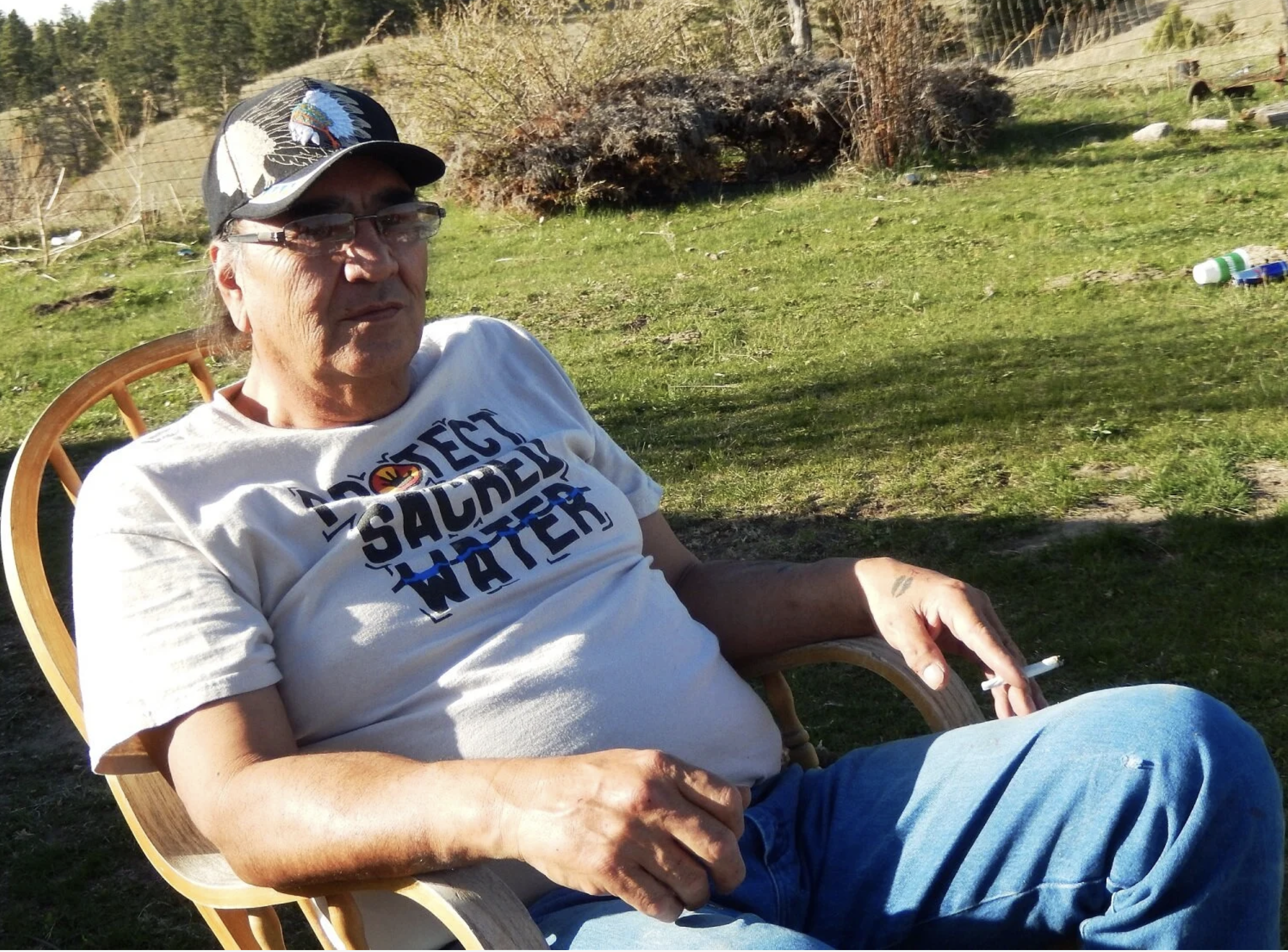
Alex White Plume discusses the history of the hemp renaissance at his home on the Pine Ridge Indian Reservation in 2023. (Photo by Talli Nauman)
2008: Hempcrete Makes an Appearance on the Prairie
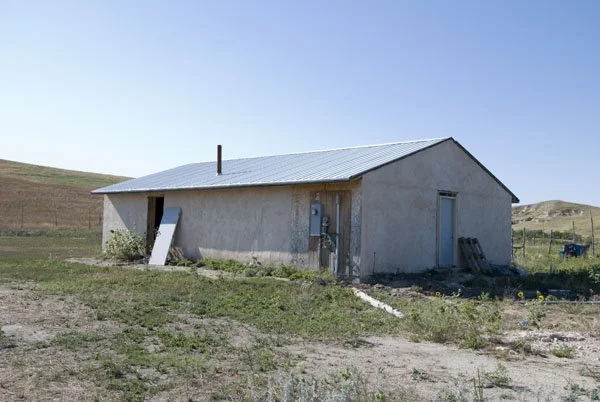
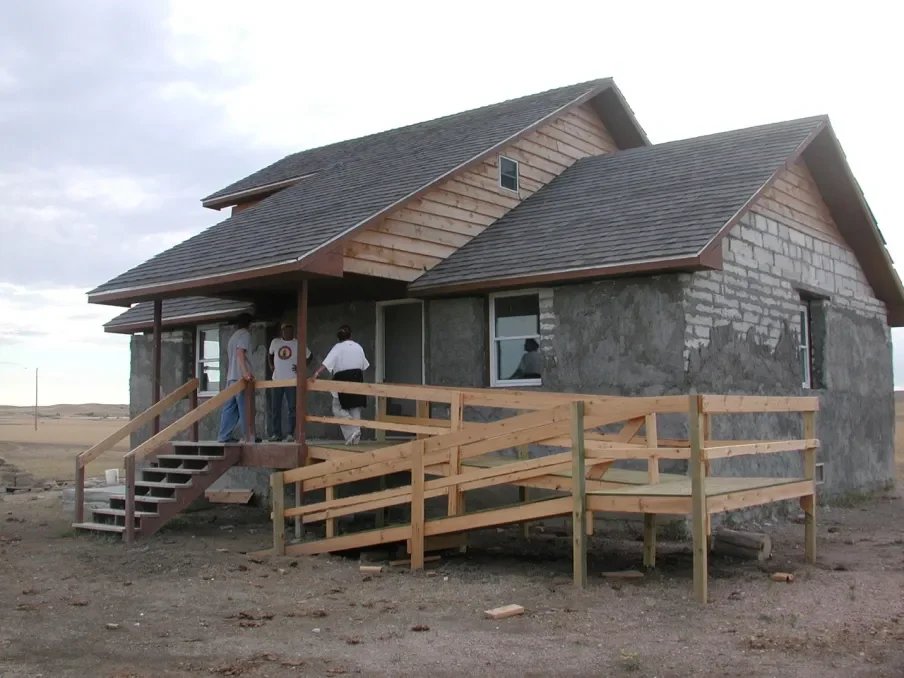
The Pine Ridge Reservation's hemp-building history is one of early adoption. In 2008, White Plume worked with Tom Cook, an outside organizer connected to the reservation through his marriage into a Slim Buttes-area tribal family, to build a hemp house on fee-patent (non-tribal) land in the Manderson community. The project's binder was hydraulic lime hauled up from Durango, CO, White Plume told HempBuild Mag. Makoce Agriculture staff said this month they were not certain of the current use of the 2008 structure, though it is not occupied as a residence. A number of other Pine Ridge hemp-based structures have been documented online.
Conflict with Feds for Growing Hemp
White Plume's hemp advocacy on Pine Ridge dates to 1998, when the Oglala Sioux Tribal Council passed an ordinance separating industrial hemp from marijuana on tribal land. Acting on that authority, White Plume and his family planted hemp crops in 2000, 2001 and 2002.
But they paid the price for early advocacy for hemp. Federal agents from DEA, FBI and U.S. marshals raided and destroyed the crop each time; the 2000 raid alone involved roughly 30 agents.
After the 2002 seizure, a federal court issued an injunction barring White Plume from growing hemp without DEA registration, a restriction his attorneys later said was unique among U.S. hemp growers. The injunction was not lifted until 2016, after the passage of the 2014 and 2018 federal farm bills opened the door to hemp cultivation nationally.
White Plume said the legal fight ran 14 years and at one point carried a threatened 30-year prison sentence, and drained the family's bison ranching operation. "Today I'm sitting out here without a ranch, living in an old house, and not growing hemp, and not having a buffalo herd," he observed.
White Plume and his lawyers argued the tribe's treaty rights should have exempted Pine Ridge from federal marijuana law altogether, an argument tribal leaders raised with federal prosecutors at the time without success. He said hemp grown from his original crops still comes up wild on his land. He has since sold small hemp harvests to outside buyers but does not currently farm it.
Asked what advice he'd give to others trying to grow and build with hemp, White Plume pointed to over-regulation and infighting over seed patents as bigger obstacles than the plant itself. He stressed cooperation and collaboration.
"We should all have been sharing, pulling our minds together, to help each other build this up, and it didn't happen," he said. He called for the crop to be lightly regulated, more like alfalfa or wheat.



Admiration for Lower Sioux, and a different set of obstacles
Both Makoce Agriculture staff and White Plume pointed to the Lower Sioux Indian Community in Minnesota. The Lower Sioux’s hemp team built a duplex and additional houses with hempcrete over the past several years using its own trained crew and its own building code authority.
Makoce Agriculture's Gracey Claymore, the program's director of communications, said sovereignty is central to the comparison: control over growing, processing and building with hemp locally, rather than purchasing processed material from off-reservation suppliers. That control does not yet exist at Pine Ridge, she said.
Cultivating hemp on the reservation remains blocked, Brave Heart said, because the tribe has not passed a resolution allowing it and USDA hemp-program guidelines are not yet in place locally.



Makoce Agriculture owns a 200-acre farm about six miles north of Pine Ridge it hopes to eventually use for growing its own hemp stock; in the meantime, the program buys hurd and binder from off-reservation suppliers at added cost.
Unlike the Lower Sioux, which negotiates its own building permits under tribal authority, Brave Heart said Makoce Agriculture has not run into permitting obstacles for the shed project. The bigger constraint, he said, is money: "It's just the expense of it all. We have to raise money, fundraise, and it's just very expensive right now."
The scale of the housing need on Pine Ridge also differs sharply from Lower Sioux, a much smaller reservation. Claymore cited a HUD case study finding the Oglala Sioux Housing Authority had roughly 1,100 houses where about 4,000 were needed. Brave Heart, who said he is in the middle of a two-year mortgage process of his own, described reservation home financing as far slower than off-reservation lending.



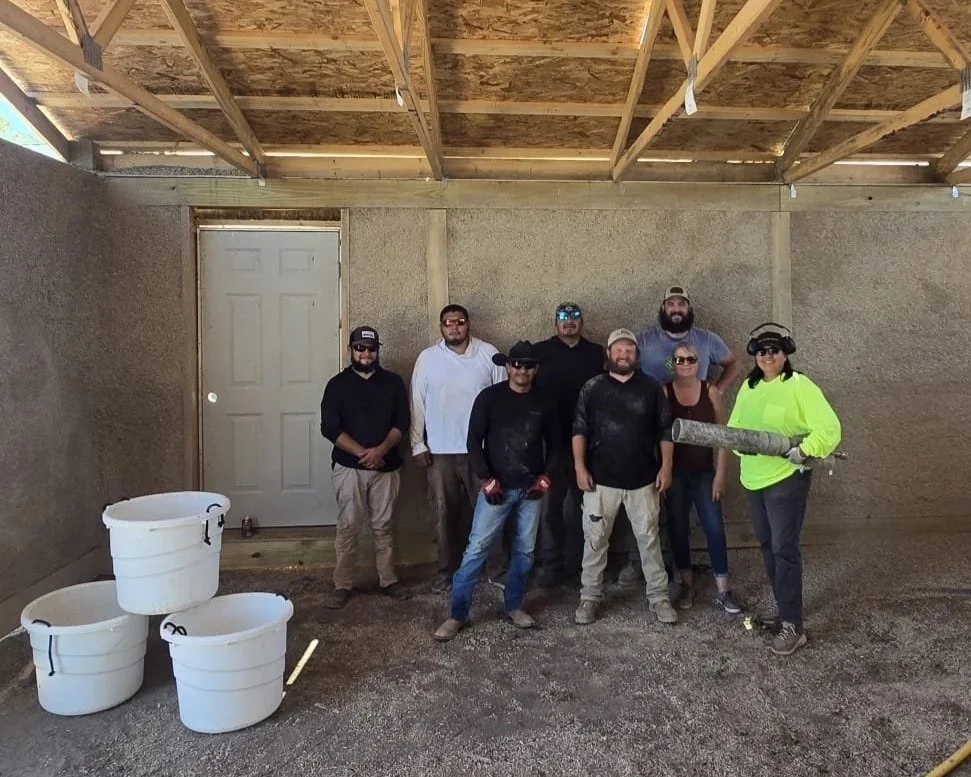
Workshop participants stand in front of newly hemped walls. (Back row left to right) Curtis Leroy (farm coordinator), Duane Stover (intern), Jonathon Red Owl (Community Engagement Manager), Cameron McIntosh. Front Row: Bobby Cheresposy (White Arrow Advantage/Terra Libre), A.J. Granelli (Farm Director), Theresa Siers (Processing Plant Manager), Dionne Holmquist (N&D Kairos, LLC). Photo courtesy of Dionne Holmquist
For now, Makoce Agriculture's hemp-building effort remains at the training and demonstration stage. Brave Heart said the program hopes to assemble a construction crew capable of building a house from start to finish, and any expansion into housing would likely follow further training, on the model Lower Sioux used to bring community members from spray-application training into house-building work.


Please Support Our Classified Advertisers
(To find out more about advertising CLICK HERE).
Publications
NOW AVAILBLE! Hemp Building Directory 2026 - Guide to the International Hemp Building Industry
Hempsteads: Architectural details for hemp-lime construction, by Timothy Callahan
Architects/Design Pros/Engineers
Next Genesis Design brings natural materials into high-performance building systems and healthy homes. White Salmon, WA
Bio-based Engineering and Design at Crownjade Design & Engineering, Greeley, CO
Experienced Natural Building Engineering Services from Verdant Structural Engineers, CA
Green Builders
Naturalia Construction, Colorado-based Sustainable Construction with Hemp
Design and build your hempcrete home in Colorado’s front range with Healthy Hemp Homes
Aaron Grail Construction, No. Cal: The intersection of art, design and performance
Evolve Construction: Providing healthy, sustainable, housing for future generations. Northern CO
Hemp Building Research and Training
Hemp Build School online and IRL for Homeowners and Professionals
Follow the Hemp Casita from Right Coast Hemp to learn more about building with hemp.
Hemp Hurd (shivs)/Hemp Fiber/ Hemp Microfiber
CannaVision, Fort Worth, TX: Home of the Pulsewave Hemp Processor
Riverdale Hemp Gin producing hemp raw materials in the Central Valley (CA)
IND HEMP: Supporting Farm Families and Rural Communities with Natural Materials Processing
E3 Agriculture: Texas plant-based materials for construction, industry, and agriculture.
East Coast Hemp Supply: Your source for hemp building materials in NC
Prairie Band Ag. Hemp Hurd Cultivating a future rooted in nature. Holton KS
Hempcrete installers/Insulation subcontractors
Americhanvre Cast Hemp: Supplies, Equipment, Experienced Hempcrete Installation
Hemp Build Network: We Make Building with Hemp Possible, New Braunfels, TX
Hemp Building Company: Hempcrete installation, supplies Lafayette, CO
Victura Hemp: Spray-applied hemp installation in New England
Hemp Batt Insulation/Supplies
Lime Binders, Plasters and Mineral Paints
US Heritage Group: Experienced Hemp Building Binder Suppliers
Hemp and Block, LLC- Hempcrete Binder
Earthaus specialty lime plasters for the health & beauty of authentic mineral finishes
Silacote Environmentally Safe Inorganic Paints (CA and Canada)
Magic Minerals hemp-lime catalyst: Proven success. Made in USA
Machine Manufacturing Companies
Quadra Concrete robotics and specialty machines in France and Phoenix, AZ USA
Hemp Wall Panel Products
Preorder your hempcrete tiny house from Sativa Building Systems
Panel solutions from Homeland Hempcrete
Hemp Hardwood and Flooring:
Hemp Blocks