Swiss Company Launches Carbon Program for Biogenic Buildings
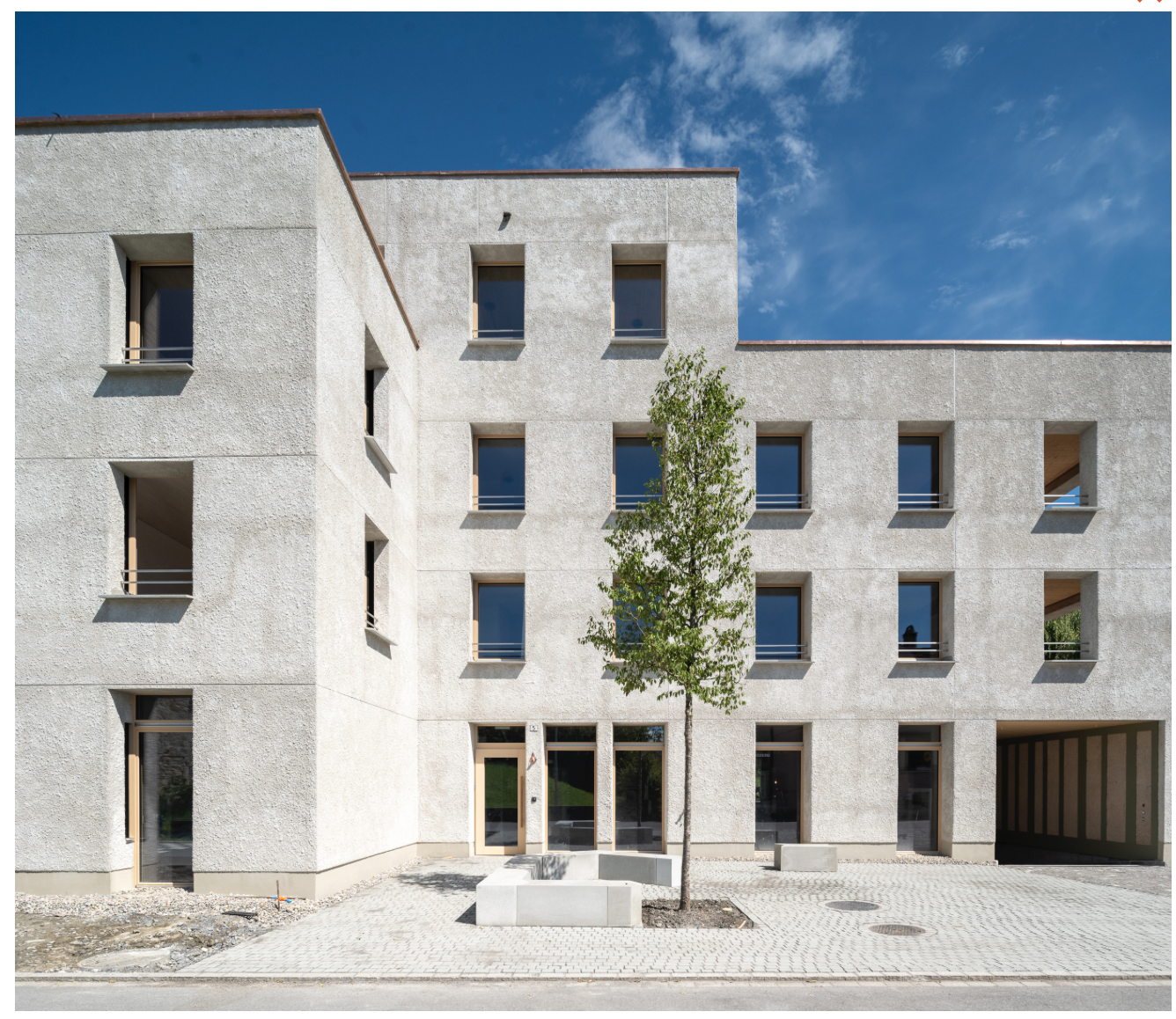
A Widnau, Switzerland 22,600 sq ft apartment building insulated with hemp-lime (hempcrete) panels has been issued the first carbon sink certification for sequestering 500 metric tonnes of CO2e. Photo courtesy of Jens Ellensohn

Swiss Company Launches Carbon Program for Biogenic Buildings
By Jean Lotus
The Swiss construction company Openly introduced last month a new class of CO₂ certificates monetizing the carbon dioxide permanently sequestered in buildings constructed with biogenic materials like hempcrete and timber. The launch follows a year of development, founders said.
The new certificates are based on the Global Construction C-Sink Standard, developed with the Ithaka Institute for Carbon Strategies, which has developed biochar carbon sequestering standards. They are certified in accordance with the EU Carbon Removal Certification Framework (CRCF), the European Union's voluntary standard for carbon removal codified on December 26 of last year.




Openly has partnered with the reseller Zurich-based climate foundation myclimate to market the carbon credits to the voluntary carbon market.
The program’s payment structure compensates building owners for the sequestered CO₂. For certified projects, the net payment for selling the certificates is currently €85 per ton of stored CO₂.

A hempcrete insulation panel made by Openly sister company Cancret. Photo courtesy of Jens Ellensohn
First Building Certified
To date, one project has been fully certified: the Openly hemp-lime (hempcrete) apartment building in Widnau, Switzerland. The 22,600 sq. ft. building, which houses 19 apartments, is one of the largest hempcrete structures in the EU. The building also features the use of biochar in concrete, reused 100% recycled steel beams, and clay panels in the ceilings and apartment partition walls. The building was certified as sequestering about 500 metric tonnes of CO₂e.
The company is focused on scaling up the program, said founder Andy Keel. "Several projects are slated for imminent certification," he said in a statement. Additional CO₂ certificates will be marketed under the brand milton.earth.




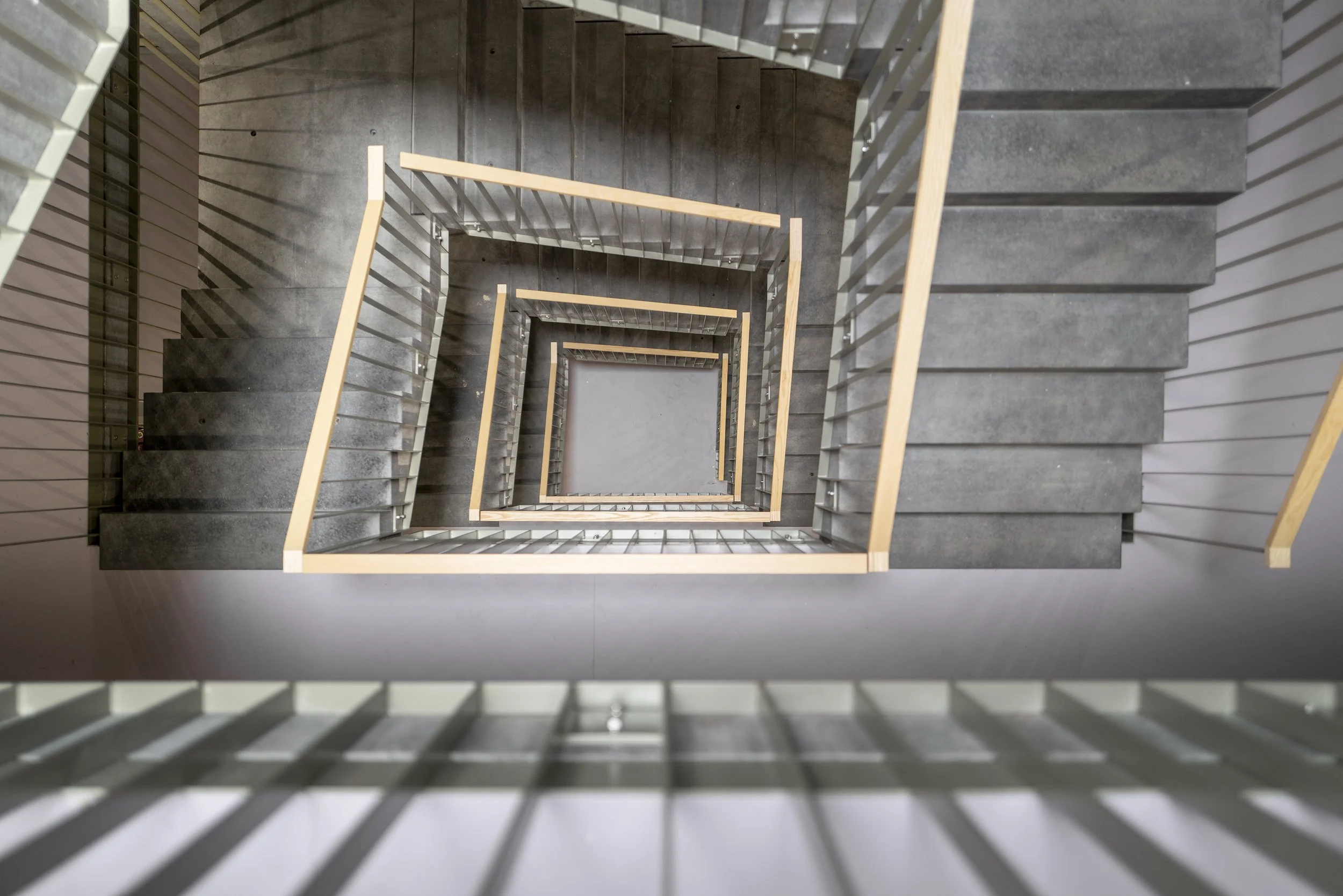
The Widnau apartment building also used biochar-infused concrete to lower the carbon footprint of the structure. Photo courtesy of Jens Ellensohn
The carbon sink program rewards developers who use building materials that act as long-term carbon sinks, Dr. Christoph Neururer, Openly's Head of C-Sink Management, told HempBuild Mag.
The payment offsets the so-called green premium, or additional cost, often associated with choosing renewable, carbon-neutral building materials over conventional alternatives, Neururer said.
“In most cases, these biological construction materials, especially in Europe, are more expensive than the mineral-based ones. And so [the carbon payment] is a financial support,” he said. The founders believe the program will refinance up to 1% of total construction costs.


Technical Details
Openly's system treats the stored biogenic carbon as a verifiable asset, locking up the carbon for a predicted minimum of 60 years.
“Without the project, no carbon sink would be created, as raw materials do not represent a long-term carbon reservoir,” the company said.
The certification process is designed to meet technical and traceability requirements of the CRCF.
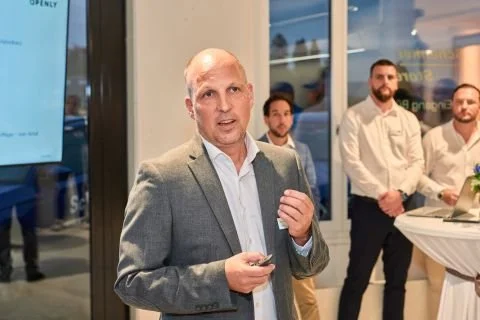
Openly founder and CEO Andy Keel gives a presentation in Switzerland. Photo courtesy of Shenker Storen


C-Sink Program Eligibility and Scope
Currently, only EU buildings are eligible for Openly’s carbon sink credit program.
Qualifying projects must use biogenic materials—such as wood, hemp, straw, or biochar—that sequester CO₂ in the structure. The project must fully adhere to all requirements of the Global Construction C-Sink Standard.
For the initial launch phase, Openly established an eligibility window through a "handshake agreement" for projects with a finish date in 2024 and 2025. This allows the program to go backwards for two years to include recently completed buildings.
For all future projects, the general requirement is that the project needs registration initially before starting with any construction works, (similar to other subsidy processes, the company says).
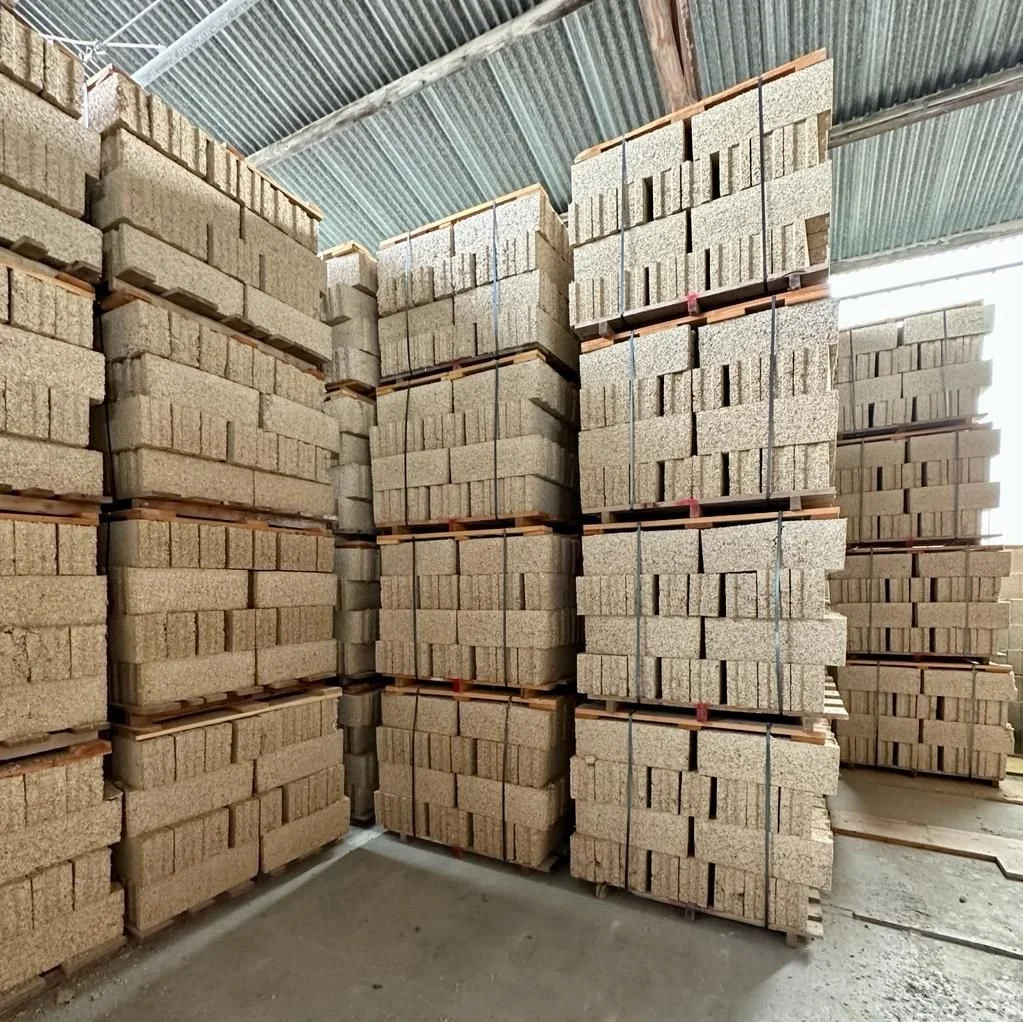
Hemp-lime blocks sourced from South Tyrol, Italy-based Schönthaler OHG were used in the project. Photo courtesy of Jens Ellensohn


Keel believes with financial incentives and an EU focus on lowering the carbon footprint of new construction projects, the program can push the construction industry into a greener future.
“I founded Openly to transform the construction industry, one of the largest emitters of CO₂, into an active partner in climate protection,” Keel said.”We use biogenic materials to turn buildings into carbon sinks.”




Please Support Our Classified Advertisers
(To find out more about advertising CLICK HERE).
Publications
ON SALE: Hemp Building Directory 2025 - Guide to the International Hemp Building Industry
Hempsteads: Architectural details for hemp-lime construction, by Timothy Callahan
Architects/Design Pros/Engineers
Next Genesis Design brings natural materials into high-performance building systems and healthy homes. White Salmon, WA
Bio-based Engineering and Design at Crownjade Design & Engineering, Greeley, CO
Experienced Natural Building Engineering Services from Verdant Structural Engineers, CA
Green Builders
Naturalia Construction, Colorado-based Sustainable Construction with Hemp
Design and build your hempcrete home in Colorado’s front range with Healthy Hemp Homes
Aaron Grail Construction, No. Cal: The intersection of art, design and performance
Hemp Building Research and Training
Hemp Build School online and IRL for Homeowners and Professionals
Follow the Hemp Casita to learn more about building with hemp.
Hemp Hurd (shivs)/Hemp Fiber/ Hemp Microfiber
CannaVision, Fort Worth, TX: Home of the Pulsewave Hemp Processor
Riverdale Hemp Gin producing hemp raw materials in the Central Valley (CA)
IND HEMP: Supporting Farm Families and Rural Communities with Natural Materials Processing
E3 Agriculture: Texas plant-based materials for construction, industry, and agriculture.
Hempcrete installers/Insulation subcontractors
Americhanvre Cast Hemp: Supplies, Equipment, Experienced Hempcrete Installation
Hemp Build Network: We Make Building with Hemp Possible, New Braunfels, TX
Hemp Building Company: Hempcrete installation, supplies Lafayette, CO
Victura Hemp: Spray-applied hemp installation in New England
Hemp Batt Insulation/Supplies
Lime Binders, Plasters and Mineral Paints
US Heritage Group: Experienced Hemp Building Binder Suppliers
Hemp and Block, LLC- Hempcrete Binder
Earthaus specialty lime plasters for the health & beauty of authentic mineral finishes
Silacote Environmentally Safe Inorganic Paints (CA and Canada)
Machine Manufacturing Companies
Quadra Concrete robotics and specialty machines in France and Phoenix, AZ USA
Hemp Wall Panel Products
Preorder your hempcrete tiny house from Sativa Building Systems
Panel solutions from Homeland Hempcrete
Hemp Hardwood and Flooring:
Hemp Blocks