Austin Celebrates a New Era in Sustainable Building with Hempcrete Code Adoption and Book Launch
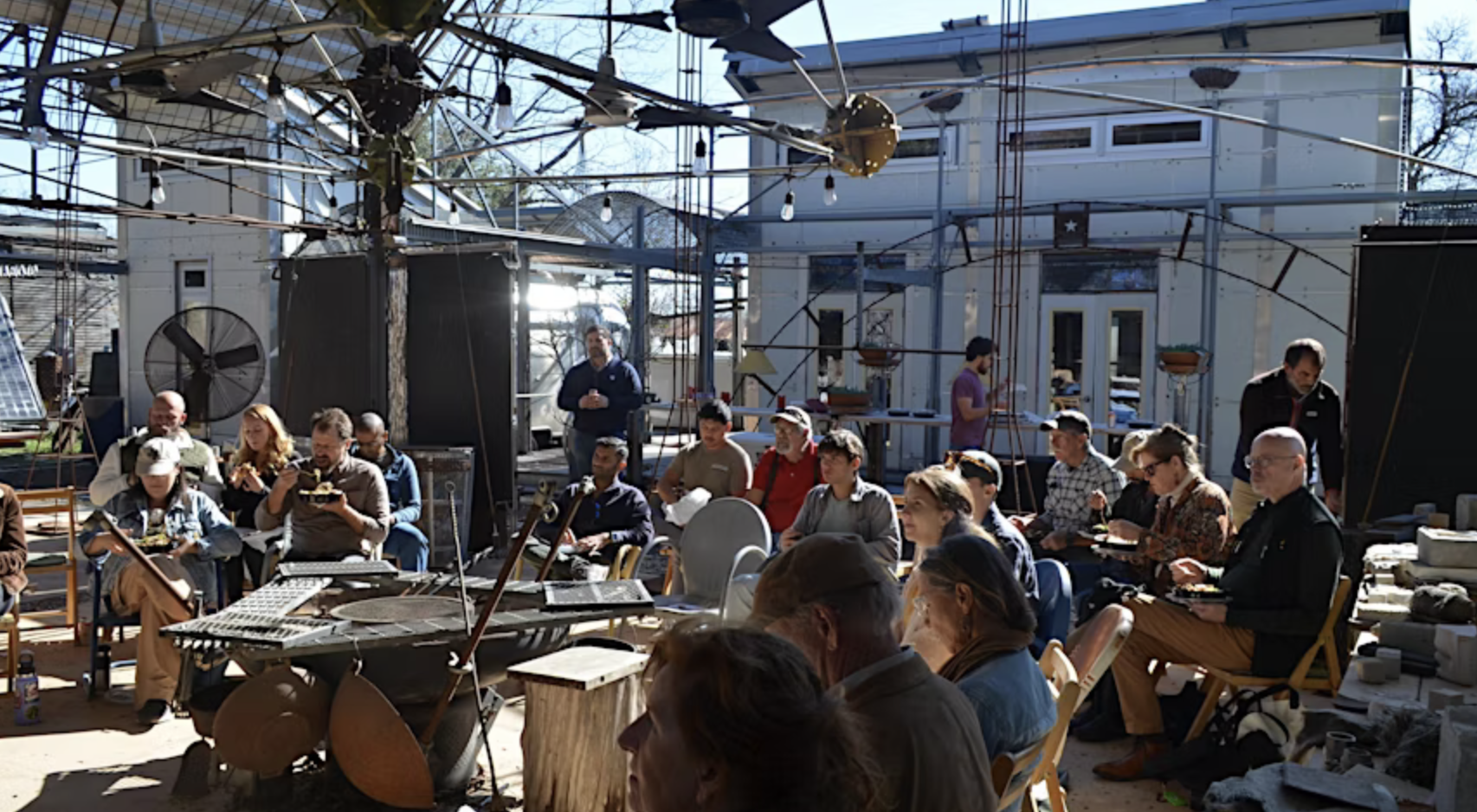
Austin’s Center for Maximum Potential Building Systems (CMPBS) will host an open house July 11 celebrating hempcrete’s adoption in the City of Austin’s residential building codes. Photo courtesy of CMPBS
Austin Celebrates a New Era in Sustainable Building with Hempcrete Code Adoption and Book Launch
By HempBuild Mag
On Friday, July 11, Austinites will gather to celebrate a historic step toward sustainable construction with a special event marking the city’s adoption of hemp-lime—commonly known as “hempcrete”—into the local building code. The celebration, hosted at the Center for Maximum Potential Building Systems (CMPBS) from 6:30–8:30 p.m., will also launch a landmark new book, Hempsteads: Architectural Details for Hemp-Lime Construction by hemp-building pioneer Timothy Callahan of Asheville, NC.
The event comes on the heels of Austin becoming the first major U.S. city to officially adopt Appendix BL of the 2024 International Residential Code, “Hemp-Lime (Hempcrete) Construction.” The new code, which goes into effect July 10, allows hempcrete to be used in permitted residential construction, streamlining the approval process for builders using this carbon-sequestering material.






Hempcrete: A Green Building Breakthrough
Hempcrete is a biocomposite insulation material made from hemp stalk hurds and a lime-based binder. It forms monolithic wall assemblies that are naturally mold- and fire-resistant, vapor-permeable, and highly durable. Importantly, it locks atmospheric carbon into the structure of buildings—an essential step in addressing climate change through the built environment.
“The adoption of hempcrete aligns with our city’s goals to reduce greenhouse gas emissions in the building sector,” said John Lawler, Policy Strategist for the City of Austin. “By embracing hempcrete, we can support local farmers and businesses, foster economic opportunities, and reflect the kind of innovative city we want to be.”
Natural building architect Gayle Borst of Austin-based Stewardship Architecture noted the code change would increase legitimacy and comfort for architects, clients, and inspectors who may have hesitated to use the material. “This change will allow more people to explore healthier, low-carbon homes built with a proven material,” she said.
Austin builders like Carl Gradek, who previously built a two-story permitted hempcrete ADU under an alternative pathway, say this code adoption is a game-changer. “This recognition by the City Council reflects a knowledgeable and forward-thinking approach,” Gradek said. “Austin is leading by example.”
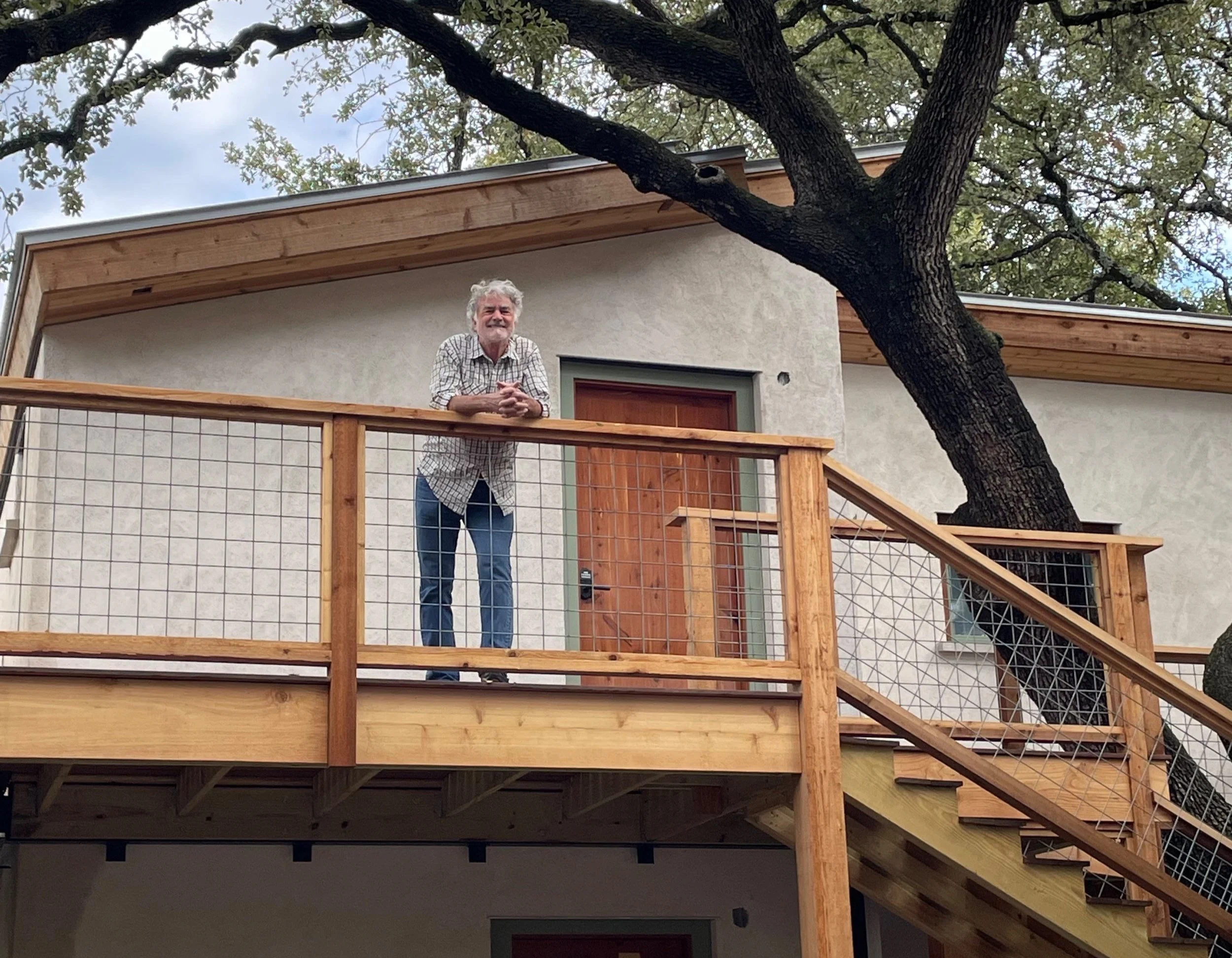
Austin hempcrete builder Carl Gradek poses on the second floor of the hempcrete ADU he built in Austin last year. Photo courtesy Carl Gradek
A New Manual for Builders: Hempsteads by Timothy Callahan
The July 11 event also marks the launch of Hempsteads, a long-anticipated book by Timothy Callahan, one of the most respected hemp-lime designers in the country. The book serves as both a technical guide and an inspiration for builders seeking to integrate hempcrete into their projects.
Published by Haepenny LLC, Hempsteads compiles over a decade of Callahan’s experience designing and building hempcrete homes, including structural details, in-situ and spray-application methods, and code-compliant specifications for walls, windows, foundations, and MEP systems. The book includes the full text and commentary of the newly adopted IRC Appendix BL and offers an option to purchase downloadable CAD files for professional use.
Callahan’s designs have been tested in extreme conditions—most recently during Hurricane Helene, which devastated Asheville, NC in 2024. None of Callahan’s five hempcrete homes suffered damage. “From a durability standpoint, these homes lived up to all our expectations,” Callahan told HempBuild Magazine.




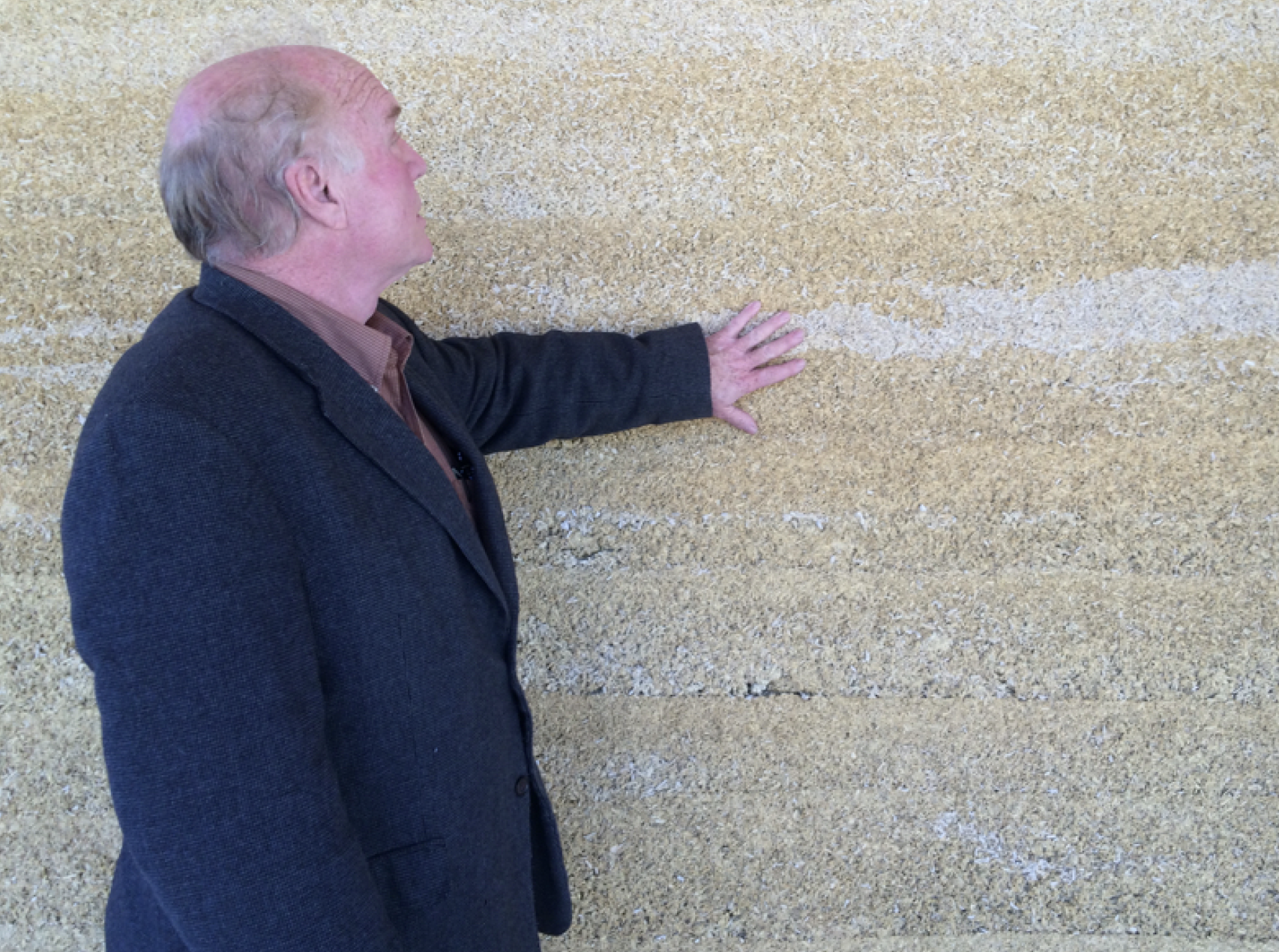
Asheville NC author and hempcrete builder/designer Tim Callahan explains the properties of a hempcrete wall. Photo courtesy Tim Callahan
The book is already being praised as a foundational text for the U.S. hemp building movement.
“Hempsteads is one of the most complete and useful texts on hempcrete construction,” said Cameron McIntosh, founder of Americhanvre in Pennsylvania. “Tim has truly dedicated his life to a more thoughtful approach to residential construction.”
“Tim is a true professional,” said Ray Kaderli, president of New Braunfels-based Hemp Build Network. “Having this high-level engagement from some of the original pioneers in the space is of the utmost value. This book is a ‘must-have for the library of anyone building with hemp,” he added.
“Hempcrete is a powerful resource that delivers thermal performance, durability, and a low-carbon footprint,” said Clark Snell, an Austin native and co-author of Building Green, now teaching architecture at the New York Institute of Technology. “Tim’s new book fills a long-standing gap in professional knowledge.”
Join our FREE online community here




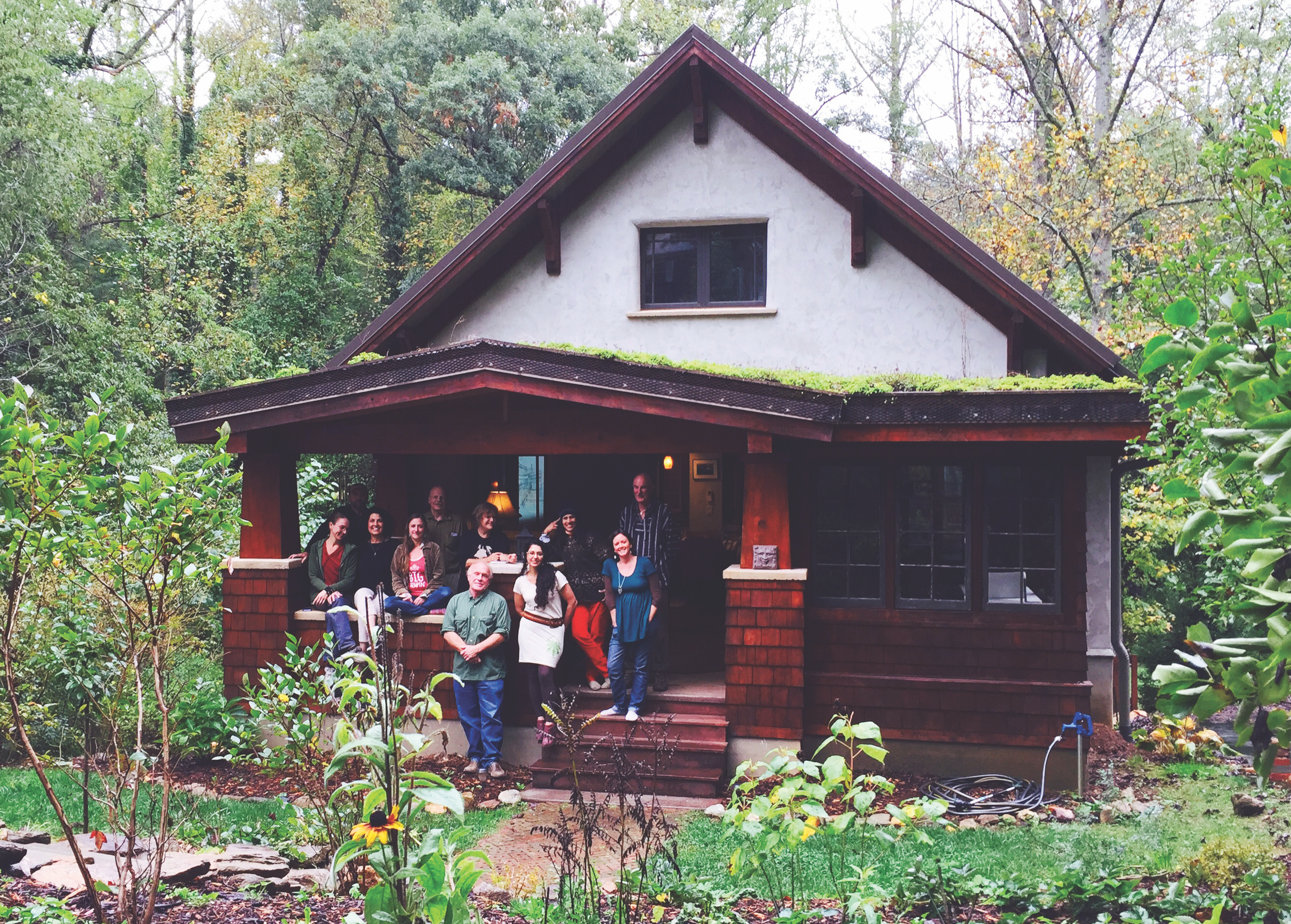
Tim Callahan (green shirt) stands with his team in front of the NauHaus prototype, a hempcrete home built in Asheville NC in 2009. Photo courtesy of Tim Callahan



An Evening of Inspiration
The July 11 event will include remarks from local hempcrete builders and architects, excerpts from Hempsteads, and an open discussion on the future of sustainable construction in Texas and beyond. Held at CMPBS—an organization long at the forefront of ecological design—the evening will bring together architects, builders, engineers, planners, and sustainability advocates to mark a turning point for both the city and the broader green building movement.
Founded in 1975 by Pliny Fisk, III, the non-profit CMPBS supports natural building materials like hempcrete and advocates for education, research, and demonstration in life cycle planning and design. The center’s goal is to “undertake projects based on their potential contribution to site, regional and global sustainability and human health, and actively pursue collaborations with associate organizations, businesses and professional firms.” CMPBS has hosted multiple hempcrete demonstrations and workshops in that past few years.
For Callahan, after decades of work, seeing hempcrete adopted into a trend-setting city’s building code represents a realization of the potential that interested him in hempcrete in the first place.
“Hempcrete has long proven its value in resilience, performance, and environmental stewardship,” said Callahan. “With the adoption of the IRC appendix in Austin, we’re finally seeing a path toward broad acceptance in U.S. construction. I’m thrilled to help provide the tools to make it possible.”




Event Details:
What: Austin Hempcrete Code Adoption Celebration & Book Launch of Hempsteads
When: Thursday, July 11, 2025 | 6:30–8:30 p.m.
Where: Center for Maximum Potential Building Systems, 8604 FM 969, Austin, TX
Admission: Free and open to the public
Book Info: Hempsteads: Architectural Details for Hemp-Lime Construction available on Amazon and at HempBuildMag.com
Sign up here for FREE tickets: https://www.eventbrite.com/e/cmpbs-hempbuild-mag-present-open-house-and-book-release-party-tickets-1376643922029







Please Support Our Classified Advertisers
(To find out more about advertising CLICK HERE).
Publications
Hemp Building Directory 2025 - Guide to the International Hemp Building Industry
Hempsteads: Architectural details for hemp-lime construction, by Timothy Callahan
Green Builders
Build your hempcrete dream house in Austin, TX with Gradek Contracting and Design
High Desert Hemp Homes - Building with hemp in the Rocky Mountains
Experienced Natural Building Engineering Services from Verdant Structural Engineers, CA
Naturalia Construction, Colorado-based Sustainable Construction with Hemp
Aaron Grail Construction, No. Cal: The intersection of art, design and performance
Hemp Building Research and Training
Hemp Build School online and IRL for Homeowners and Professionals
Follow the Hemp Casita to learn more about building with hemp.
Hemp Hurd (shivs)/Hemp Fiber/ Hemp Microfiber
CannaVision, Fort Worth, TX: Home of the Pulsewave Hemp Processor
IND HEMP: Supporting Farm Families and Rural Communities with Natural Materials Processing
Wyoming Hemp Company - Industry-leading industrial hemp suppliers
Aggricrete, TX, Natural Materials with Superior Sustainability
Hempcrete installers/Insulation subcontractors
Americhanvre Cast Hemp: Supplies, Equipment, Experienced Hempcrete Installation
Hemp Build Network: We Make Building with Hemp Possible, New Braunfels, TX
Hemp Building Company: Hempcrete installation, supplies Lafayette, CO
Hemp Batt Insulation/Supplies
Lime Binder
Hemp Wall Panel Products
Preorder your hempcrete tiny house from Sativa Building Systems
Panel solutions from Homeland Hempcrete
Hemp Composite Boards
Bison Biocomposites produces sustainable thermal insulation, hempcrete, hemp hurd, and more.
Hemp Blocks