CA Hempcrete ADU Built with French Panel Prototypes
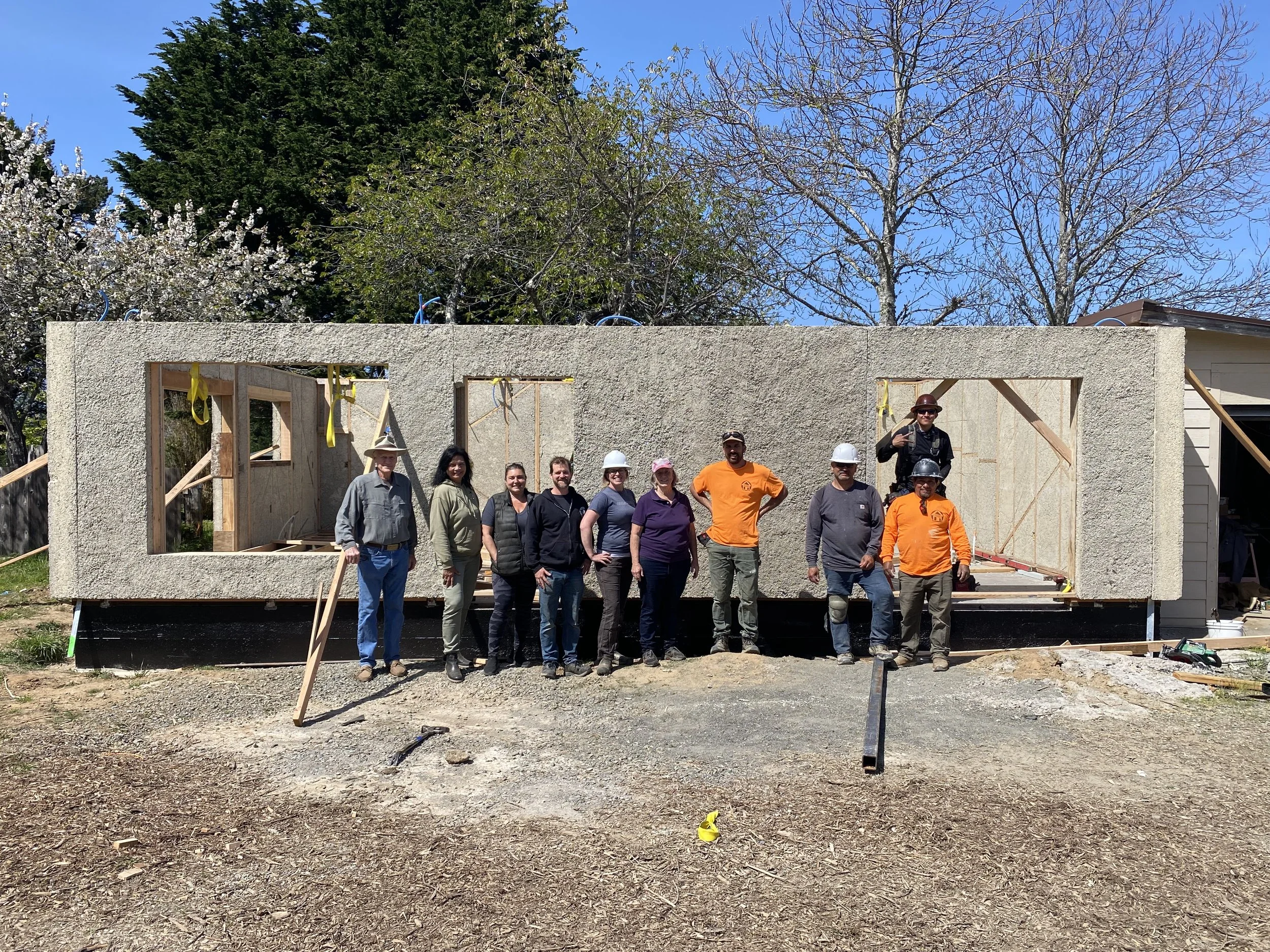
Builders and supporters pose in front of a prefabricated panel hempcrete ADU in Eureka, CA installed by crane in an afternoon. Photo courtesy of Lisa Sundberg, Indigenous Habitat Institute
CA Hempcrete ADU Built with French Panel Prototypes

By Jean Lotus
On a chilly Pacific Redwoods morning in April, Joann Kerns, 68, was perched on her garage roof in Eureka, CA filming a crane installing the first 2,000 lb. wall panel for her new hempcrete ADU (accessory dwelling unit), when the operation took a surprising turn.
“The workers piled the panel onto the forklift held by these straps and they pulled it up and it started to spin,” she told HempBuild Mag. Everyone watched as the panel came crashing down and smashed onto the ground, she said.
The five prefabricated panels for her new building had been transported 60 miles from the Hoopa Modular factory in Humboldt County where they were fabricated using a special imported lime binder formulated in France for large highrise hempcrete projects.
Kerns, her builder/engineer (and next door neighbor) Chrissy Backman feared the worst – that the panel would be cracked or crumbled, causing delays on the new building.
But despite falling to the ground, the panel was unscathed.






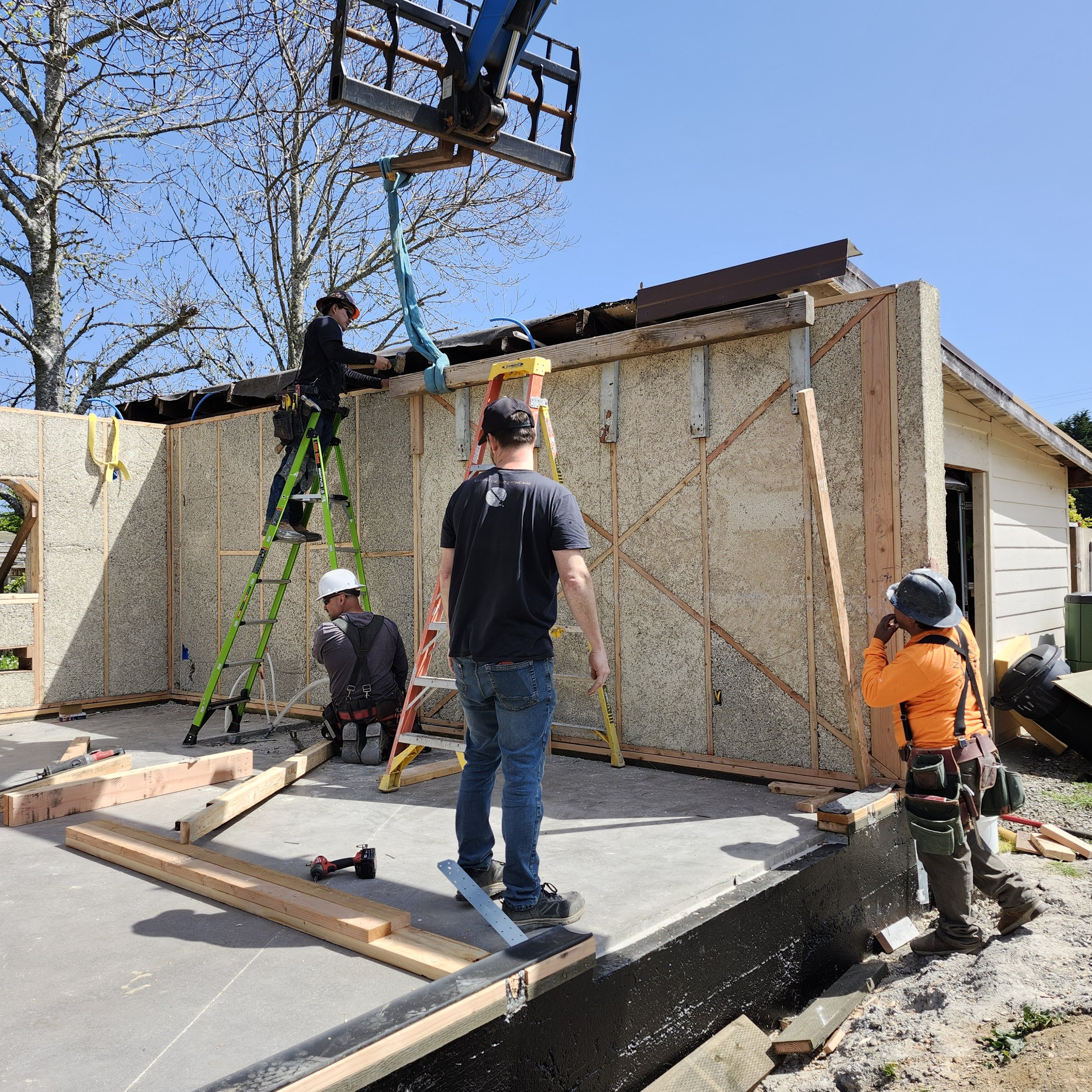
Workers install a wall of the first permitted hempcrete ADU in Eureka, CA. Photo courtesy Chrissy Backman, Backman Building Servics
Backman credited the French formulation for the panel’s indestructibility.
“I'm an engineer, and I want to use material that I'm confident in,” she said. “Respectable brands from France have done the fire testing, the seismic testing, they have specifications,” she added.
“We had a sigh of relief,” to find the panel was undamaged, she said, but the incident validated the decision to use specified products to create the best product for a modular housing prototype.
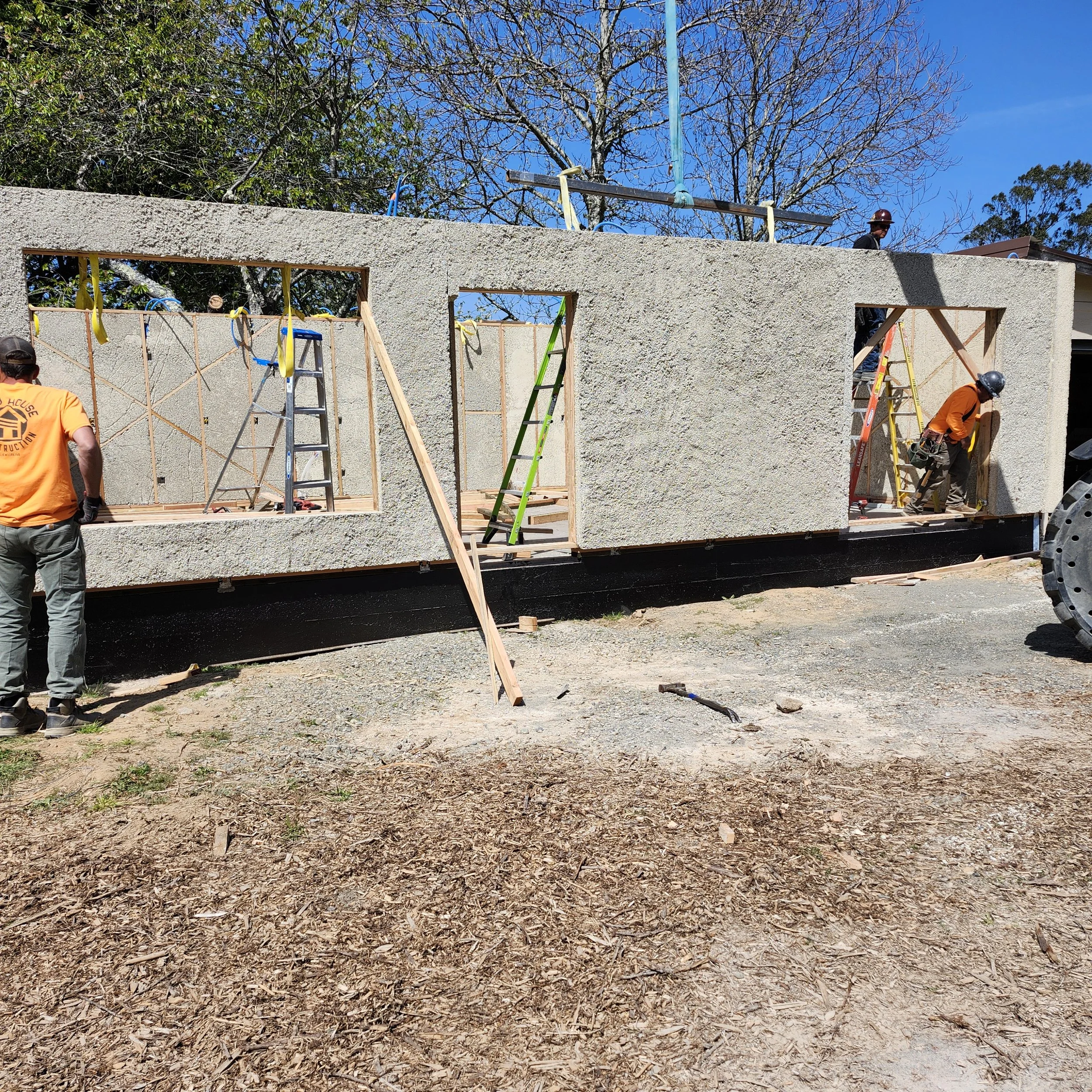
The final wall is placed by crane for the Eureka, CA hempcrete ADU. Photo courtesy of Joann Kerns




The new 700 sq. foot ADU is the first permitted hempcrete structure in the NoCal City of Eureka and among the first prefabricated hempcrete panel projects in the state. The ground-breaking project was instigated by the Trinidad, CA-based Indigenous Habitat Institute (IHI).
IHI’s founder, Lisa Sundberg, of Yurok descent and a member of the Trinidad Rancheria, has worked for several years with EU suppliers and experts with the goal of building a hempcrete panel factory on tribal land.
Partnering with Oregon State University, the institute was awarded a $630,000 grant last year to start the factory, working with the College of the Redwoods and bringing a knowledge transfer of hemp-lime technology and best practices from France.
“These materials have been tested in the EU,” Sundberg told HempBuild Magazine. “They’ve done the gauntlet run.”
Join our FREE online community here



Convergence of builder, material and homeowner
But in spite of the grant, Sundberg said the project came together because a private homeowner desiried hempcrete. “The only way it happened is with private money,” she said.
Now that the project has started, others in the tribe are less skeptical. “We hope this is the first domino,” she said.
Homeowner Kerns was not spooked by bio-based building materials and a talented builder/engineer happened to live next door.
Backman and her husband Justin Shobe first built their own ADU for Backman’s parents on the block of early-20th century houses on large lots. Kerns admired the neighbors’ ADU and inquired about building her own.
With a background in building energy analysis, and as a member of the California Coastal Commission, Backman had been looking for solutions to meet California’s energy codes.
“You need continuous exterior insulation and the most prevalent material used is foam,” Backman told HempBuild Mag. Petroleum-based spray foam insulation can release toxic gasses such as isocyanates. These are especially toxic in a fire, Backman said, which she observed firsthand when a hot tub caught on fire.
“The hot tub was wrapped in foam, and that was the most toxic, yellow, billowing smoke!’ she said. “The fire department had to come in full hazmat suits,” she added.
“So, how do we not use foam? That was my segue into hempcrete,” she said. “I came across this whole team (IHI) that's trying to bring hempcrete to this area, and I was like, "Oh, wow, can I use hempcrete?”
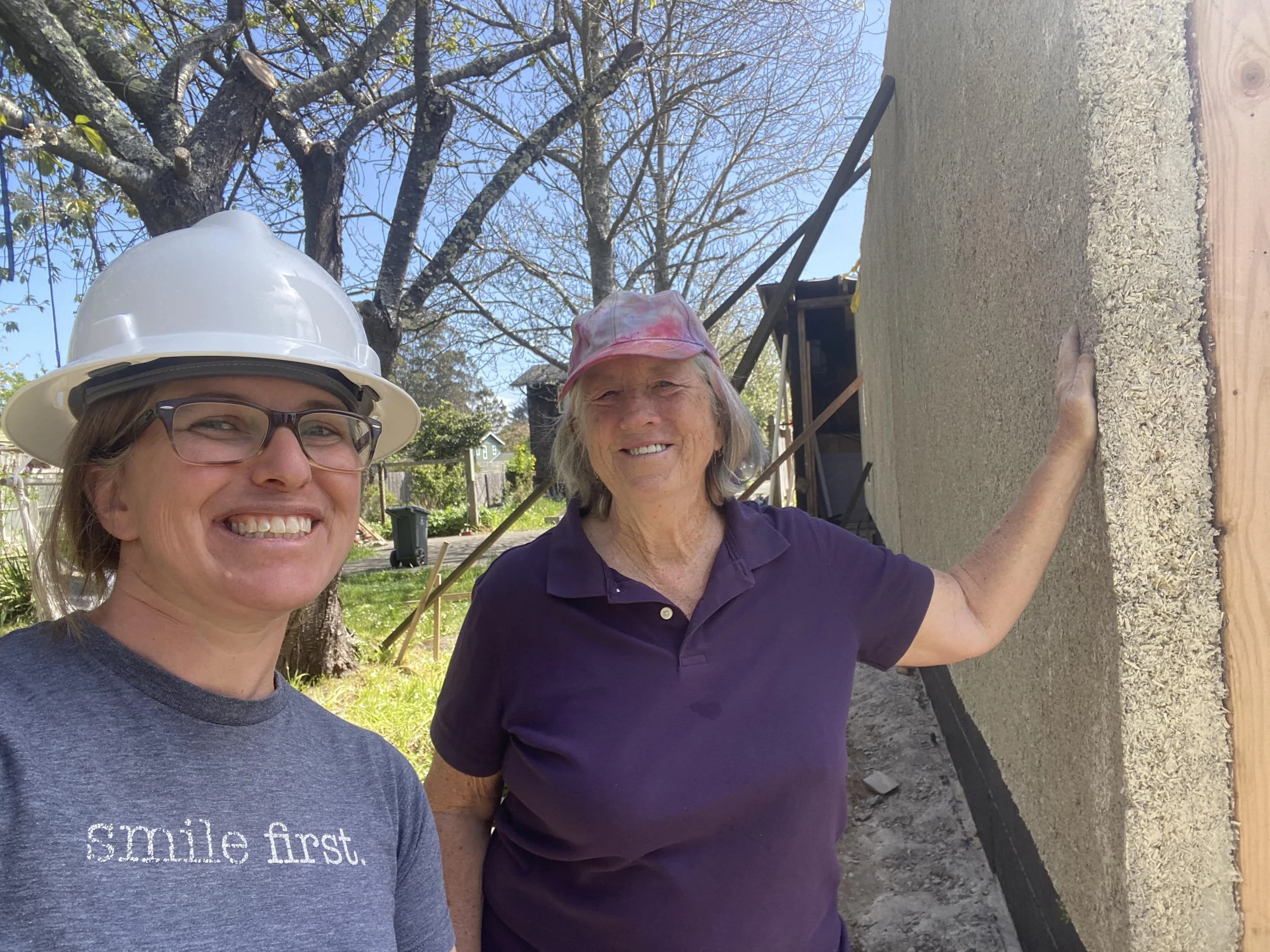
Builder Chrissy Backman (L) and homeowner Joann Kerns (R) pose beside the hempcrete panel walls of Joann’s new ADU. Photo courtesy Chrissy Backman



Kerns was not put off by the hempcrete proposal. A sister had experience building straw bale homes and hempcrete wasn’t that odd an idea to her, she told HempBuild Mag. The project was “grandfathered in” because it reused the footprint of an old shed on the property, Kerns said.
Plus Backman prided herself on her talent for acquiring building permits.
“Chrissy is so good with people. She's just enchanting,” Kerns said. “So I just figured I'll let her enchant the city. And one by one, all the hoops got jumped through,” she added.
The walls for the project were fabricated in a partnership with non-profit Building LIves by Building Structure where CEO Franklin Richards teaches construction at nearby College of the Redwoods.
"We're very interested in building these,” Richards told Redwood News in February. “We can do these all day long.”
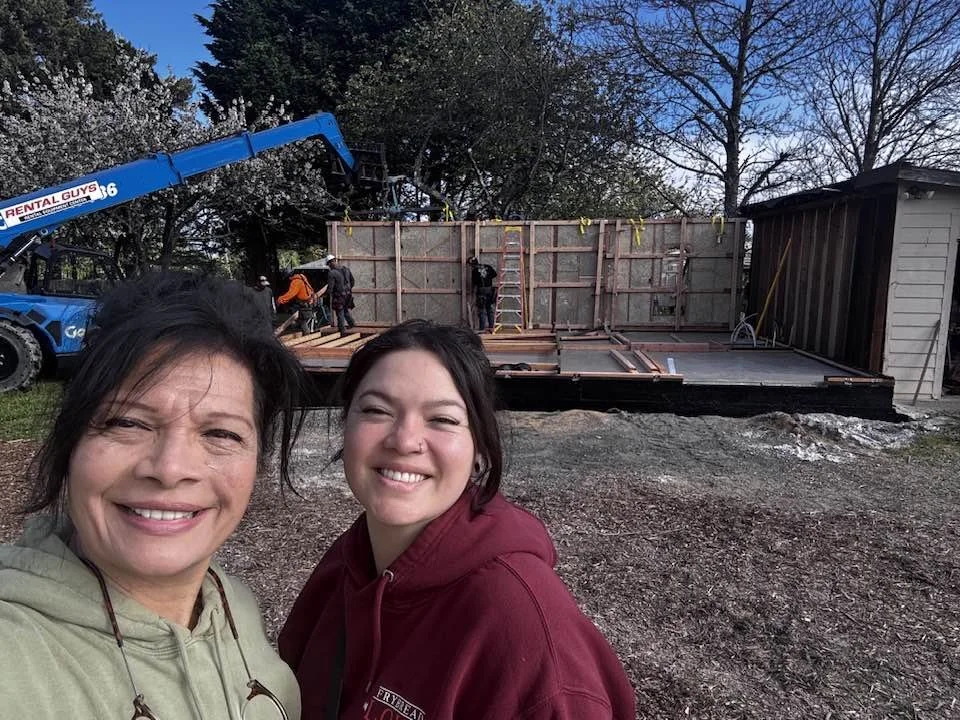
Lisa Sundberg and Aliesha Brown pose in front of the ADU as it is assembled. Photo courtesy of Lisa Sundberg




The Value of Hempcrete
Sundberg believes a tribal-owned hempcrete panel factory is a solution for dilapidated housing where members are burdened with high energy bills and mold issues in the humid climate.
But perhaps the most important selling point in the Pacific Northwest is fire resistance. Hempcrete has long been certified as fire-resistant in the EU and now multiple tests paid for by the US Army have shown hempcrete can pass fire-resistance testing in the United States.
California and the Pacific Northwest is especially prone to wildfire, as the 2024 Los Angeles fires and earlier 2017 North Bay fires have shown.
More than 82 percent of Humboldt County’s area (comprising 2.13 million acres) is categorized in the state’s Fire Hazard Severity zone (FHSZ). More than 55 percent of county residents, or 76,000 people, live in mapped wildfire risk areas and most of the structures in those areas are residential according to the Office of the State Fire Marshal.


Sundberg believes Californians are looking for a natural solution that provides protection from fires and doesn’t involve toxic chemicals like spray foam and other petroleum-derived materials.
“You can’t stop consumer demand,” she said. “You can’t stop the science and reality.”
Meanwhile, Joann Kerns said she is already enjoying the new structure in her yard. With its 8” thick walls and high ceilings, the ADU “has a feeling of security,” Kerns said. Even before windows were installed, she noticed ”it has this acoustical property where it cuts off the outside noise. And I’m really sensitive to noise,” she added. Kerns says she’s looking forward to downsizing and moving into the ADU to free up space in her 3-bedroom home built in 1914, according to country records. She’s also looking forward to the warmth of thick hempcrete walls during cold northern California nights, she said.
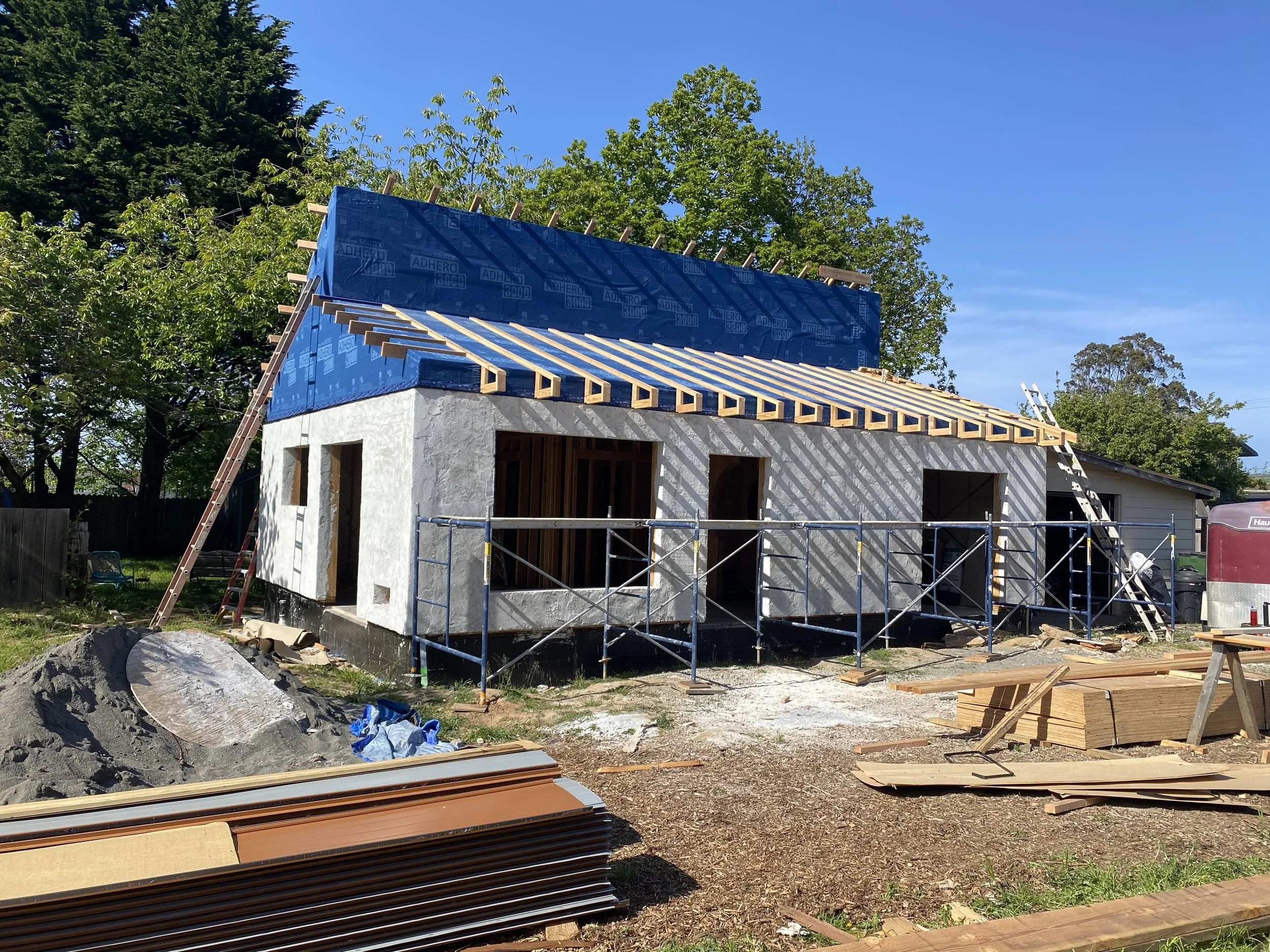
The hempcrete ADU received its first plaster coat and was prepared for the roof to be installed. Photo courtesy of Chrissy Backman
The new build will “pave the way to scalability,” Sundberg said. The next step will be College of the Redwoods taking on the accreditation of the French hempcrete training while IHI hosts workshops, she said. Long term, the goal is manufacturing binder in the USA and sourcing local hemp to localize the supply chains.
“We have the talent in our community to pull this off at a local level,” Sundberg said.



Please Support Our Classified Advertisers
(To find out more about advertising CLICK HERE).
Publications
Hemp Building Directory 2025 - Guide to the International Hemp Building Industry
Hempsteads: Architectural details for hemp-lime construction, by Timothy Callahan
Green Builders
Build your hempcrete dream house in Austin, TX with Gradek Contracting and Design
High Desert Hemp Homes - Building with hemp in the Rocky Mountains
Experienced Natural Building Engineering Services from Verdant Structural Engineers, CA
Naturalia Construction, Colorado-based Sustainable Construction with Hemp
Aaron Grail Construction, No. Cal: The intersection of art, design and performance
Hemp Building Research and Training
Hemp Build School online and IRL for Homeowners and Professionals
Follow the Hemp Casita to learn more about building with hemp.
Hemp Hurd (shivs)/Hemp Fiber/ Hemp Microfiber
CannaVision, Fort Worth, TX: Home of the Pulsewave Hemp Processor
IND HEMP: Supporting Farm Families and Rural Communities with Natural Materials Processing
Wyoming Hemp Company - Industry-leading industrial hemp suppliers
Aggricrete, TX, Natural Materials with Superior Sustainability
Hempcrete installers/Insulation subcontractors
Americhanvre Cast Hemp: Supplies, Equipment, Experienced Hempcrete Installation
Hemp Build Network: We Make Building with Hemp Possible, New Braunfels, TX
Hemp Building Company: Hempcrete installation, supplies Lafayette, CO
Hemp Batt Insulation/Supplies
Lime Binder
Hemp Wall Panel Products
Preorder your hempcrete tiny house from Sativa Building Systems
Panel solutions from Homeland Hempcrete
Hemp Composite Boards
Bison Biocomposites produces sustainable thermal insulation, hempcrete, hemp hurd, and more.
Hemp Blocks