Austin, TX Celebrates Adoption of Hempcrete, Book Launch
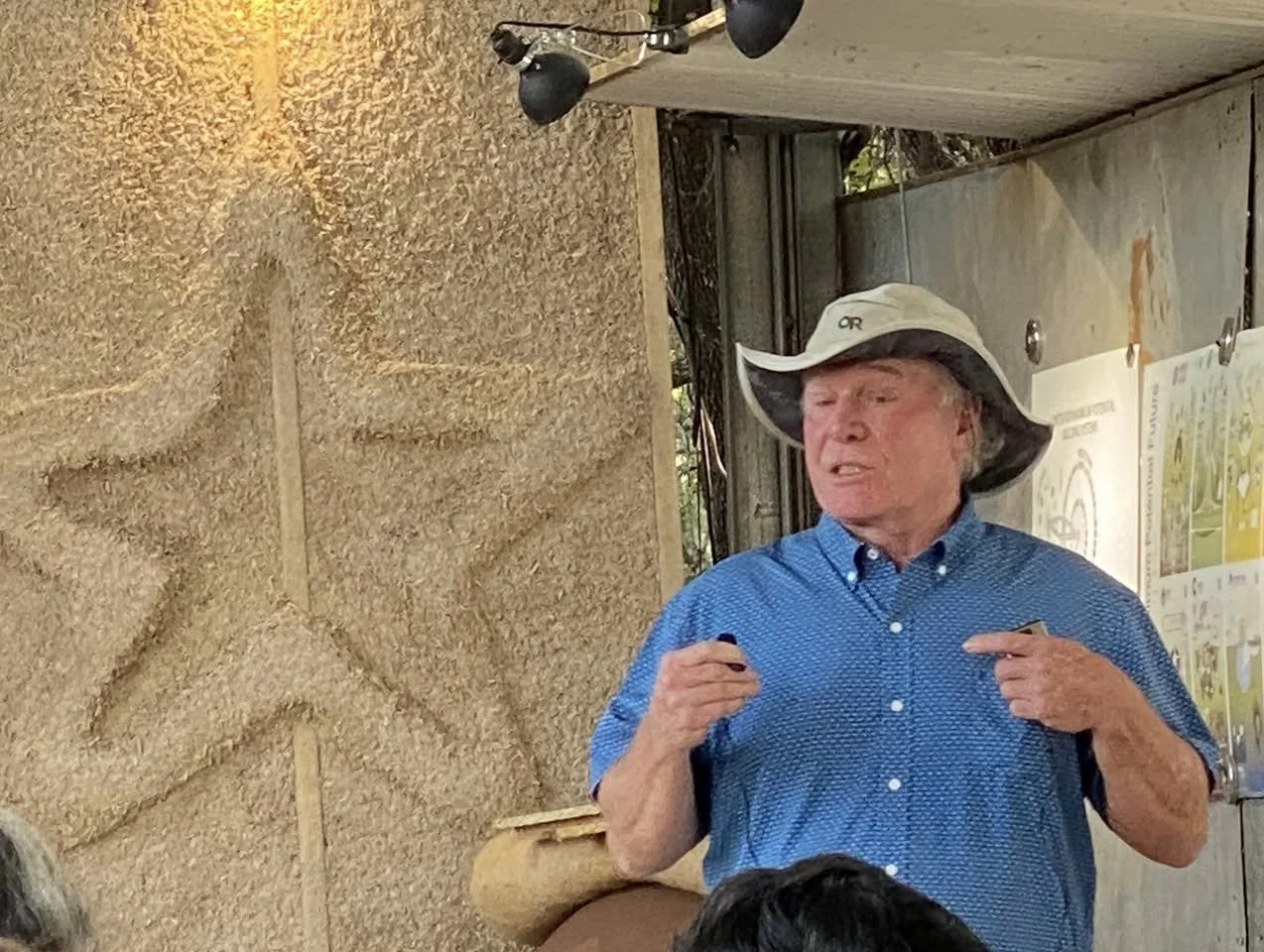
Hempcrete designer/builder Tim Callahan, who co-authored the hemp-lime appendix in the 2024 International Building Code, addresses the crowd at a celebration of Austin’s adoption of hempcrete into the local building codes at the Center for Maximum Potential Building Systems (CMPBS). Photo courtesy of Jean Lotus
Austin, TX Celebrates Adoption of Hempcrete, Book Launch

By Jean Lotus
Architects, builders and hemp homeowner hopefuls gathered in Austin July 11 at a landmark event celebrating the city’s formal adoption of hemp-lime construction (commonly known as “hempcrete”) into its residential building codes. The event, hosted at the Center for Maximum Potential Building Systems (CMPBS), also marked the official release of Hempsteads: Architectural Details for Hemp-Lime Construction, a new book by North Carolina–based designer and builder Tim Callahan.
Callahan, a co-author of the 2024 International Residential Code Appendix BL, adopted by the City of Austin, spoke to the crowd reflecting on the journey of hemp-lime construction in the U.S., offering insight from decades of design experience and addressing the road ahead for biogenic building materials.
“This is not just about a material,” Callahan told the crowd. “It's about a systems shift—how we think about health, housing, and our responsibility to the planet.”
A Long Time Coming
Callahan’’s introduction to hemp lime and natural building came in 2009 when he built a prototype in Asheville, NC called the “Nauhouse” with partner and one-time co-auther Clarke Snell, now an Industry Associate Professor at the Stevens Institute of Technology in New York.
Callahan gave a shoutout to the Center for inspiring his partner in the 90s when Snell (an Austin native) served as an intern at the CMPBS. Founded in 1975, the CMPBS is an educational building science and urban-planning research non-profit. Callahan thanked Center founders Pliny Fisk III and Gail Vittori said the “profound influence” of the center’s work led to original work. “So there’s a part of me that owes you a deep debt of gratitude just for what you’ve done and all the people you have influenced in this world,” Callahan said.
The Center has hosted multiple hemp-lime workshops over the years, including most recently a panel spray workshop with Pennsylvania-based Americhanvre. In fact, Callahan delivered his remarks in front of a hempcrete-sprayed panel from that workshop.
The event in Austin, Callahan said, felt like a kind of full-circle moment. “This feels to me like the completion of a dream, really… To see that a city like Austin has adopted this as part of their building code, and that you're all here interested in taking it forward, I think is just amazing.”
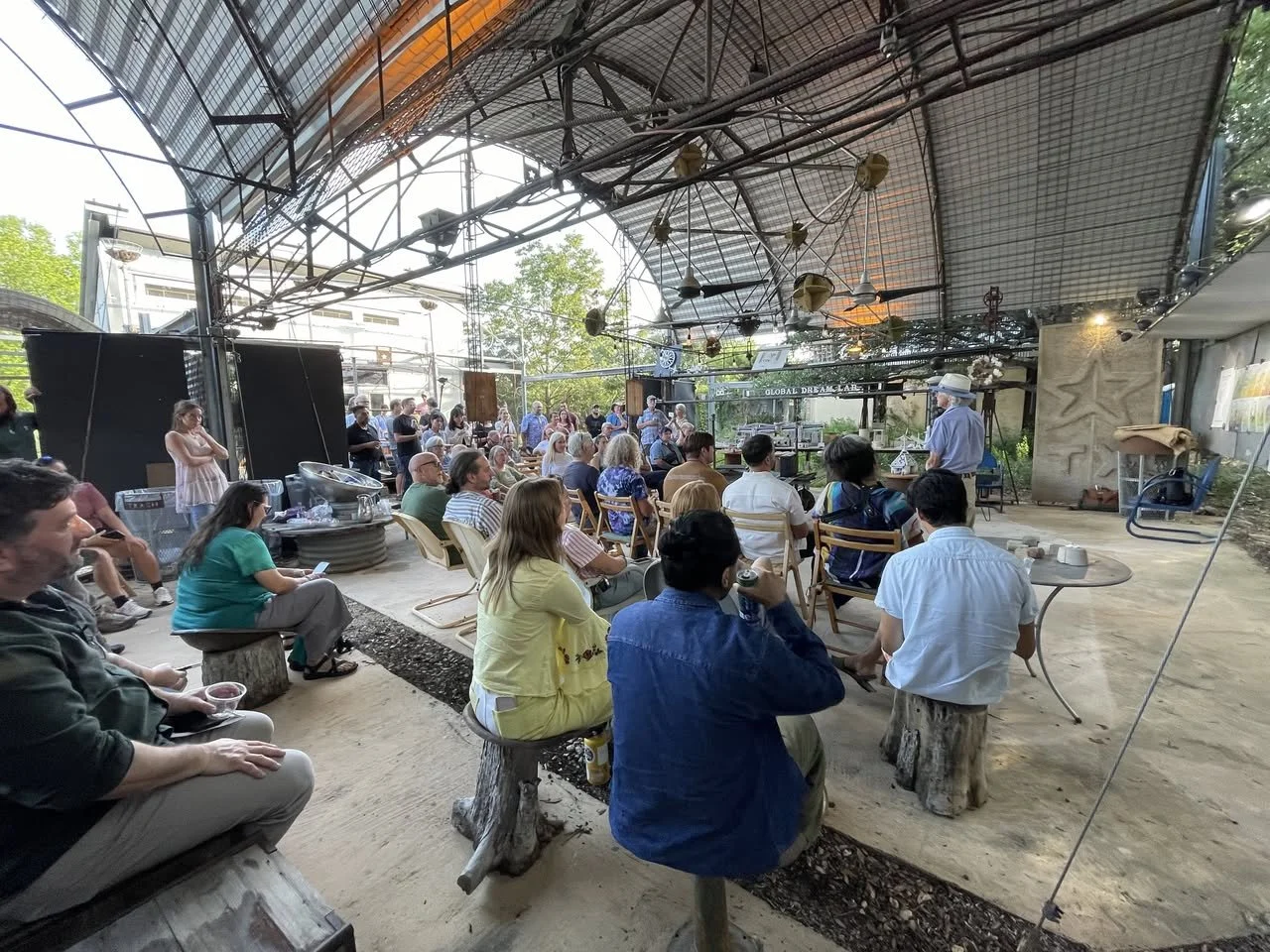
Center for Maximum Potential Building Systems founder Pliny Fisk III regales the crowd with historical episodes from the history of the Center. Photo courtesy of Gail Vittori






A Systems Approach to Materials
While Callahan is known for his technical knowledge, his remarks emphasized the holistic approach needed for sustainable construction. He reminded attendees that no single material — even one as promising as hempcrete — is a “magic bullet.”
“Buildings are living things,” he said. “Everything is in a dynamic interaction with every other component.” He likened the design process to conducting a symphony: “Everyone has to play their part at the right time… if it all is put together and blends in a way that’s harmonious, then you have a building that is going to be sustainable over time.”
Callahan also underscored the role of bio-based materials in promoting healthier indoor environments. He entered natural building after falling ill from chemical exposure in a past job. “I got very sick… and it really is what moved me into closely examining what I’m putting in — not just what I’m working with, but what’s going to be there for other people.”
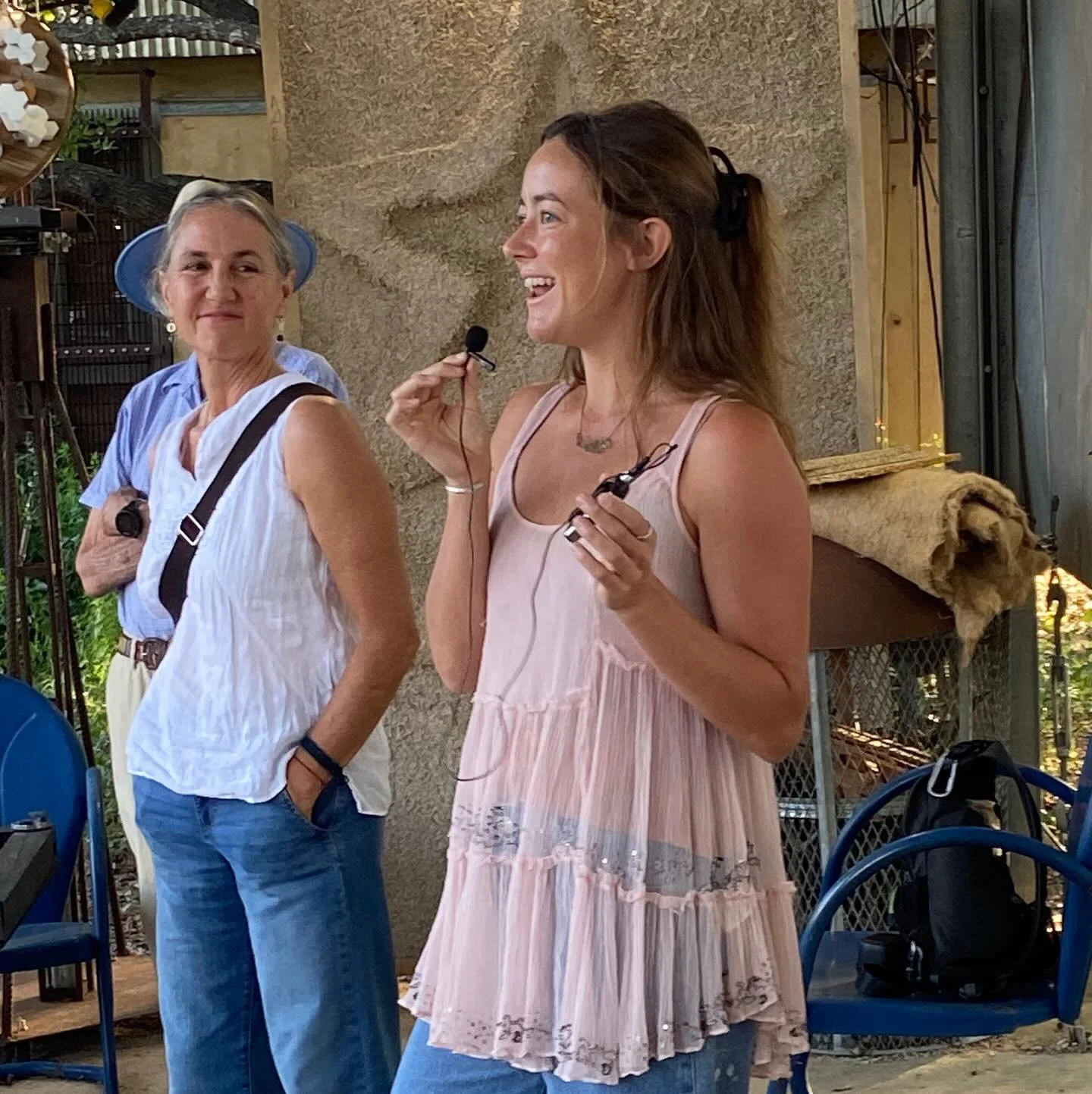
Lauren Stanley, AIA, (L) and designer Caroline Dunn (R) of the Austin AIA Resiliency & Climate Response Committee talk about the team that presented hemp-lime to the city building code authorities this spring. Photo courtesy of Gail Vittori



Austin becoming the first major U.S. city to officially adopt Appendix BL “Hemp-Lime (Hempcrete) Construction.” The new code, as of July 10, allows hempcrete to be used in permitted residential construction, streamlining the approval process for builders using this carbon-sequestering material.
The Austin AIA’s Resiliency and Climate Response Committee worked with local building code officers to bring the adoption of the appendix to the city’s Technical Building Codes as an innovative building material.
“Hempcrete offers a low-carbon alternative to traditional concrete and aligns with the city’s broader goals to reduce greenhouse gas emissions in the building sector,” a press release said.
Austin has been a trend-setter in energy efficient construction. In 1991, the Austin Energy Green Building program developed the first rating system in the U.S. for evaluating the sustainability of buildings, inspiring many cities to follow. Today, the AEGB provides resources to help builders and designers choose the most sustainable building materials and methods.
At the event was hempcrete builder Carl Gradek, who previously built a two-story permitted hempcrete ADU under an alternative pathway. ”I am so proud that I live in one of the most progressive cities in the nation,” Gradek said when hempcrete was approved by the city council. Callahan also mentioned his work with Austin Realtor Henry Valles in 2019 to build a small hempcrete tiny house in Austin’s Community First! Village.




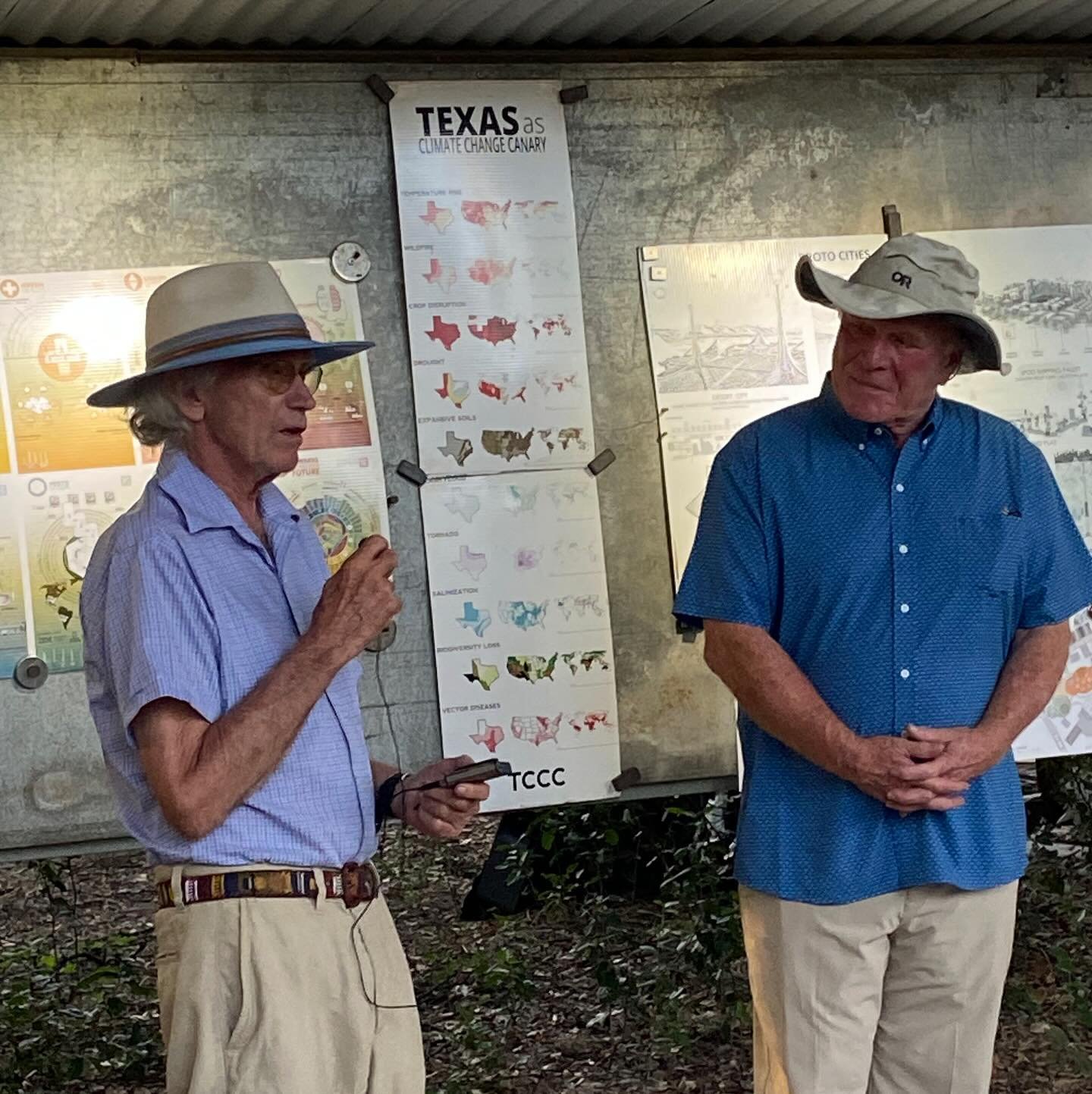
Pliny Fisk III (L) and Tim Callahan (R) discuss natural building at the celebration of the adoption of hempcrete at the Center for Maximum Potential Building Systems. Photo courtesy of CMPBS
Performance and Practicality
In his remarks, Callahan touched on the technical strengths of hemp-lime, including its resistance to mold, insects, and fire. “The alkalinity of lime — with a pH of 12 — makes it a very unfriendly environment for mold and insects,” he said, while cautioning that no system is fail-proof. “It’s not like if you use hempcrete, you’ll never have any mold. Mold is everywhere… But this addresses the big ones — particularly in exterior walls.”
He also discussed efforts underway to secure additional fire-resistance certifications. Although an earlier ASTM E-119 test for a one-hour fire rating fell short due to technicalities, Callahan and collaborators expect further testing this fall to confirm performance and support code inclusion for 2027.
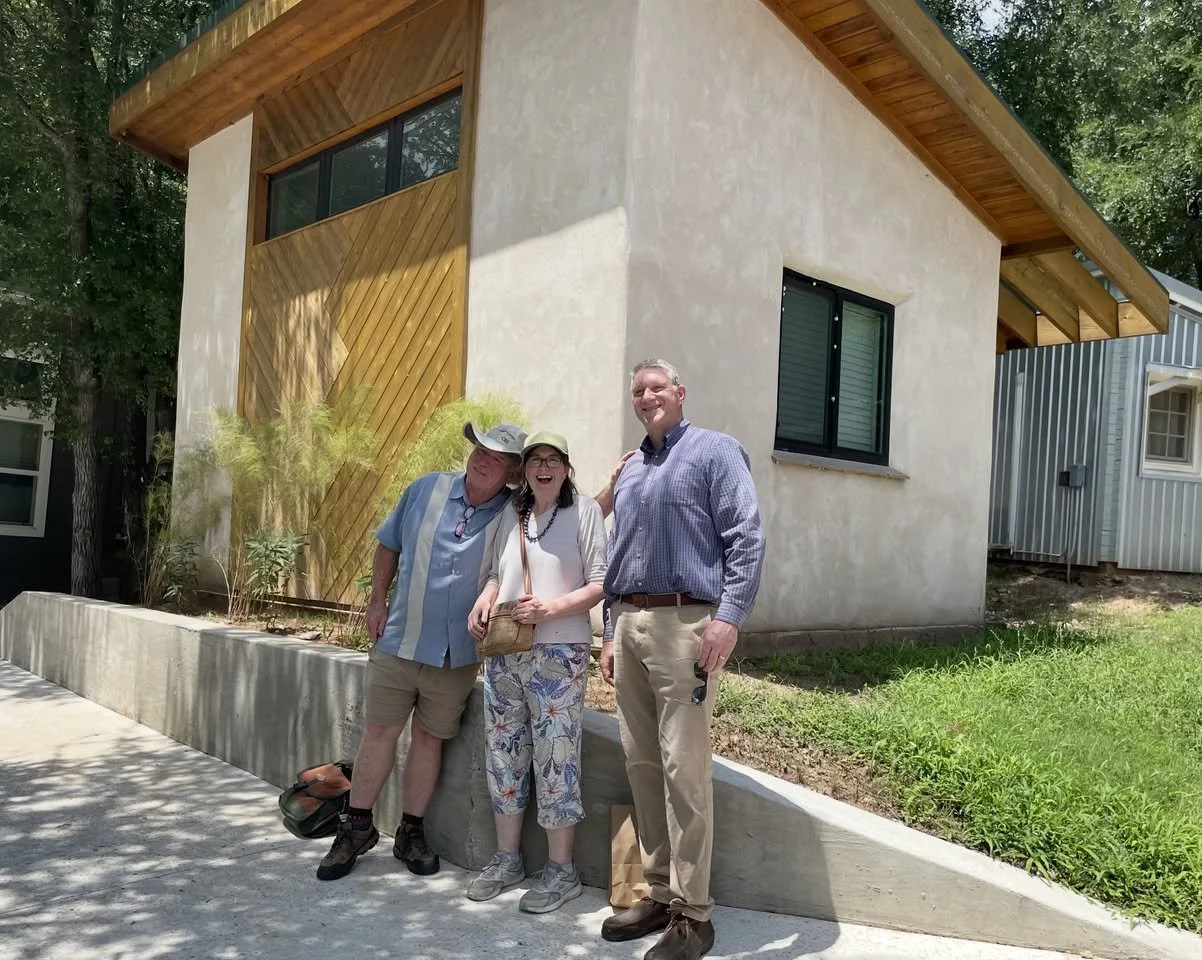
A visit to a hempcrete prototype partially designed by Tim Callahan (L) at the Community First! Village in Austin with Jean Lotus of HempBuild Mag and Ray Kaderli of Hemp Build Network. Photo courtesy of Jean Lotus




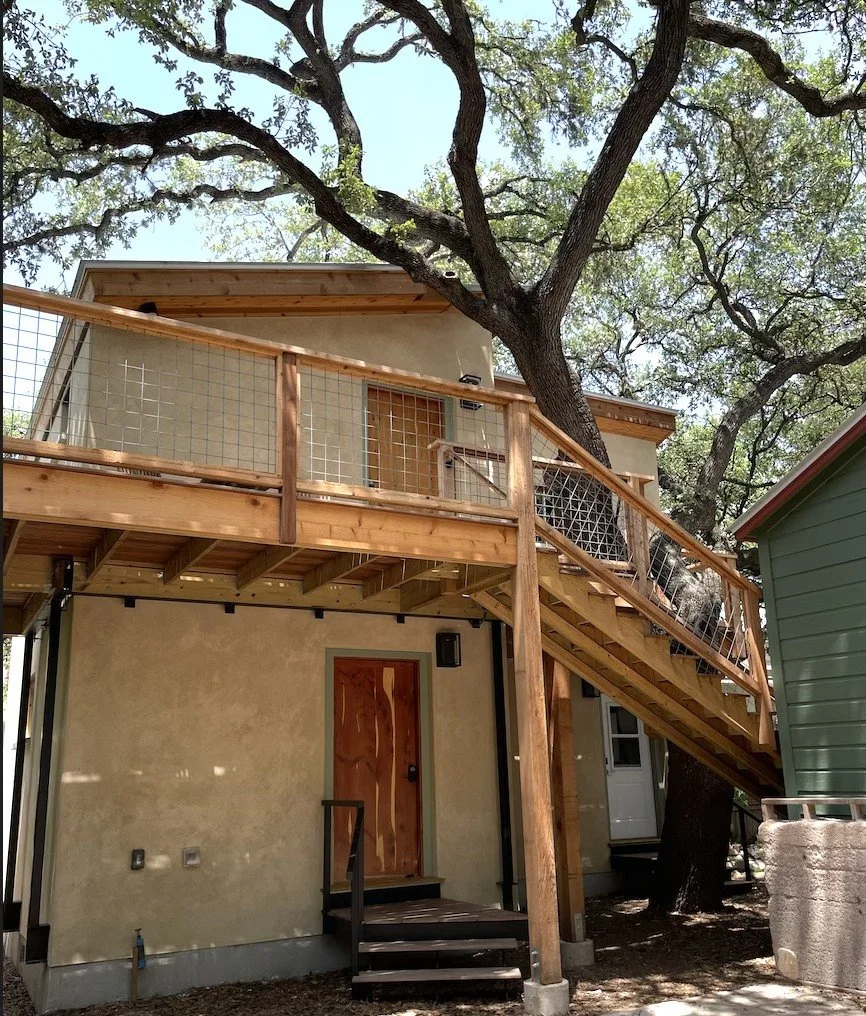
A hempcrete ADU built in Austin last year by Carl Gradek, Gradek Construction, under an alternative materials variance. Photo courtesy of Jean Lotus




Open Source and the Path Ahead
Throughout the talk, Callahan emphasized knowledge-sharing and collaboration. “We’re really just beginning,” he said. “There’s still so much to learn, and that’s what makes it exciting.”
He urged builders, architects, and homeowners to share what they know and remain open to critique. “What we put on the ground is going to affect its immediate environment — and things beyond that we don’t even see — for hundreds, possibly hundreds of years,” he said. “So I think it’s important to think beyond our own lives.”
With Hempsteads now available and Austin’s code change on the books, Callahan sees the momentum building. “Austin could be like a plant system,” he said. “A lot of things develop underground, and then suddenly things come together and new things arise.”
For builders and designers working with hemp-lime, he added, “I feel like I’m just beginning.”
Watch Callahan’s remarks here.



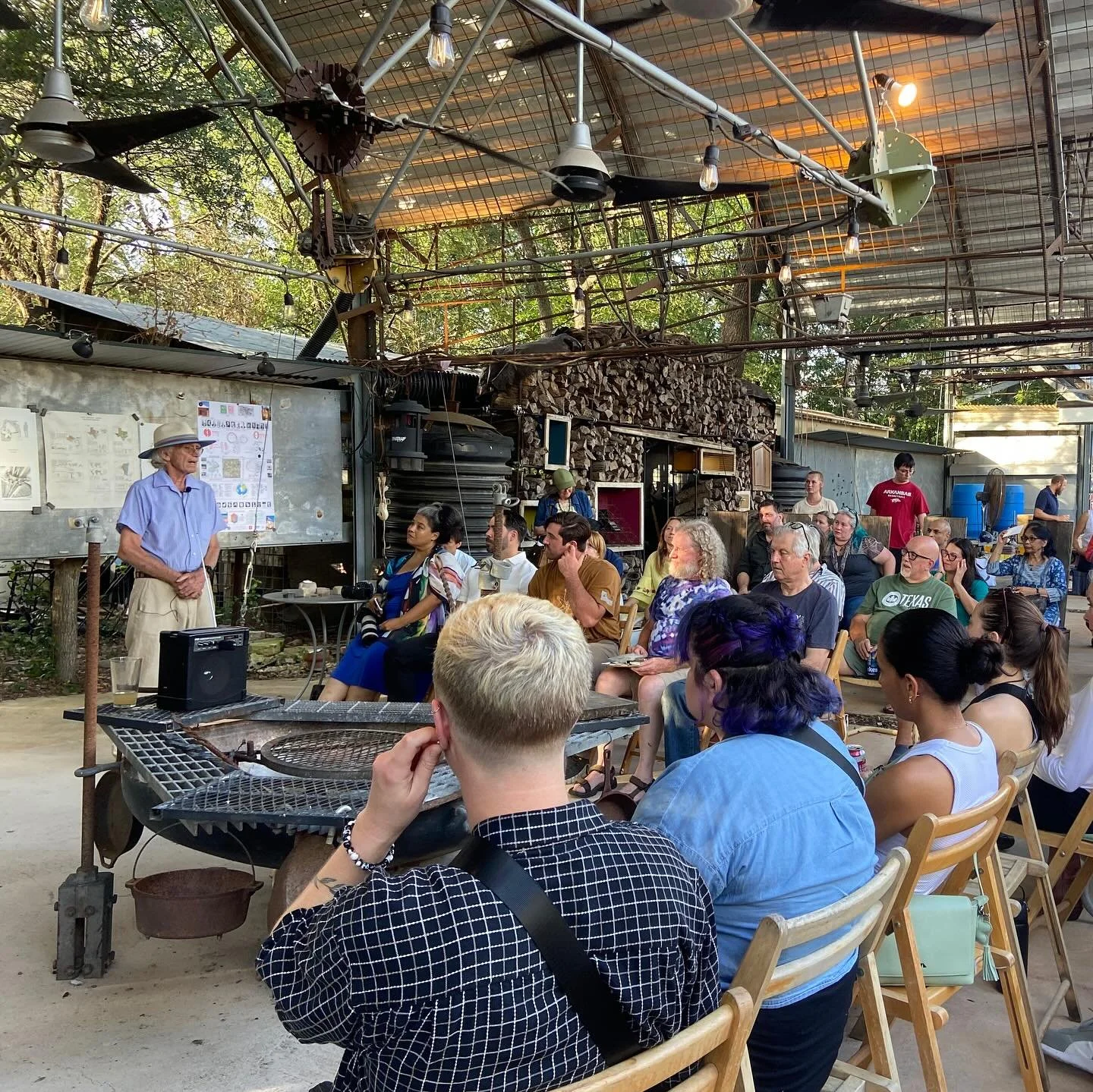
Photo courtesy of the Center for Maximum Potential Building Systems
Please Support Our Classified Advertisers
(To find out more about advertising CLICK HERE).
Publications
Hemp Building Directory 2025 - Guide to the International Hemp Building Industry
Hempsteads: Architectural details for hemp-lime construction, by Timothy Callahan
Green Builders
Build your hempcrete dream house in Austin, TX with Gradek Contracting and Design
High Desert Hemp Homes - Building with hemp in the Rocky Mountains
Experienced Natural Building Engineering Services from Verdant Structural Engineers, CA
Naturalia Construction, Colorado-based Sustainable Construction with Hemp
Aaron Grail Construction, No. Cal: The intersection of art, design and performance
Hemp Building Research and Training
Hemp Build School online and IRL for Homeowners and Professionals
Follow the Hemp Casita to learn more about building with hemp.
Hemp Hurd (shivs)/Hemp Fiber/ Hemp Microfiber
CannaVision, Fort Worth, TX: Home of the Pulsewave Hemp Processor
IND HEMP: Supporting Farm Families and Rural Communities with Natural Materials Processing
Wyoming Hemp Company - Industry-leading industrial hemp suppliers
Aggricrete, TX, Natural Materials with Superior Sustainability
Hempcrete installers/Insulation subcontractors
Americhanvre Cast Hemp: Supplies, Equipment, Experienced Hempcrete Installation
Hemp Build Network: We Make Building with Hemp Possible, New Braunfels, TX
Hemp Building Company: Hempcrete installation, supplies Lafayette, CO
Hemp Batt Insulation/Supplies
Lime Binder
Hemp Wall Panel Products
Preorder your hempcrete tiny house from Sativa Building Systems
Panel solutions from Homeland Hempcrete
Hemp Composite Boards
Bison Biocomposites produces sustainable thermal insulation, hempcrete, hemp hurd, and more.
Hemp Blocks