MN Moves to Adopt Hempcrete, Strawbale in Residential Building Codes

Minneapolis strawbale home designer, Janneke Schaap (L) high-fives Danny Desjarlais of the Lower Sioux Hempcrete Group (R) after the first approval of natural building appendices in the Minnesota state residential building codes. Photo courtesy of Simona Fischer, AIA
MN Moves to Adopt Hempcrete, Strawbale in Residential Building Codes

By Jean Lotus
Minnesota appears to be the first US state on the path to adopting the newest official residential building codes featuring plant-based building materials after a July 15 hearing in St. Paul.
The state’s Technical Advisory Group (TAG) to the Construction Codes Advisory Council approved adoption of Appendix BL (Hemp-lime “Hempcrete”) and Appendix BJ (Strawbale Construction) of the 2024 International Residential Codes (IRC).
The nine-member TAG group voted 8-1 in favor of hempcrete and 7-2 in favor of strawbale, said advocates who had to appear before the advisory board twice with significant revisions to finally get approval.
“When we walked out of the hearing we were hugging and high-fiving and screaming,” Danny Desjarlais, head of the hempcrete team at the Lower Sioux Community in southwestern Morton, MN told HempBuild Mag.
Sign up for our free newsletter






Desjarlais credited an international “Dream Team” of more than 20 local and North American architects, engineers and building-science pros committed to using non-toxic natural bio-based materials. “They did all the hard work,” Desjarlais said.
The North Star State has been a center of US hempcrete construction activity and activism mostly thanks to the determination of the Lower Sioux, of one of the nation’s tiniest tribal communities.
Tribe members, with a home-grown hempcrete team, have already built four hempcrete homes on their reservation, largely from hemp grown and processed on site. The Lower Sioux received a nearly $5 million grant in 2024 from the US Environmental Protection Agency to renovate 30 homes with hempcrete on the reservation.
It also helped that a local Minnesota first-time lawmaker, Rep. Katie Jones of the Minnesota House had recently built a straw bale home in Minneapolis and was present at the hearing, Desjarlais said.
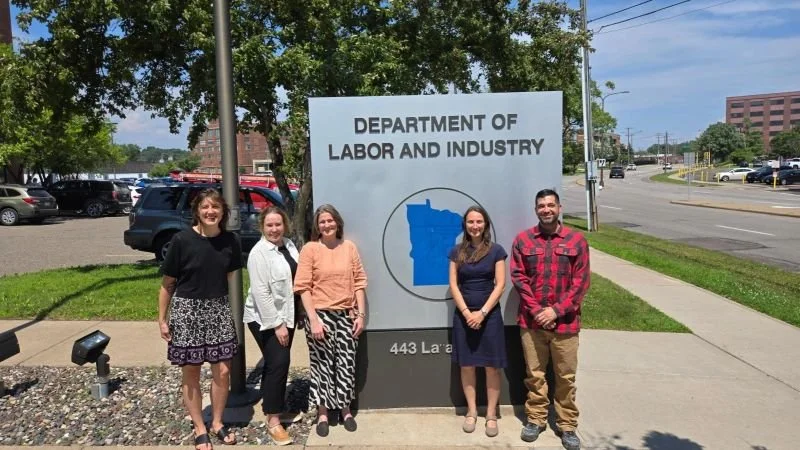
Minnesota’s “dream team” members achieved a win for strawbale and hempcrete adoption. L-R Janneke Schaap, Simona Fischer, AIA, Anna Koosmann, AIA Rep. Katie Jones, Danny Desjarlais. Photo courtesy of Katie Jones
Local Minnesota dream-team members included Rep. Jones’s Minneapolis-based strawbale designer, Janneke Schaap and architects Anna Koosmann, AIA and Simona Fischer, AIA.
Other advocates were expert natural building code writers including Berkeley, CA-based architect Martin Hammer and engineer Anthony Dente of Verdant Structural Engineers; Tucson-based architect David Eisenberg of the nonprofit Development Center for Appropriate Technology (DAT) and Canadian Building Science Engineer John Straube of RDH Building Science and the University of Waterloo.
“We all worked on the presentations a lot together,” Hammer told HempBuild Mag. “That was definitely teamwork. These proposals needed guidance and input to get it right.”
Panelists seemed worried more codes would equal more work for building inspectors, Tom Rossmassler, CEO of Massachusetts-based HempStone, LLC told HempBuild Mag. (Rossmassler zoomed in by video). “But building inspectors don’t need to memorize the code, you just need to quickly look up what you need, including the exceptions,” Rossmassler added.


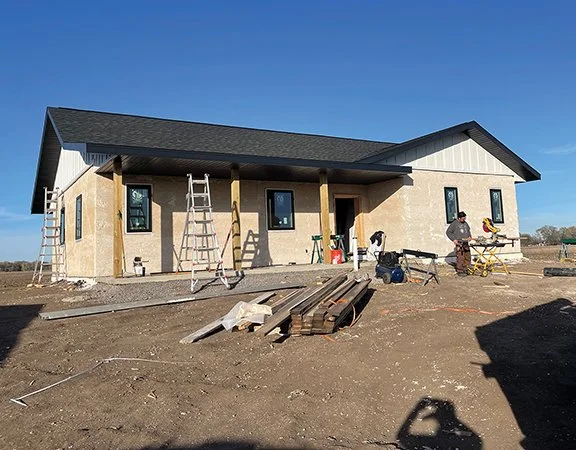
A four-bedroom hempcrete home built on the Lower Sioux Community reservation. Photo courtesy of Ashley Satorius.
Why so much excitement over an arcane building code tweak?
Adopting natural building methods into the official state code means cutting red tape for builders, designers and homeowners, making things much more affordable to build a hempcrete or strawbale home. Plus, these determinations come around in cycles, and the next chance to adopt new codes would be in 2031.
Still need final approval
The code changes still need to be finally approved by the state building officials at the overarching agency, the Minnesota Department of Labor and Industry.
But advocates believe that will soon happen. The hard work is done.
Online, architect Koosman called the decision a “major victory” and added, “Minnesota homeowners, builders and building officials can now simplify the permitting process for safe, durable and healthy homes.”
The 2024 IRC is the first time hemp-lime has been included in the national code. Strawbale has been included as an appendix in the IRC since 2015, but while there exist probably 1,000 strawbale homes in western states like California, only a handful exist in Minnesota.
Working on Rep. Jones’s first permitted straw-bale house in Minneapolis in 20 years drove home to designer Janneke Schaap the idea that the code had to be adapted to make these projects easier, she told HempBuild Mag.
“We had to go through the regulatory journey of an alternative compliance and due diligence to get a permit, and we thought there must be some way to make this journey easier with building codes,” she said. The Uptown Strawhouse was started in 2018 and took almost four years to complete.



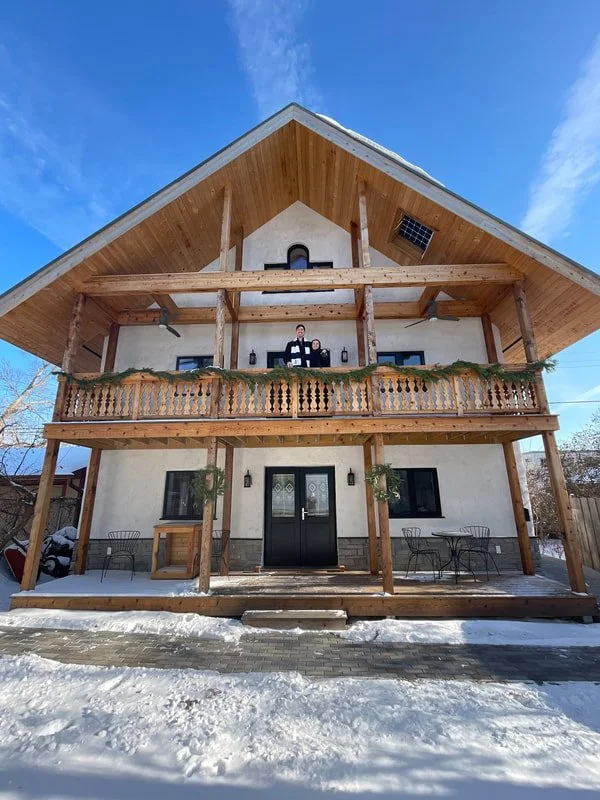
The Uptown Strawhouse in Minneapolis was started in 2018 and took almost four years to complete, partially because of building code hurdles. Photo courtesy of Katie Jones.
In the first round, TAG officials voted against the straw-bale appendix and sent the hempcrete proposal back for more details.
Schaap believes they were skeptical that a natural building method popular in California would be appropriate for the blazing humid summers and bone-chilling winters of Minnesota in Climate Zones 6-8.
Schaap and the team went to work, spending hours with consultants rewriting the proposed code to acknowledge the unique Minnesota climate.
The secret ingredient that turned a “no” vote into a “yes,” she believes, was the building science work of John Straube of Waterloo, since Ottawa, Canada is even colder and more extreme than Minnesota, she believes.
“Janneke is a freaking Wonder Woman,” Desjarlais noted.
Join our FREE online community here


A news video of the large Rochester MN house hempcreted by Americhanvre’s Ereasy spray system with help from the Lower Sioux team. Video courtesy of KARE 11
Absence of building codes helped build more hemp houses on tribal land
One of the reasons the Lower Sioux tribe was able to move so quickly with hempcrete construction was that as a sovereign nation, the tribe is NOT subject to state building code restrictions. That, and a persistent vision has brought them international attention.
Other tribes have visited, as well as state and local officials. A Patagonia short feature film about the tribe’s hemp-building program The Green Buffalo won first prize at the Santa Barbara Film Festival this year.
In contrast, a large hempcrete home in Rochester, MN built this summer and hemped with the Ereasy spray system by Pennsylvania-based Americhanvre took years of haggling with architects and code officials to finally start construction.
“We started that project in 2022 when the code was first written, before it had even been submitted to the ICC,” Americhanvre owner Cameron Mcintosh told HempBuild Mag.
Being able to point to natural building material appendices in the state building codes would make the process faster and cheaper, the dream team believes.
Advocates hope more states will adopt the 2024 IRC’s natural building appendices, falling in a domino effect as the word gets out.


Already, the City of Austin, TX officially adopted the hempcrete appendix into residential codes in April of this year.
“Forty-nine more states to go,” said Massachusetts-based Rossmassler.
Meanwhile, Minnesota’s hempcrete folks will be celebrating the state’s trailblazing win with the 13th Annual International Hemp Building Symposium, to be held at the Jackpot Casino on the Lower Sioux Reservation October 3-5.
“We have to make it a really big celebration now that Minnesota is the first state to adopt hempcrete,” Desjarlais said.
Clarification: The construction timeline for the Uptown Strawhouse was corrected to four years from 10 years.




Please Support Our Classified Advertisers
(To find out more about advertising CLICK HERE).
Publications
Hemp Building Directory 2025 - Guide to the International Hemp Building Industry
Hempsteads: Architectural details for hemp-lime construction, by Timothy Callahan
Green Builders
Build your hempcrete dream house in Austin, TX with Gradek Contracting and Design
High Desert Hemp Homes - Building with hemp in the Rocky Mountains
Experienced Natural Building Engineering Services from Verdant Structural Engineers, CA
Naturalia Construction, Colorado-based Sustainable Construction with Hemp
Aaron Grail Construction, No. Cal: The intersection of art, design and performance
Hemp Building Research and Training
Hemp Build School online and IRL for Homeowners and Professionals
Follow the Hemp Casita to learn more about building with hemp.
Hemp Hurd (shivs)/Hemp Fiber/ Hemp Microfiber
CannaVision, Fort Worth, TX: Home of the Pulsewave Hemp Processor
IND HEMP: Supporting Farm Families and Rural Communities with Natural Materials Processing
Wyoming Hemp Company - Industry-leading industrial hemp suppliers
Aggricrete, TX, Natural Materials with Superior Sustainability
Hempcrete installers/Insulation subcontractors
Americhanvre Cast Hemp: Supplies, Equipment, Experienced Hempcrete Installation
Hemp Build Network: We Make Building with Hemp Possible, New Braunfels, TX
Hemp Building Company: Hempcrete installation, supplies Lafayette, CO
Hemp Batt Insulation/Supplies
Lime Binder
Hemp Wall Panel Products
Preorder your hempcrete tiny house from Sativa Building Systems
Panel solutions from Homeland Hempcrete
Hemp Composite Boards
Bison Biocomposites produces sustainable thermal insulation, hempcrete, hemp hurd, and more.
Hemp Blocks