Hemp Takes the Stage at 2025 Rocky Mountain Natural Building Conference
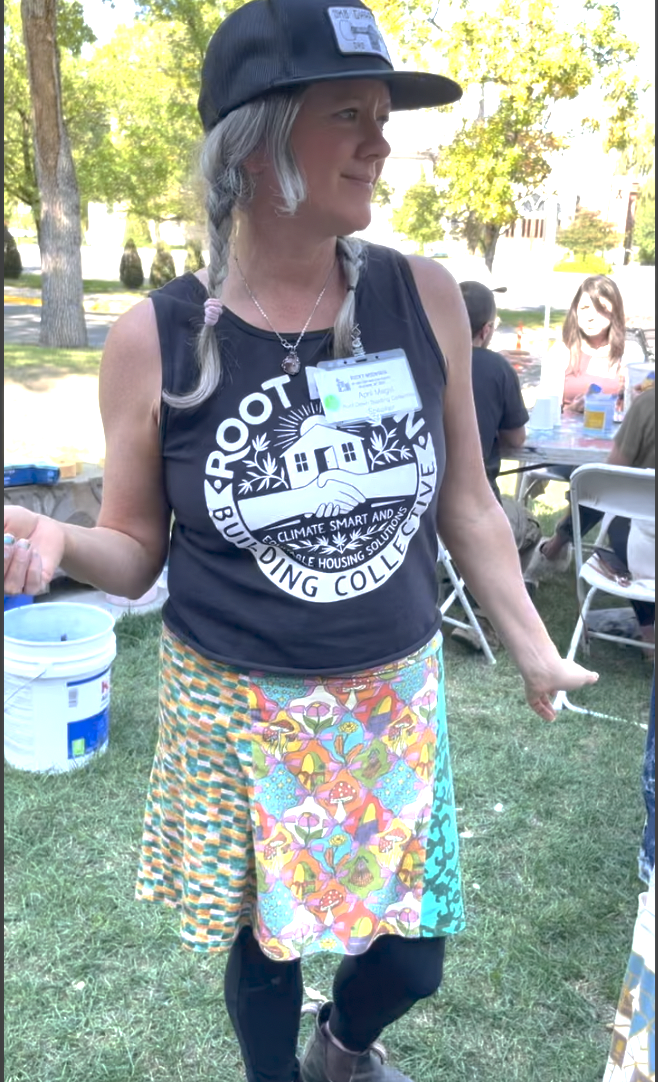
South Carolina natural-building architect April Magill, AIA, assists at a plaster and tadelakt workshop at the Rocky Mountain Natural Building Conference in Bozeman MT. Photo by Jean Lotus
Hemp Takes the Stage at 2025 Rocky Mountain Natural Building Conference

By Jean Lotus
At the 2025 Rocky Mountain Natural Building Conference in Bozeman, Montana, last week, three leaders in hemp-based construction shared their perspectives on the material’s future: Greg Wilson of HempWood, Matt Marino of Homeland Hempcrete, and architect April Magill of Root Down Building Collective. (Full disclosure: I serve as executive director of the conference hosts, the Colorado-based Natural Building Alliance.)
Even though he pioneers of the contemporary natural building movement (sometimes called Bioconstruction) in the United States got their start in the 1990s with straw-bale construction, hemp building was well represented at the conference, along with adobe, straw panel, light-straw clay and other natural building materials and practices.
Additionally, two hemp building materials providers — Idaho-based Hempitecture Inc. and Benton, MT-based IND HEMP — displayed sponsor tables at the conference alongside industry favorite bio-construction engineer, Anthony Dente of Berkeley, CA-based Verdant Structural Engineering. A workshop on the shady lawn of Bozeman’s historic Emerson Center even included hempcrete balls plastered with tadelakt for a “take home” souvenir.






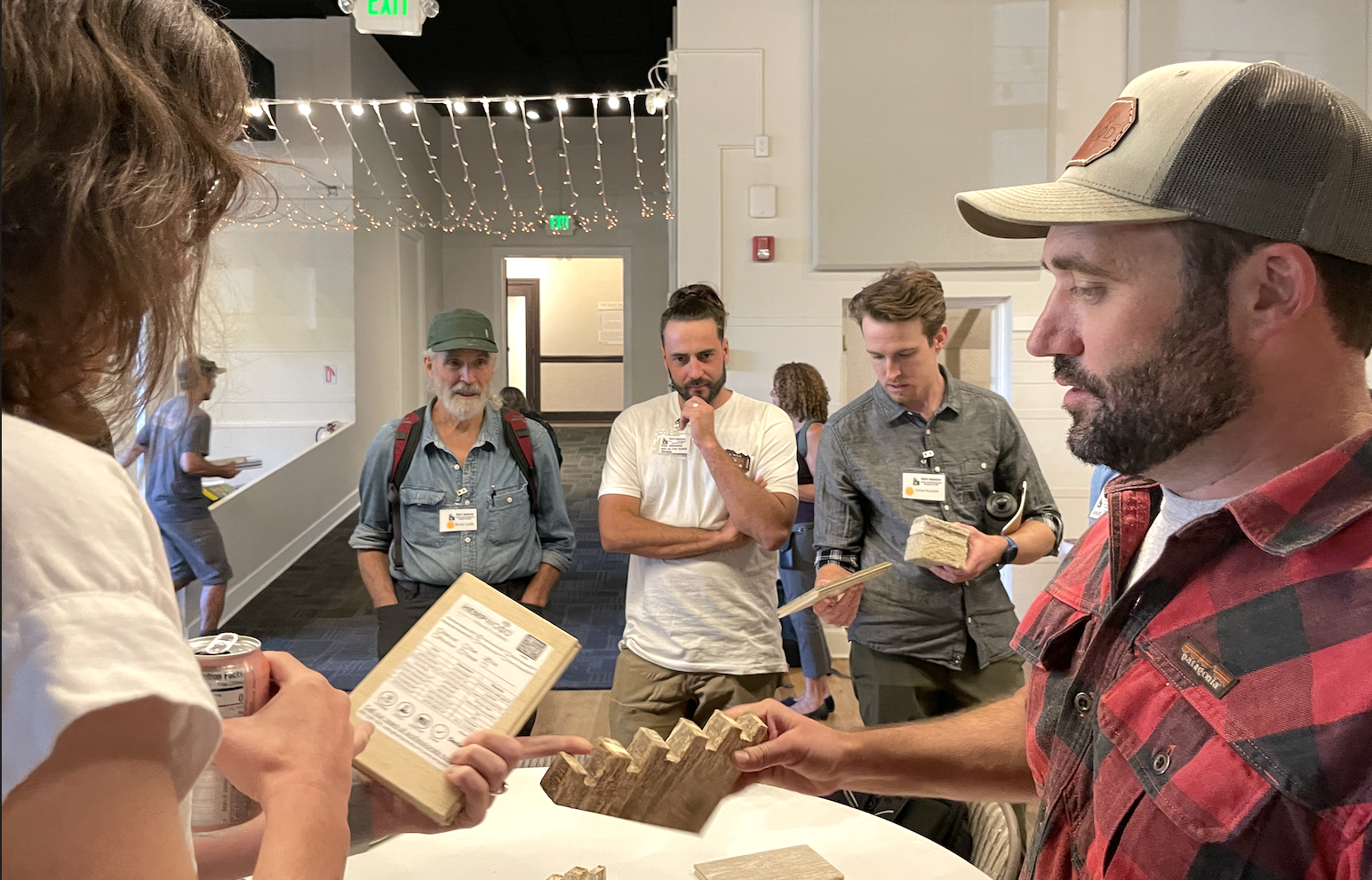
Greg Wilson (far right) shows off HempWood samples to conference attendees at the Rocky Mountain Natural Building Conference in Bozeman, MT. Photo courtesy of Jean Lotus
Greg Wilson: Building Markets for HempWood
Greg Wilson, founder of Murray, KY-based HempWood, detailed his company’s work in creating a carbon-negative alternative to hardwood flooring and panels. Wilson, who previously developed strand-woven bamboo and eucalyptus composites in Asia, has spent the last decade establishing U.S.-based hemp production and processing with a partnership with Murray State University in Kentucky.
Wilson’s manufacturing process is rooted in nature's most efficient algorithm: the Fibonacci sequence. The company, named Fibonacci, uses this ratio for everything from the compression of plant fibers to the dimensions of its products.
HempWood sources all hemp within 100 miles of its Kentucky mill, bonding the hurd with a soy-based adhesive instead of formaldehyde, Wilson said. He alluded to his own health challenges after being exposed to formaldehyde in Asian factories and having part of a lung removed. “I can’t do some of the things I used to do,” Wilson said.
Wilson highlighted the company’s growth into retail and institutional markets, supplying flooring and finishes to Apple, Patagonia, BMW, and Kentucky public schools. He emphasized indoor air quality as a key driver for adoption, pointing to zero-VOC classrooms where healthier materials correlate with better student outcomes. He contrasted this with the use of vinyl flooring, a product he described as a "dirty little secret" containing vinyl chloride, a known cancer-causing chemical.
HempWood is also expanding into cross-laminated hemp products tested for structural use, though Wilson acknowledged cost and scaling challenges. “Everyone who’s tried this has gone broke,” he said about hemp composite sheetgoods.
In the end, Wilson said that HempWood is a product that has an interesting history and healthy benefits. “People aren’t buying because it’s cheaper,” he said. “They’re buying into health and a future story.”



Matt Marino: Prefabrication and the Next Stage of Hempcrete
Matt Marino, co-founder of Bismarck, ND-based Homeland Hempcrete, discussed building a localized supply chain as he traced the company’s shift from hand-cast hempcrete walls to prefabricated panels. Entering the industry shortly after the 2018 Farm Bill, Marino and his wife/buisiness partner Sam Marino sourced hemp hurd from Canadian animal bedding suppliers before U.S. production began.
Marino said he responded to the idea of a hemp-lime wall infill as a way to simplify an "over-complicated building envelope."
Over the past decade, Homeland has built projects in 13 states, refining methods while responding to regional priorities such as fire resistance in the West and mold resistance in Louisiana, Marino said.
Marino identified labor, curing time, and seasonal constraints as barriers to widespread adoption. Prefabrication, he argued, is the solution: “We went from weeks on-site to closing in a building in four days,” he said of a recent West Virginia project.
Homeland Hempcrete now manufactures structural and insulated panels they call “SHIPs” designed with hempcrete. Marino also showcased how the company partners with other hemp businesses, including using HempWood for interior features and Hempitecture’s hempwool for ceiling insulation.
Marino stressed that localized supply chains are critical to scale, citing recent projects in Montana that used Montana-grown hurd.
“It’s about closing the loop so builds use regional material,” he said.
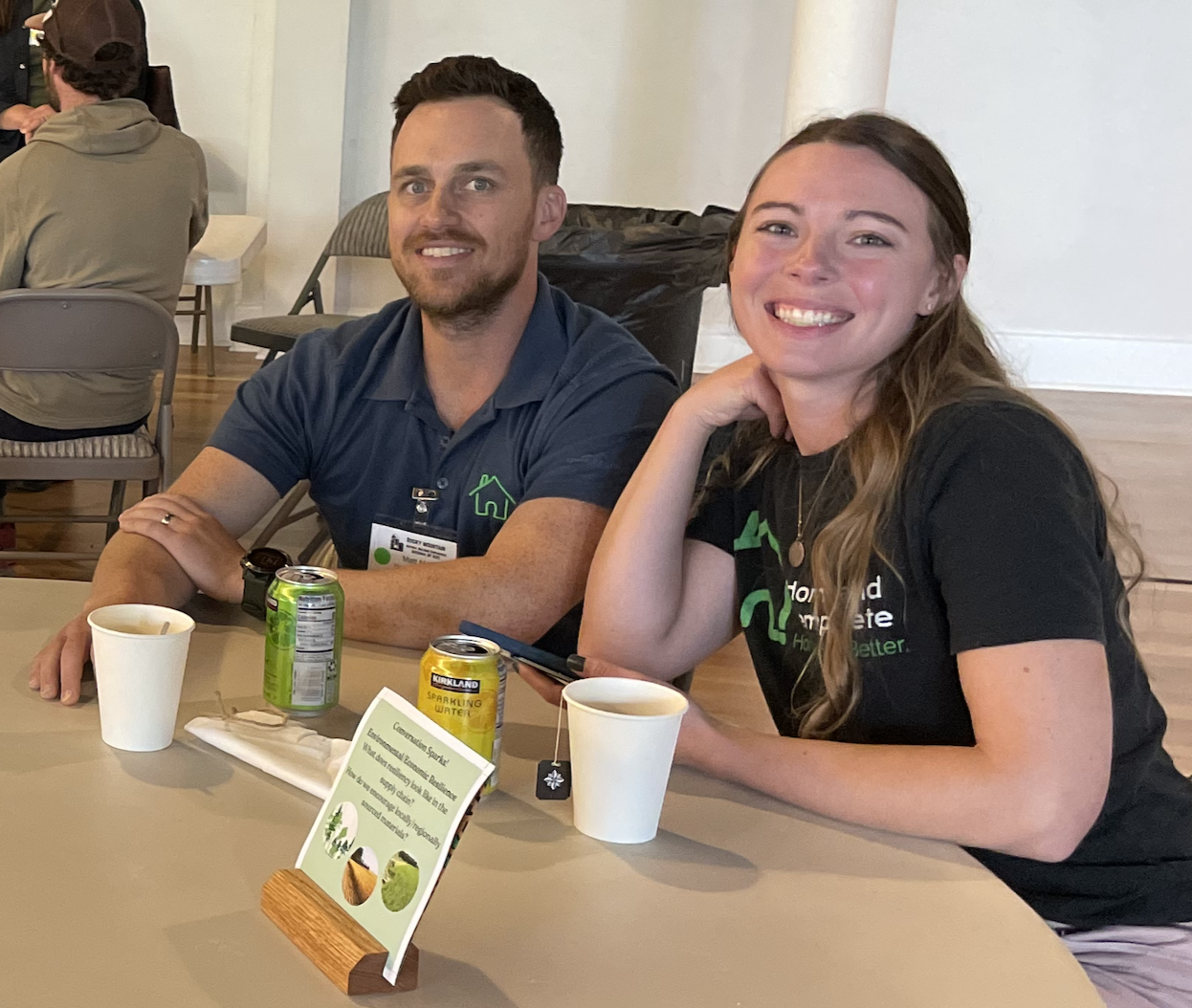
Co-founders Matt and Samantha (Sam) Marino, of Bismarck, ND-based Homeland Hempcrete socialize at the Rocky Mountain Natural Building Conference in Bozeman. Photo courtesy of Jean Lotus




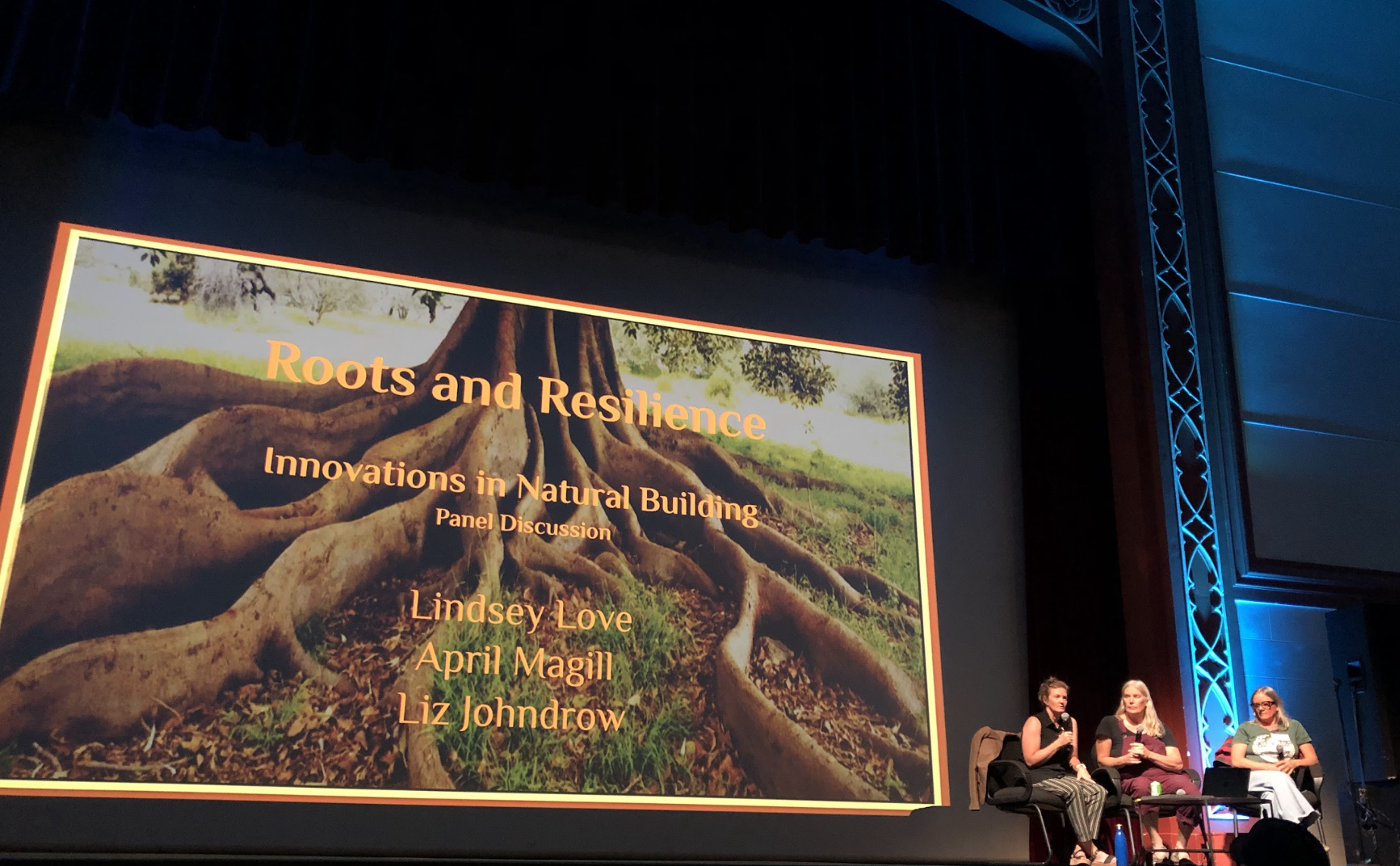
April Magill (R) discusses innovations in natural building with Idaho-based architect Lindsey Love and Vermont-based natural builder Liz Johndrow. Photo courtesy of the Natural Building Alliance
April Magill: Designing for Healthy and Equitable Housing
Architect April Magill, founder of Charleston, SC-based Root Down Building Collective, said her journey from a conventional firm to natural building was sparked by a realization that a LEED Platinum federal project she worked on was "full of concrete and foam and glass" and didn't feel right. After discovering the term "natural building," she quit her job and took a workshop that inspired her to use her hands and focus on healthier materials, she said.
Her work has connected hemp construction to broader questions of equity and housing justice. Her nonprofit, established in 2022, pursues “climate-smart and equitable housing solutions,” including a recent hempcrete pilot designed as a panelized prototype for replacing mobile homes in the hurricane-prone Southeast.
“We see hempcrete as a mechanism that can foster new agricultural pathways for Black farmers and create regional farm-to-building cycles,” she said. Her projects integrate performance monitoring, with embedded sensors tracking moisture and thermal behavior in southern climates.
Magill's work, through her practice Root Down Designs, focuses on healthy buildings that use "red-list free" and ethically sourced materials. To make this type of construction more accessible, she founded Root Down house plan company, which offers high-quality house designs at a fraction of the cost of custom architecture. This includes a collection of hempcrete house plans called "Hempstead Living."




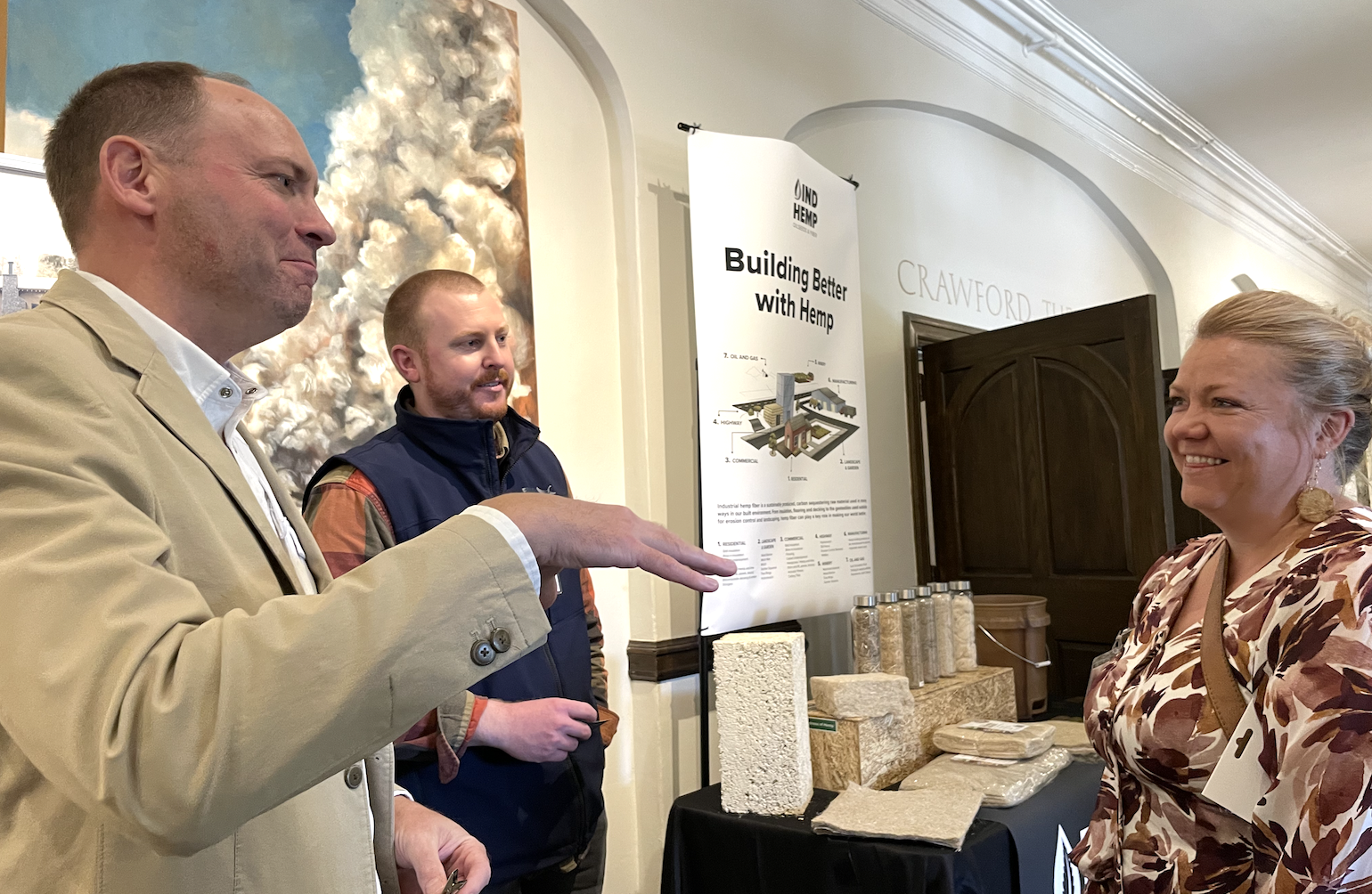
Montana-based IND HEMP was among the sponsors at the Rocky Mountain Natural Building Conference in Bozeman. Photo courtesy of Jean Lotus




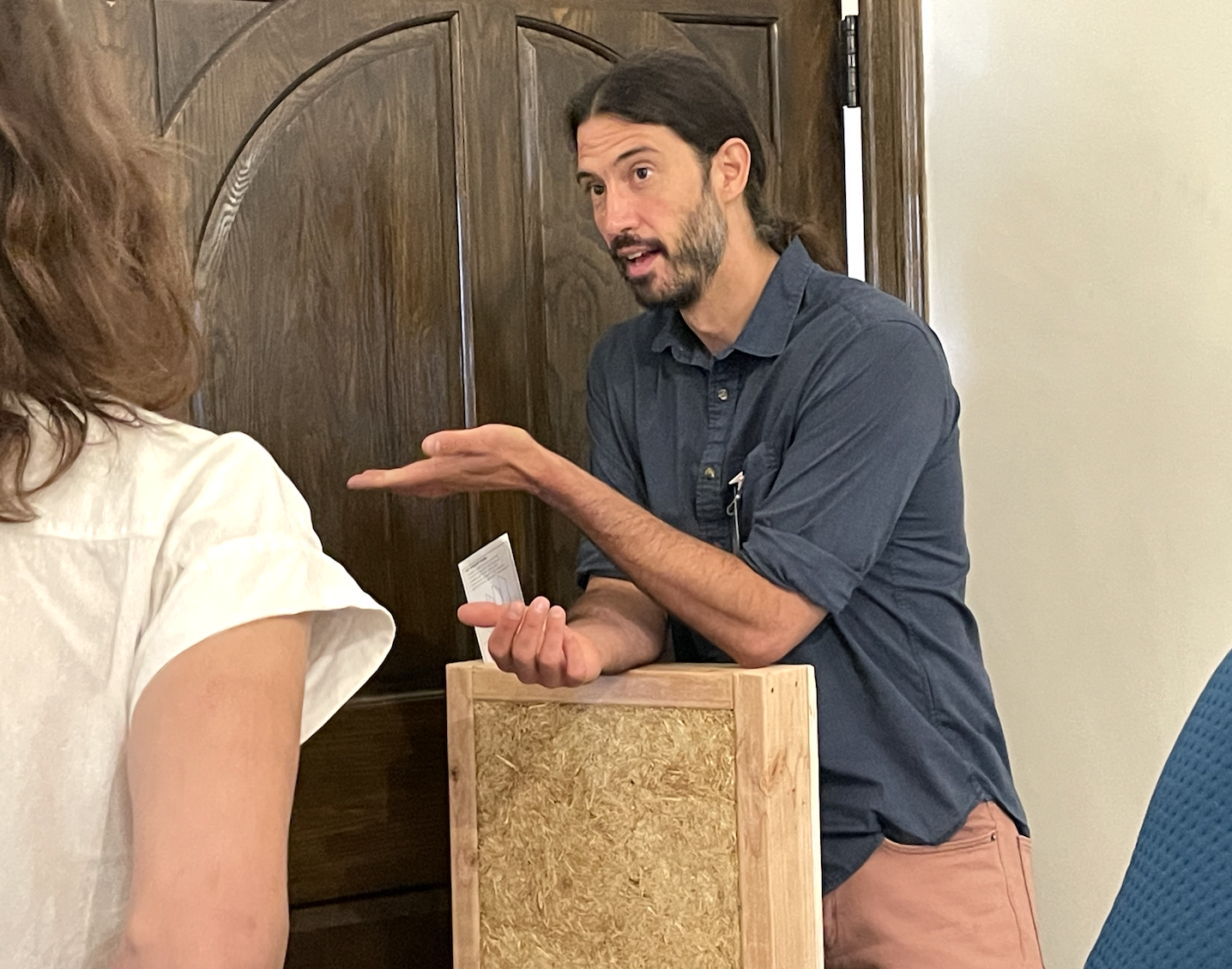
Bioconstruction engineering specialist Anthony Dente of Berkeley, CA-based Verdant Structural Engineers poses with a straw panel at the Rocky Mountain Natural Building Conference in Bozeman, MT. Photo courtesy of Jean Lotus
In addition to her for-profit work, she founded the Root Down Building Collective, a nonprofit dedicated to "advancing regional climate smart and equitable housing solutions". One of their projects involves designing an exhibit space for the Durham Museum of Life and Science to showcase sustainable building solutions.
Magill and other Charleston colleagues were disappointed when an EPA grant to revitalize a disadvantaged Charleston neighborhood with natural building prototypes was among the hundreds of EPA grants cut by the current presidential administration. But citing the conference theme “resilience” she announced that her company would be moving forward — and even sponsoring a new Southeast Natural Building Conference, which drew cheers from the audience.
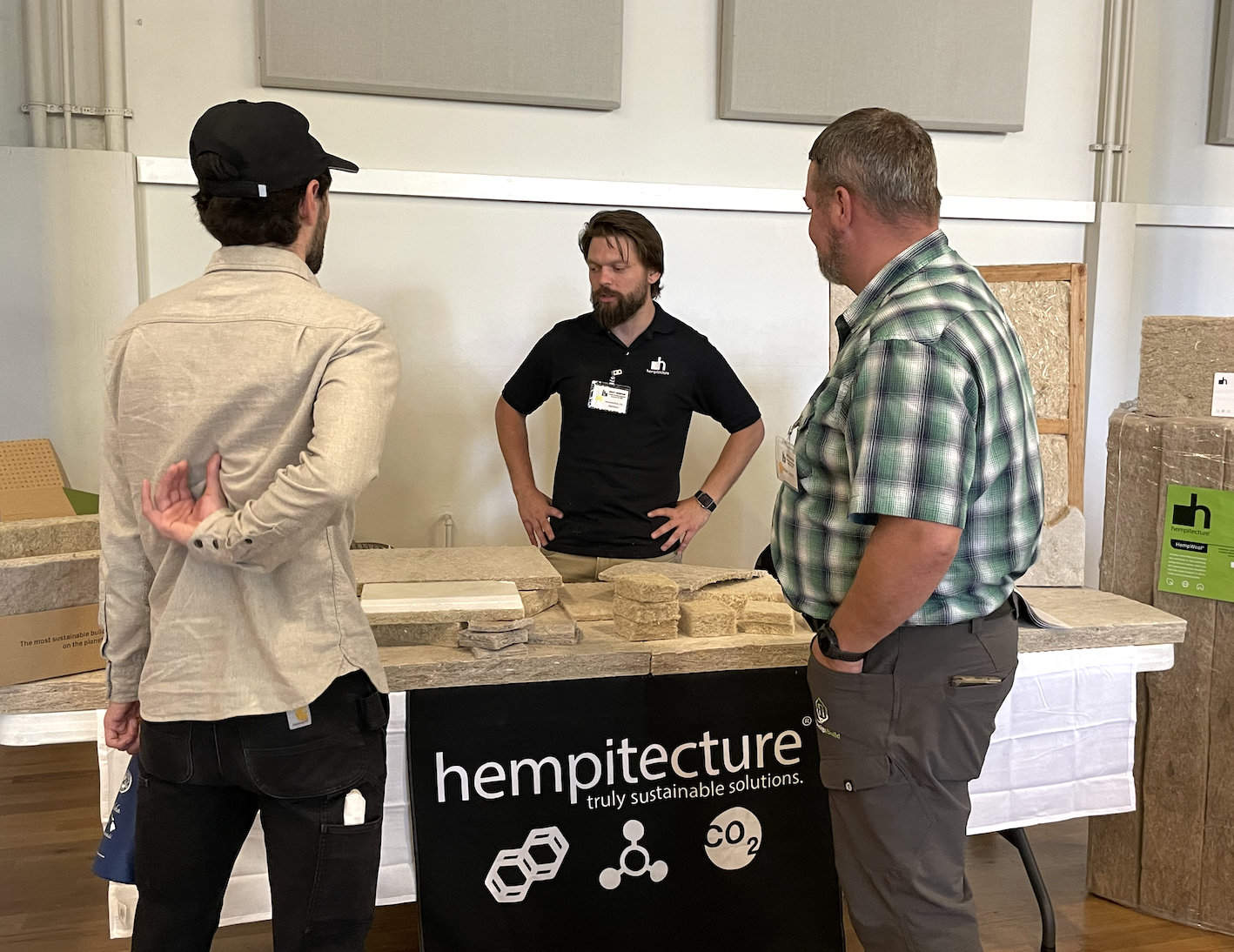
Idaho-based Hempitecture, Inc. was one of the exhitibiting sponsors of the conference. Photo courtesy of Jean Lotus
Even though hemp is a relative newcomer to the US bioconstruction eco-system, the speakers and sponsors of the conference pulled their weight in Bozeman at the RMNBC and introduced hemp building materials and methods to a whole new tribe of professionals.




Please Support Our Classified Advertisers
(To find out more about advertising CLICK HERE).
Publications
Hemp Building Directory 2025 - Guide to the International Hemp Building Industry
Hempsteads: Architectural details for hemp-lime construction, by Timothy Callahan
Green Builders
Build your hempcrete dream house in Austin, TX with Gradek Contracting and Design
High Desert Hemp Homes - Building with hemp in the Rocky Mountains
Experienced Natural Building Engineering Services from Verdant Structural Engineers, CA
Naturalia Construction, Colorado-based Sustainable Construction with Hemp
Aaron Grail Construction, No. Cal: The intersection of art, design and performance
Hemp Building Research and Training
Hemp Build School online and IRL for Homeowners and Professionals
Follow the Hemp Casita to learn more about building with hemp.
Hemp Hurd (shivs)/Hemp Fiber/ Hemp Microfiber
CannaVision, Fort Worth, TX: Home of the Pulsewave Hemp Processor
IND HEMP: Supporting Farm Families and Rural Communities with Natural Materials Processing
Wyoming Hemp Company - Industry-leading industrial hemp suppliers
Aggricrete, TX, Natural Materials with Superior Sustainability
Hempcrete installers/Insulation subcontractors
Americhanvre Cast Hemp: Supplies, Equipment, Experienced Hempcrete Installation
Hemp Build Network: We Make Building with Hemp Possible, New Braunfels, TX
Hemp Building Company: Hempcrete installation, supplies Lafayette, CO
Hemp Batt Insulation/Supplies
Lime Binder
Hemp Wall Panel Products
Preorder your hempcrete tiny house from Sativa Building Systems
Panel solutions from Homeland Hempcrete
Hemp Composite Boards
Bison Biocomposites produces sustainable thermal insulation, hempcrete, hemp hurd, and more.
Hemp Blocks