Hemp Building: A Path to Ireland’s Climate Resilience
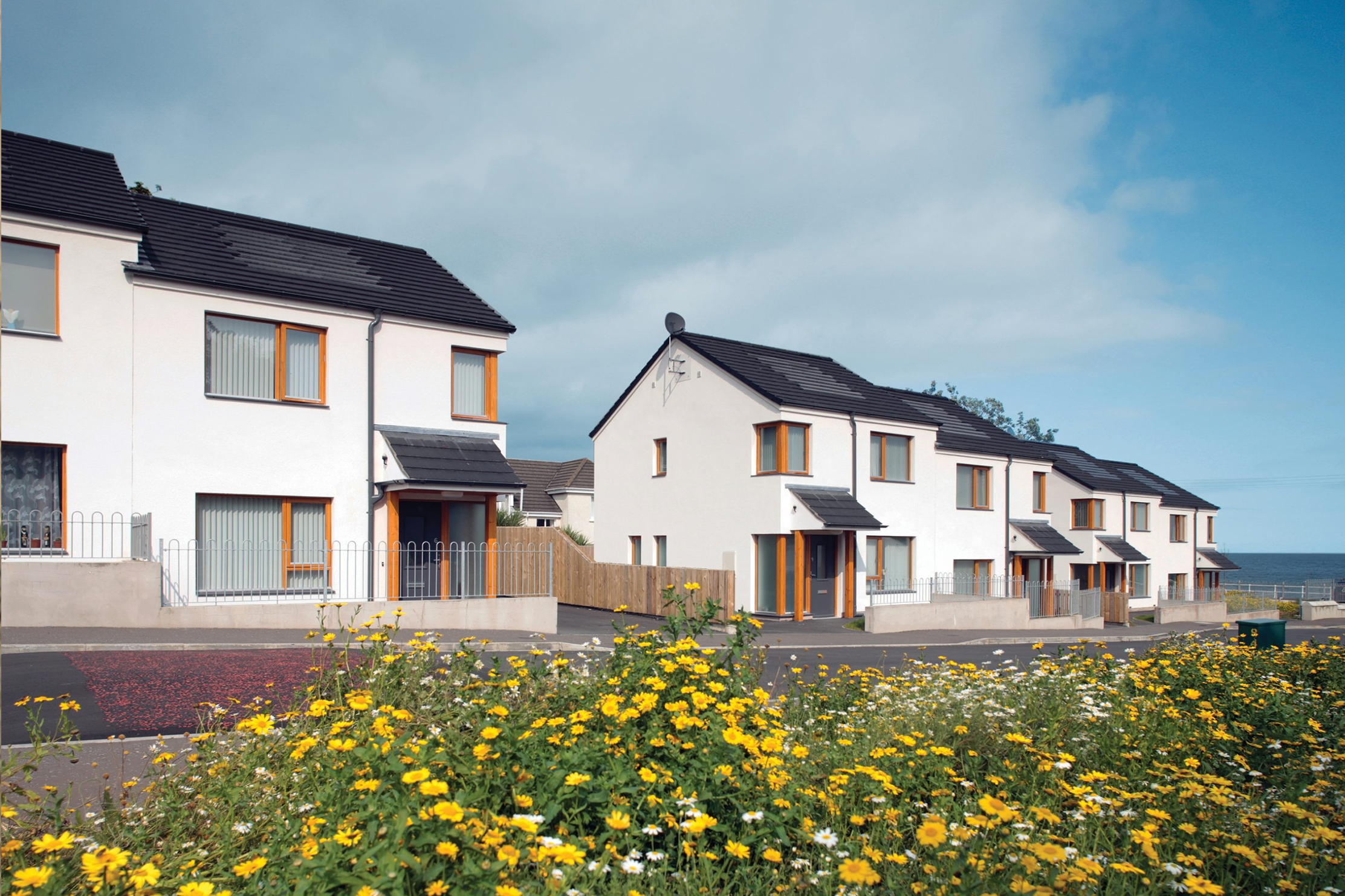
Social Housing Scheme in Northern Ireland built with hempcrete (Photo Oaklee Housing Association)
Hemp Building: A Path to Ireland’s Climate Resilience

By Walter Brennan
First Published by World Sensorium/Conservancy
Ireland’s landscape is steeped in tradition, but the terrain of its future must be shaped by innovation. As the nation faces steep greenhouse gas (GHG) reduction targets set for 2030, the stakes are high—both environmentally and economically. The Environmental Protection Agency (EPA) warns of multibillion-euro fines from the European Union if current trajectories are not altered. Together, the Built Environment and Agriculture account for over 70% of Ireland’s emissions. Yet traditional carbon accounting still overlooks one of the most impactful factors: the embodied carbon of the materials we build with.
What if the solution to this emissions conundrum could be found not in imported technologies, but in the soil itself?
This question led to an exploration of one of the world’s oldest crops—Cannabis Sativa Linn, commonly known as hemp. Grown domestically, processed sustainably, and deployed innovatively, hemp-based building materials offer a remarkable opportunity to address emissions across sectors. They combine low embodied energy with high carbon sequestration capacity, making them an ideal candidate for Ireland’s shift toward a circular economy—an economy in which waste becomes a resource, and carbon is not emitted, rather stored.






While concrete, steel, and other conventional materials dominate construction, they come at a steep environmental cost. These materials carry an enormous, embodied carbon load—emissions associated with their extraction, processing, and transport. Hemp, by contrast, is an agricultural powerhouse. Fast-growing and soil-restorative, it pulls CO₂ from the air as it grows, locking it into the soil and hemp’s fibers and ultimately into the walls, floors, and insulation of buildings.
Calculations from this research demonstrate that dedicating just 11% of Ireland’s agricultural land to hemp cultivation for a single year could sequester enough carbon to fully offset the country’s emissions overshoot. This is not a far-off fantasy. It’s a tangible, shovel-ready mitigation strategy—one that simultaneously restores soil health, provides farmers with sustainable income streams, and radically reduces the climate burden of our buildings.



Methodology: Design Meets Ecology
The research followed an Applied Design approach using the Double Diamond Design Process—an iterative, problem-solving methodology common in innovation and systems design. It moved through four key stages: Discover, Define, Develop, and Deliver.
The early phases involved rigorous literature reviews and assessments of Ireland’s emissions profile, international best practices, and the material science of hempcrete and hemp-based construction composites. This was paired with two nationwide surveys gauging public awareness and openness to sustainable materials. The surveys revealed broad support for climate action, but limited familiarity with hemp’s potential. A strategic opportunity was clear: public education could tip the scale.
The outcome of this process was the Hemp Emission Mitigation Plan (HEMP)—a policy and practice roadmap for deploying hemp across Ireland’s construction and agricultural sectors. It includes practical, regulatory, and communicative steps for scaling hemp adoption.

Hempcrete addition on a home in County Kerry, N. Ireland. Photo courtesy of Steve Allin
Policy Barriers and Perception Gaps
Despite its ecological advantages, hemp remains legally and socially constrained. Ongoing conflation with narcotic cannabis has left industrial hemp tightly regulated, with bureaucratic hurdles limiting farmers, processors, and builders. These outdated regulations not only stifle innovation—they jeopardize Ireland’s ability to meet its own climate targets.
The surveys conducted during this research also revealed that while Irish residents are deeply concerned about climate change, many are unaware of hemp’s role as a carbon sink and building material. This signals a need for a strategic cultural shift. If the scent of turf fires is etched into the memory of Ireland’s past, could the subtle vegetal aroma of lime-mixed hemp one day characterize a new era of Irish environmental stewardship?
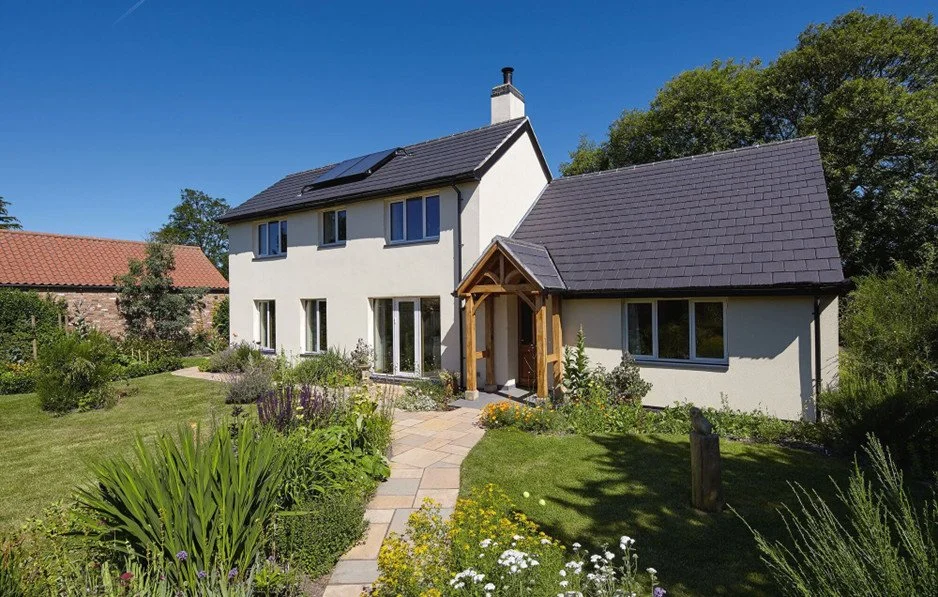
Timber-framed hempcrete home in Ireland. Photo courtesy of Jack Coffey




Toward a Circular Future
The research concludes that hemp is not simply a niche alternative—it is a foundational solution. It links agriculture, architecture, and carbon strategy in a way few other materials can. With the right support, hemp can become a cornerstone of Ireland’s circular economy.
The HEMP framework outlines the following core recommendations:
Regulatory Reform: Amend legislation to clearly distinguish industrial hemp from cannabis. Unlock cultivation and processing capacity through science-based policy.
Economic Incentivization: Provide financial mechanisms—subsidies, grants, and tax incentives—that empower the construction sector to transition to bio-based materials.
Educational Initiatives: Launch public awareness campaigns to communicate hemp’s environmental and economic value, and dispel stigma through science and storytelling.
Carbon Accounting Reform: Modernize emissions reporting to include embodied carbon and carbon storage, enabling better comparisons and more informed policy.
Walter Brennan, MSc, is a sustainability researcher and environmental advocate specializing in low-carbon building materials and circular economic strategies. His work focuses on reducing greenhouse gas emissions in the built environment and agriculture sectors.




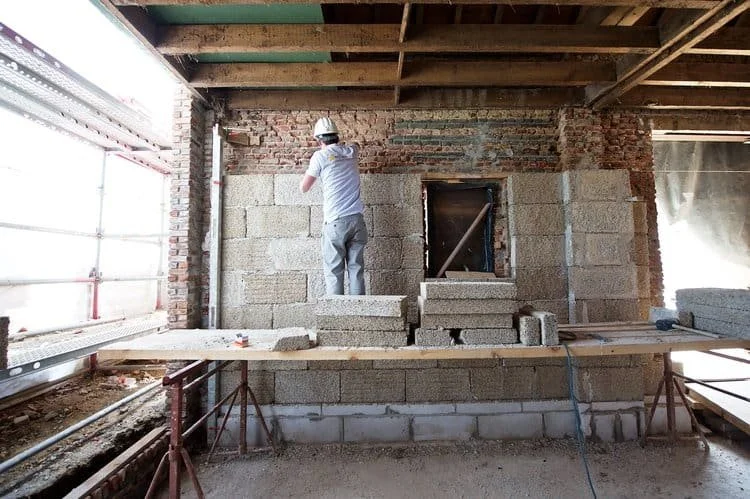
Irish retrofit using hempcrete blocks. Courtesy of Hempbuild.ie




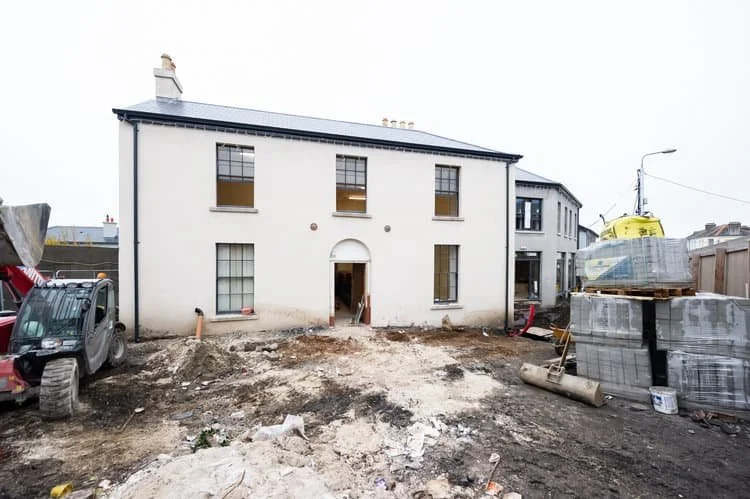
Irish historic home converted into a restaurant with hemp blocks. Photo courtesy of Hempbuild.ie




Please Support Our Classified Advertisers
(To find out more about advertising CLICK HERE).
Publications
Hemp Building Directory 2025 - Guide to the International Hemp Building Industry
Hempsteads: Architectural details for hemp-lime construction, by Timothy Callahan
Green Builders
Build your hempcrete dream house in Austin, TX with Gradek Contracting and Design
High Desert Hemp Homes - Building with hemp in the Rocky Mountains
Experienced Natural Building Engineering Services from Verdant Structural Engineers, CA
Naturalia Construction, Colorado-based Sustainable Construction with Hemp
Aaron Grail Construction, No. Cal: The intersection of art, design and performance
Hemp Building Research and Training
Hemp Build School online and IRL for Homeowners and Professionals
Follow the Hemp Casita to learn more about building with hemp.
Hemp Hurd (shivs)/Hemp Fiber/ Hemp Microfiber
CannaVision, Fort Worth, TX: Home of the Pulsewave Hemp Processor
IND HEMP: Supporting Farm Families and Rural Communities with Natural Materials Processing
Wyoming Hemp Company - Industry-leading industrial hemp suppliers
Aggricrete, TX, Natural Materials with Superior Sustainability
Hempcrete installers/Insulation subcontractors
Americhanvre Cast Hemp: Supplies, Equipment, Experienced Hempcrete Installation
Hemp Build Network: We Make Building with Hemp Possible, New Braunfels, TX
Hemp Building Company: Hempcrete installation, supplies Lafayette, CO
Hemp Batt Insulation/Supplies
Lime Binder
Hemp Wall Panel Products
Preorder your hempcrete tiny house from Sativa Building Systems
Panel solutions from Homeland Hempcrete
Hemp Composite Boards
Bison Biocomposites produces sustainable thermal insulation, hempcrete, hemp hurd, and more.
Hemp Blocks