Australian Researchers Explore Hempcrete Binder 4X Stronger than Lime
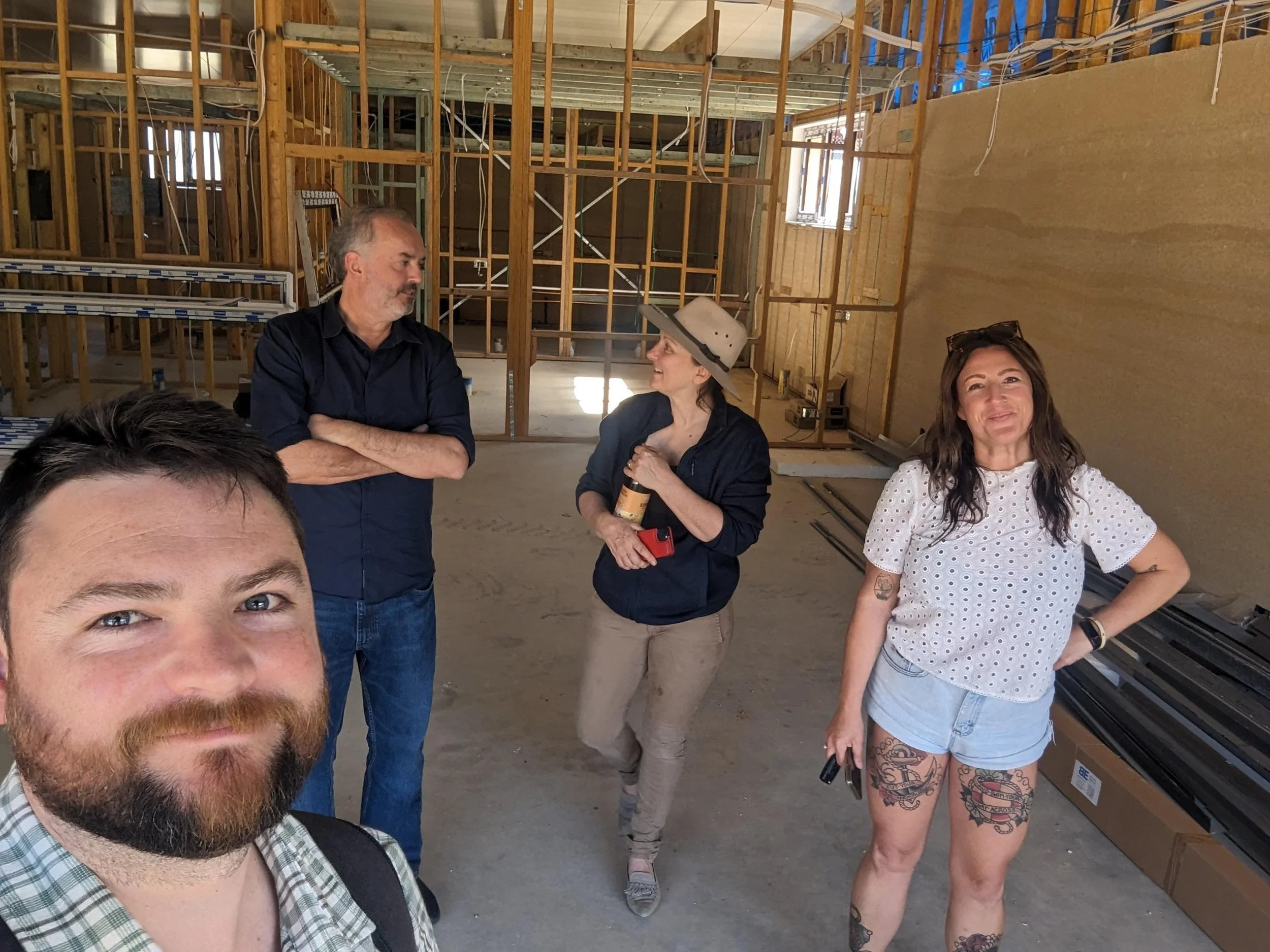
Australian researchers from University of Technology, Sydney pose at the construction site of the hempcrete Lithgow Women’s Shed project being constructed in Lithgow, NSW. L-R Peter Irga, Arnaud Castel, Michelle Zeibots, and PhD researcher Gabby Duani. Photo courtesy of Peter Irga
Australian Researchers Explore Hempcrete Binder 4X Stronger than Lime

By Peter Irga
Australian researchers at University of Technology, Sydney are working with experienced hempcrete builders to develop a hemp-based structural panel with a geopolymer binder that they say is up to four times stronger than traditional hempcrete.
Led by Professor Arnaud Castel from the UTS Faculty of Engineering and IT, a multi-disciplinary team of researchers have released their first publication in Built Environment Project and Asset Management on research creating a binder made of calcined clay and ground granulated blast-furnace slag.
“The first step is to improve the hempcrete itself by further reducing the embodied carbon, which is already very low compared to traditional concrete, and then to combine the two technologies,” Professor Castel said in a statement.






Pilot scale cast in place test structure and prefab panels created by researchers at the University of Technology, Sydney. Photo courtesy of Peter Irga
The research is in collaboration with regional industry leaders The Australian Hemp Masonry Company. From an industry standpoint, the project could open the door to significant growth in hemp-based building products, which are yet to take off in a big way in Australia.
“We need to bring more hemp building products to the market, because the building industry needs to reduce its footprint and because people need heathier environments to live and work in,” said Klara Marosszeky, managing director of the Byron Bay, NSW-based Australian Hemp Masonry Company.
Researchers are also working with Canowindra NSW-based Belubula Hemp Homes on the ‘‘Lithgow Women's Shed’ project, a hempcrete structure that will be used for a community center. The project is a multi-purpose building, housing both the Women’s Shed workshop and tool room etc, a public meeting hall for up to a hundred people, with semi-commercial kitchen and accessible facilities, as well as two rentable offices intended for community or sporting organisations.
Hempcrete was chosen “to replace the ice-box cottage the women had previously suffered in – Lithgow can be very cold,” supporters say.
The Men’s Shed and Women’s Shed movements in Australia provide comfortable “third space” communities which encourage skill-building, support, and social connection.



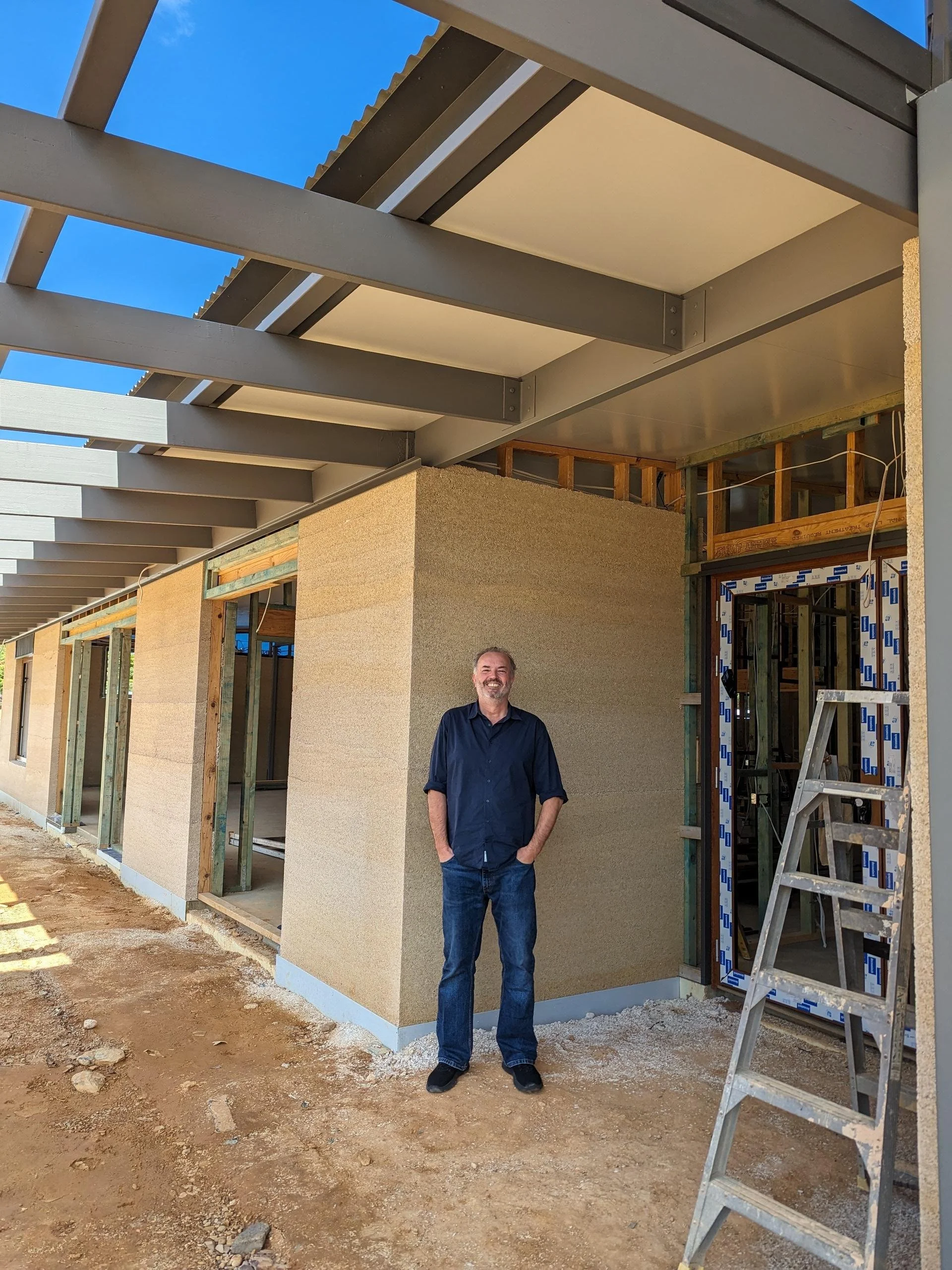
Professor Arnaud Castel from the UTS Faculty of Engineering and IT poses in front of the Lithgow Women’s Shed project in Lithgow, NSW. Photo courtesy of Peter Irga
Why hempcrete?
Hempcrete is a bio-based material made from hemp, a fast-growing renewable plant source.
The research team has two objectives: to develop a novel low-carbon binder (the material that binds hempcrete together), and to create an integrated, prefabricated panel that enhances the performance of hempcrete technologies.
Concrete is the world’s most widely used construction material, but it’s highly carbon intensive. In Australia, the concrete sector is the second highest greenhouse gas emitter of all industries nationally, releasing five megatons of emissions into the atmosphere every year.
Developing sustainable alternatives is key to reducing the environmental impact of the built environment – and the new UTS-led ARC Linkage project is seeking to do just that.





Klara Marosszeky, managing director of the Byron Bay, NSW-based Australian Hemp Masonry Company. Photo courtesy Facebook
Greater than the sum of its parts
Hempcrete offers significant potential to reduce the carbon impact of the built environment. Hemp-embedded building products are less carbon and energy intensive to produce than traditional alternatives, can capture and store carbon, and are highly resistant to biodegradation over time.
Previous research also suggests that hempcrete has excellent thermal insulation properties and enables greater control of interior environmental quality.
However, hempcrete binders have traditionally been made of hydraulic or hydrated lime, both carbon intensive materials. Replacing this binder with a sustainable alternative will significantly increase hempcrete’s environmental credentials, researchers believe.
Potentially, researchers can develop a carbon-positive material, so the more of it that can be embedded in the building, the less carbon there is in the atmosphere.
“There's a great need to educate the broader community and educating building professionals is a big part of that. We feel that these broader objectives could be achieved through the UTS team we're working with, because they're as passionate about the project as we are,” said Marosszeky.



By developing prefabricated panels, the research team is hoping to leverage the inherent value of both products to create a solution that’s greater than the sum of its parts. And it comes at a critical time in Australia’s environmental history: as climate instability becomes more commonplace, decarbonising our urban environments will be a crucial component of protecting the future of our planet.
“When we’re looking at cities and trying to reach net zero, the only way that we can achieve this is by looking at all different aspects of buildings in a city and thinking about how we can implement all these sustainable technologies at once,” said UTS project team member Peter Irga.







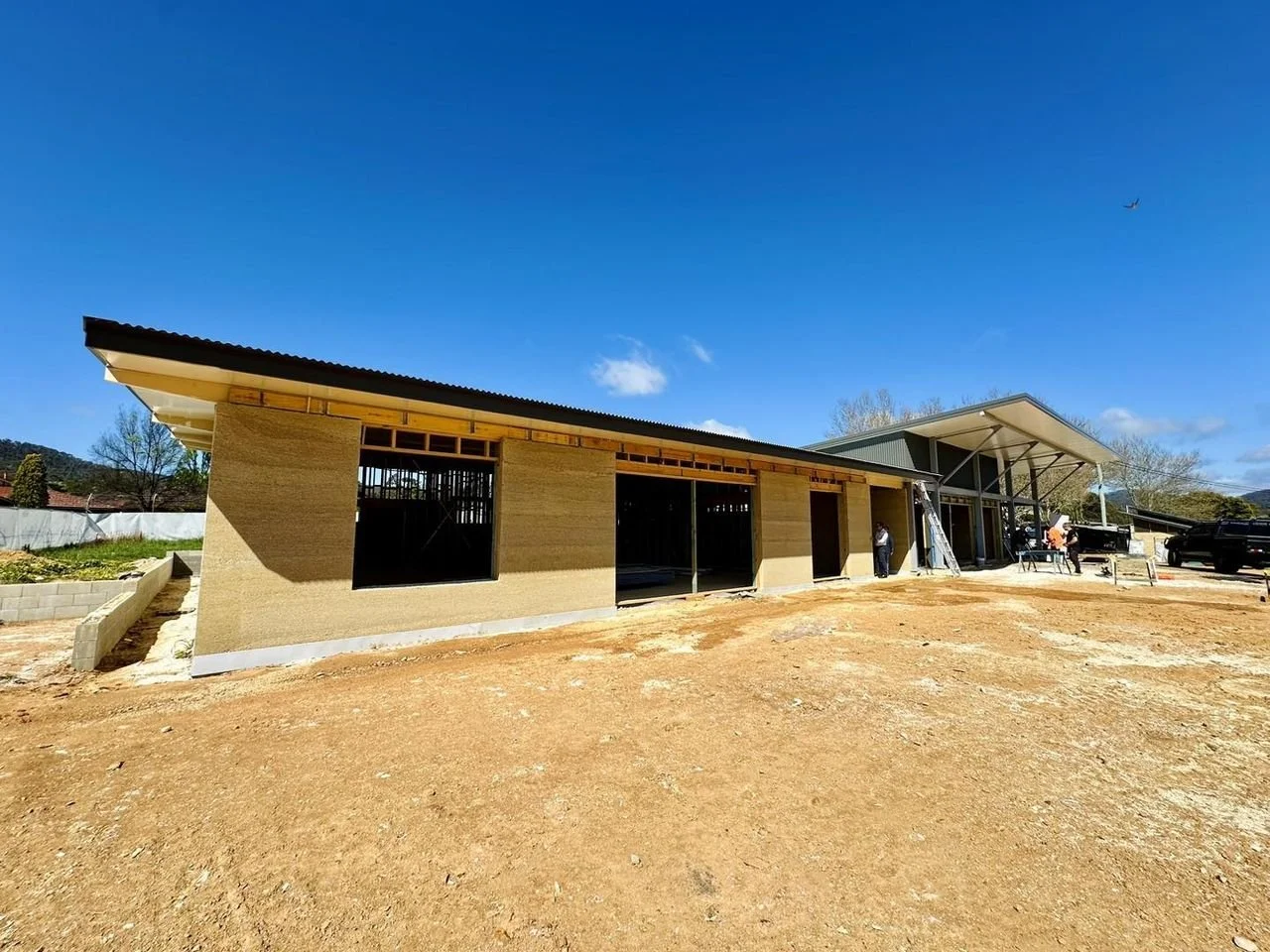
The Lithgow Women’s Shed hempcrete project in Lithgow NSW. Photo courtesy of Peter Irga




Please Support Our Classified Advertisers
(To find out more about advertising CLICK HERE).
Publications
Green Builders
Build your hempcrete dream house in Austin, TX with Gradek Contracting and Design
High Desert Hemp Homes - Building with hemp in the Rocky Mountains
Experienced Natural Building Engineering Services from Verdant Structural Engineers, CA
Naturalia Construction, Colorado-based Sustainable Construction with Hemp
Aaron Grail Construction, No. Cal: The intersection of art, design and performance
Hemp Building Research and Training
Hemp Build School online and IRL for Homeowners and Professionals
Follow the Hemp Casita to learn more about building with hemp.
Hemp Hurd (shivs)/Hemp Fiber/ Hemp Microfiber
CannaVision, Fort Worth, TX: Home of the Pulsewave Hemp Processor
IND HEMP: Supporting Farm Families and Rural Communities with Natural Materials Processing
Wyoming Hemp Company - Industry-leading industrial hemp suppliers
Aggricrete, TX, Natural Materials with Superior Sustainability
Hempcrete installers/Insulation subcontractors
Americhanvre Cast Hemp: Supplies, Equipment, Experienced Hempcrete Installation
Hemp Build Network: We Make Building with Hemp Possible, New Braunfels, TX
Hemp Building Company: Hempcrete installation, supplies Lafayette, CO
Hemp Batt Insulation/Supplies
Lime Binder
Hemp Wall Panel Products
Preorder your hempcrete tiny house from Sativa Building Systems
Panel solutions from Homeland Hempcrete
Hemp Composite Boards
Bison Biocomposites produces sustainable thermal insulation, hempcrete, hemp hurd, and more.
Hemp Blocks