Experiences of Hemp Home Living Rated in New Online Atlas
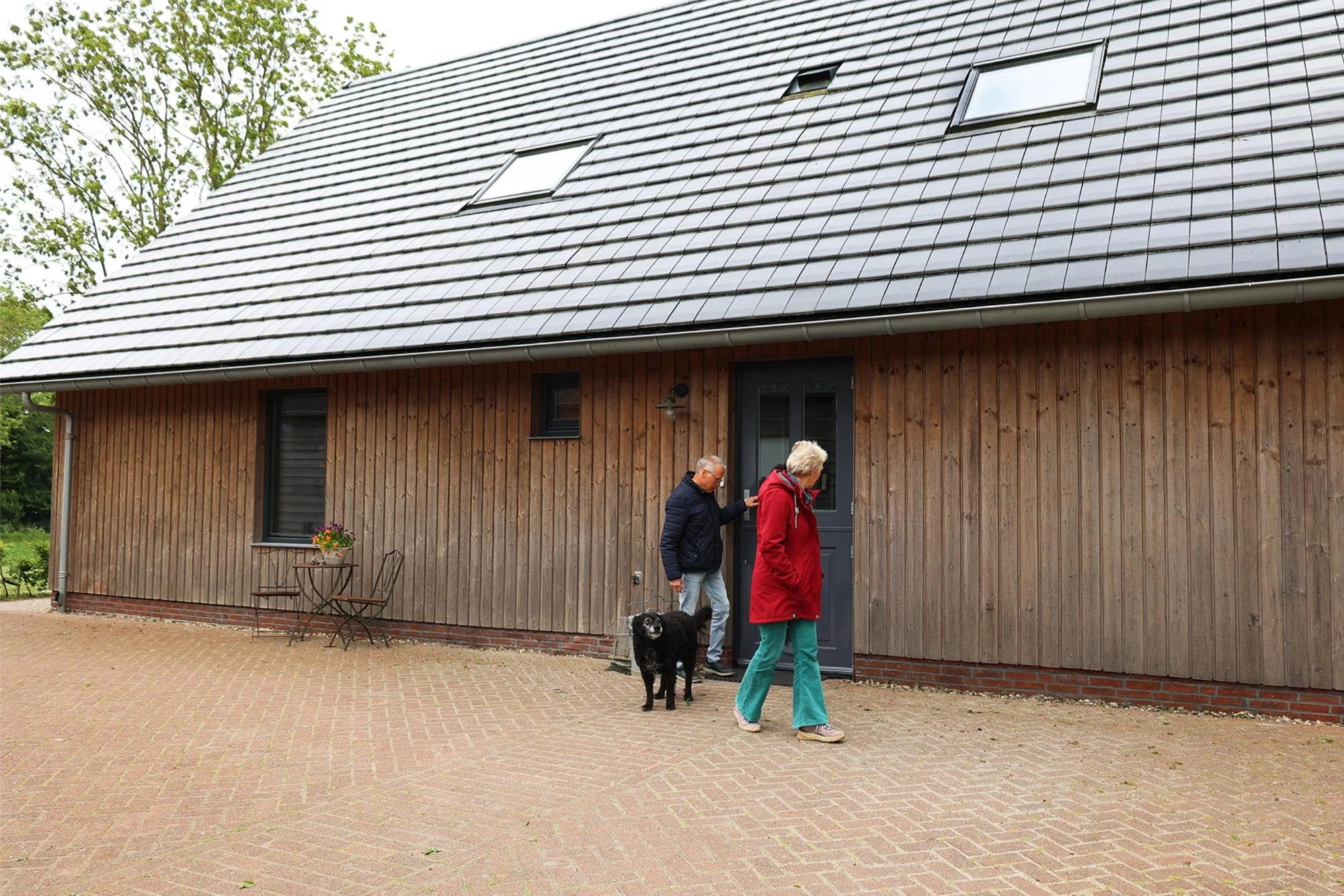
Jan and Inka Menninga outside their pre-fab hemp-lime home in the Netherlands, more than five years in. Photo: Habitat Atlas.

By Arta Yazdanseta
How does it feel to live in a hempcrete home? Will I be stuck repairing and maintaining it every year? Or worse, paying someone to do the work I can't do myself? Would our guests even be comfortable? We can't expect family to wake up in a damp room.
These were the questions at our dinner table when my household decided to build a guesthouse for family visits, and I had brought up hemp-lime. My lab at RPI's School of Architecture and its Center for Architecture, Science and Ecology (CASE) treats hemp-lime as a tunable material. We change the recipe, measure what it does, and train models to predict the ones we have not mixed yet. My husband still saw hempcrete as a risky proposition, not something to spend our life savings on.
The odd thing is that I could not answer him. I could rattle off thermal, hygrothermal, and mechanical values, and the embodied carbon of every recipe. I had never slept in a hemp-lime home, let alone lived in one through the seasons.




That gap was not an accident. In our review of 309 studies,1 nearly 80 percent characterized the material and 3 percent addressed its social dimensions. We know the material, not the life inside it. Think of how you book a room or buy a tool: past the listing, you go to the reviews. A review is a small act of care: someone who has lived with the thing passes on what they learned to the next person. For hemp-lime we have the listing, which is the spec sheet, and almost no reviews.



Three years minimum
So I went to collect the reviews. With a traveling fellowship from RPI's School of Architecture, we set off for the UK, France, and the Netherlands with one criterion: you had to have lived in the building for at least three years, long enough for full summers and winters and for neighbors and contractors to react. Everyone we met had passed five years. One had passed 16 years.
We interviewed twelve people in eight households: self-builders, turnkey buyers, and a renter. The buildings ran from restored 1800s farmhouses to a factory-built prefab, and two double as music venues. Instead of "how is the R-value," we asked about aging with grace, rituals of care, and the climate within. We coded every remark positive, neutral, or negative, and each category's score from 0 to 100 comes from that: positive counts in full, neutral half, negative zero.
Join our FREE online community here
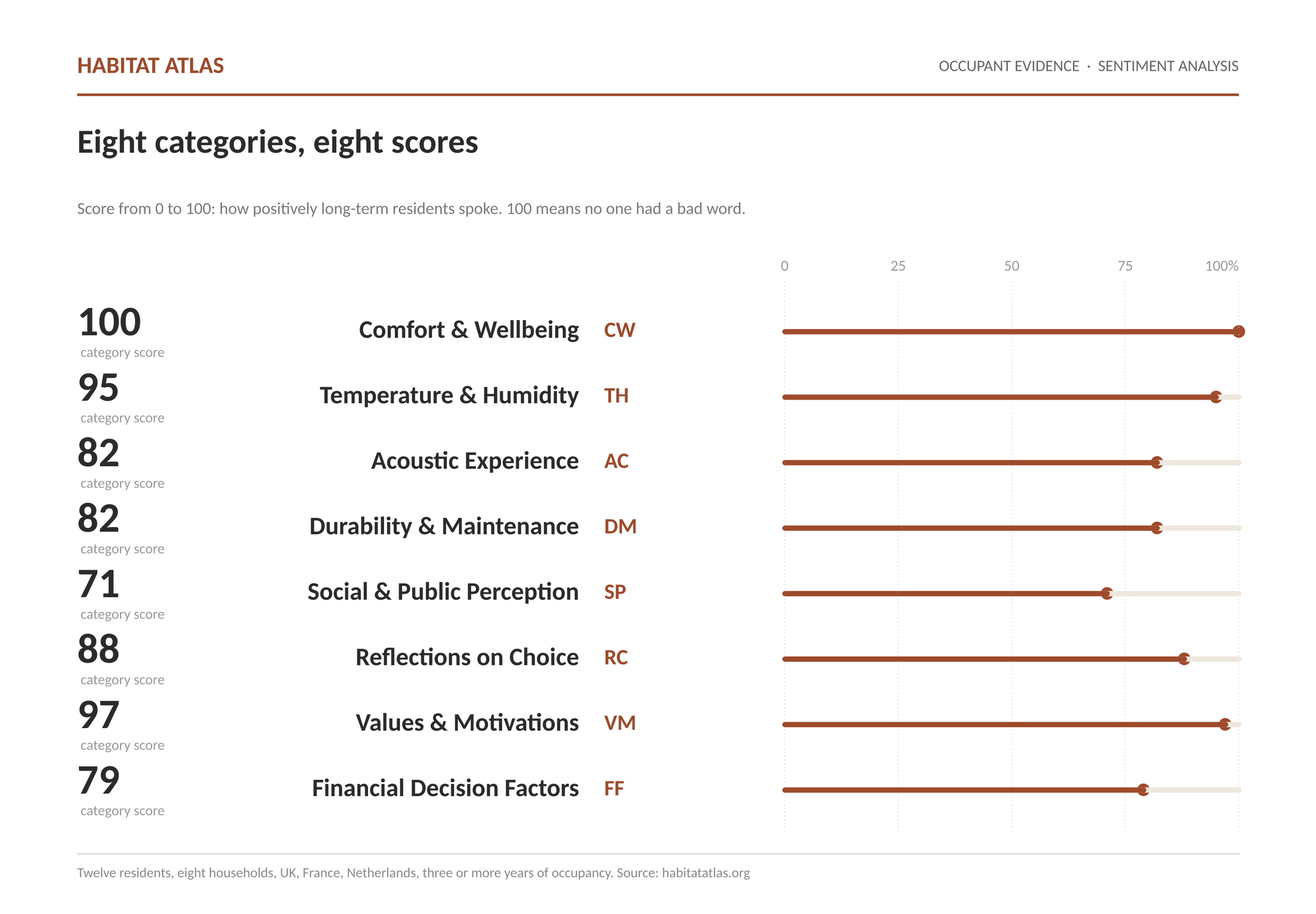
Resident sentiment by category, from the Habitat Atlas dashboard. Figure: Habitat Atlas.
Here is what they passed on, sorted by our dinner-table questions. Each answer opens with one resident. The score is the summary.




How does it feel?
“I have asthma, and it used to be so severe that I was rushed to the hospital with an asthma attack. I used to go through about one inhaler every month. Now I only use one a year. My asthma has almost completely disappeared.” — Caroline Hankins, UK. New self-built home, eight years.
Check Out Our FREE International Hemp Construction Suppliers Map



SCORE 100 – Comfort & Wellbeing
Comfort & Wellbeing scored 100 because not one remark in it was a complaint. Caroline's case is the medical one, and others with chemical sensitivities found relief too. The rest described comfort as bodily ease and the feel of natural materials: texture, light, walls that feel alive.


Will guests wake up damp?
“I was a little worried when I first moved in because I'm someone who's always cold. But the hemplime insulation really surprised me. The house stays comfortable in both summer and winter.” — Nathalie Robert, France. Restored 1800s farmhouse, 10 years.


SCORE 95 – Temperature & Humidity
Temperature & Humidity scored 95. Homes stayed cool through heat waves and warm through winter, often on little more than a wood stove, and no one found damp. Energy Savings scored 100, not one complaint, and several households said the fuel price spike barely impacted them. The five missing points are residents who could not tell whether the walls were regulating moisture or simply never noticed humidity.
Will I be stuck repairing it?
“After more than 10 years, we haven't noticed any signs of aging. We've been hosting concerts and welcoming the public throughout that time, and the materials haven't suffered any damage.” — Nicholas Fabrice, France. Retrofitted farmhouse, more than 10 years.
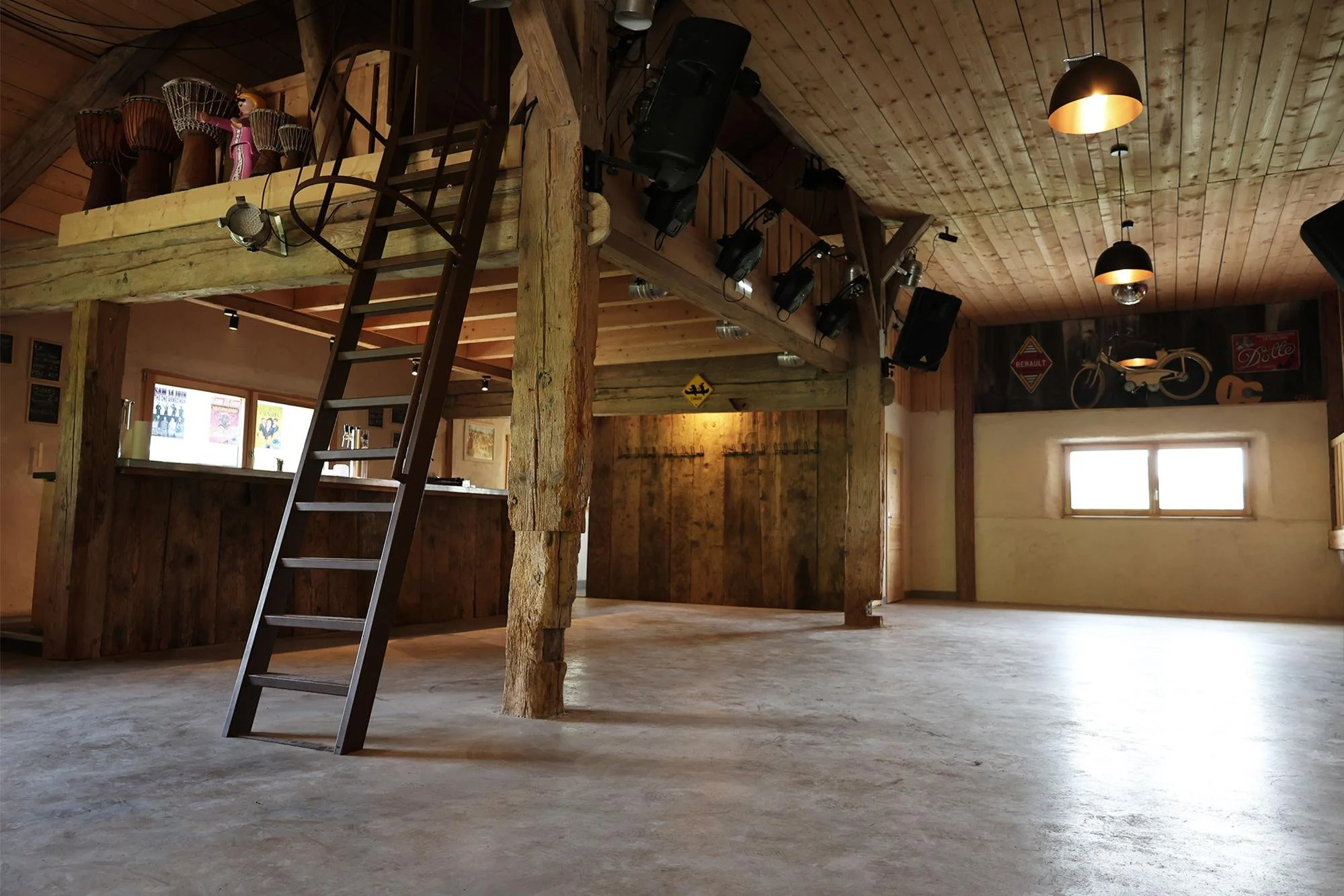
The restored farmhouse in France that doubles as a music venue. After more than ten years of concerts, the hemp-lime shows no sign of aging. Photo: Habitat Atlas.
SCORE 82 – Durability & Maintenance
This is the finding that surprised me. Hold a block of hemp-lime and it looks fragile. Durability & Maintenance scored 82, and the split is between the hemp-lime substrate and the finish applied over it. The substrate aged without trouble in every home, and Substrate Maintenance scored 100 because no resident had done anything to it. The finish is where all the upkeep lives. Finish System scored 80: lime renders cracked as buildings settled, and one self-built home had cracks from an inexperienced plasterer. The takeaway for a prospective owner: the hemp-lime substrate needs no maintenance. The finish system is the only maintenance there is, so make sure skilled professionals apply it.
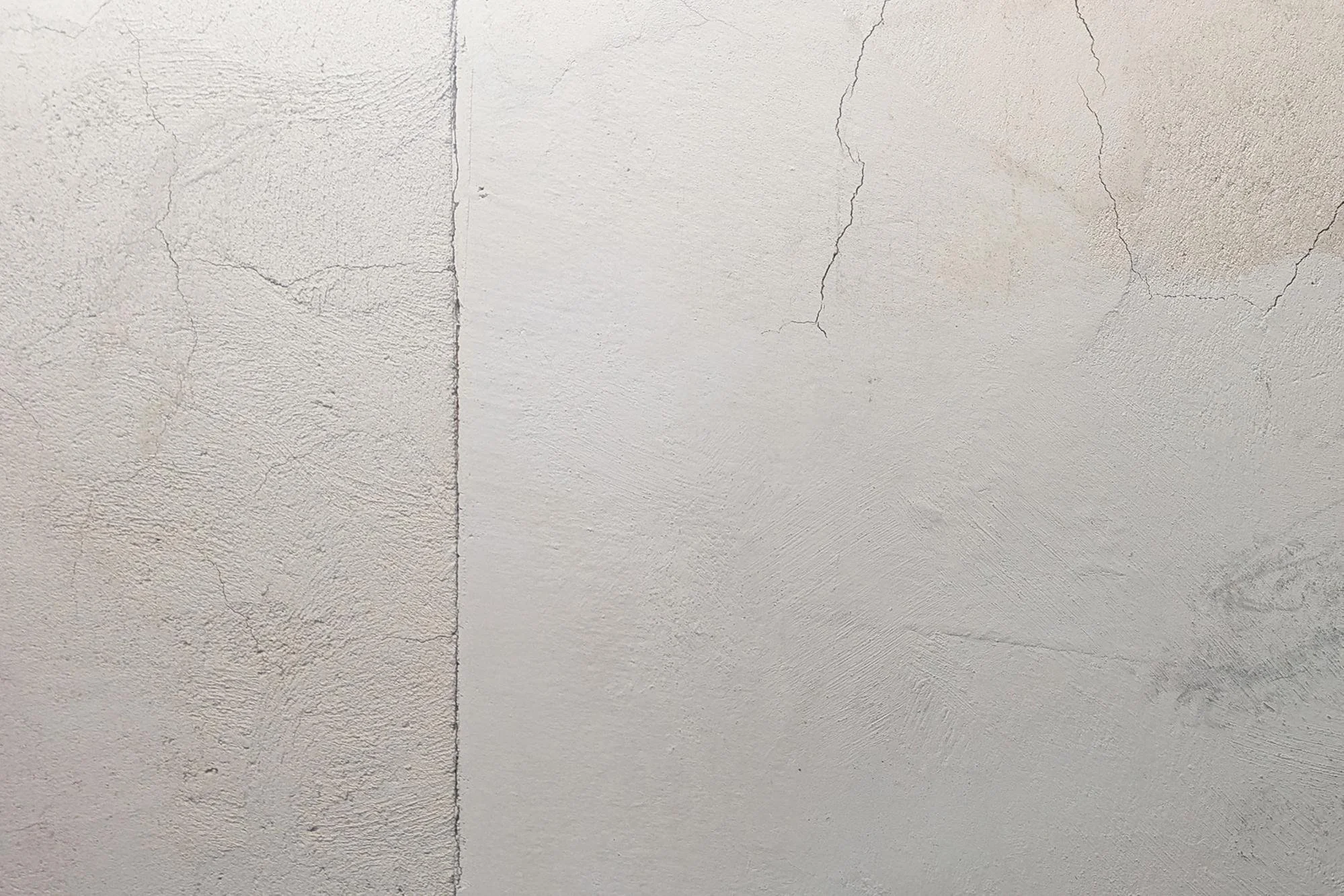
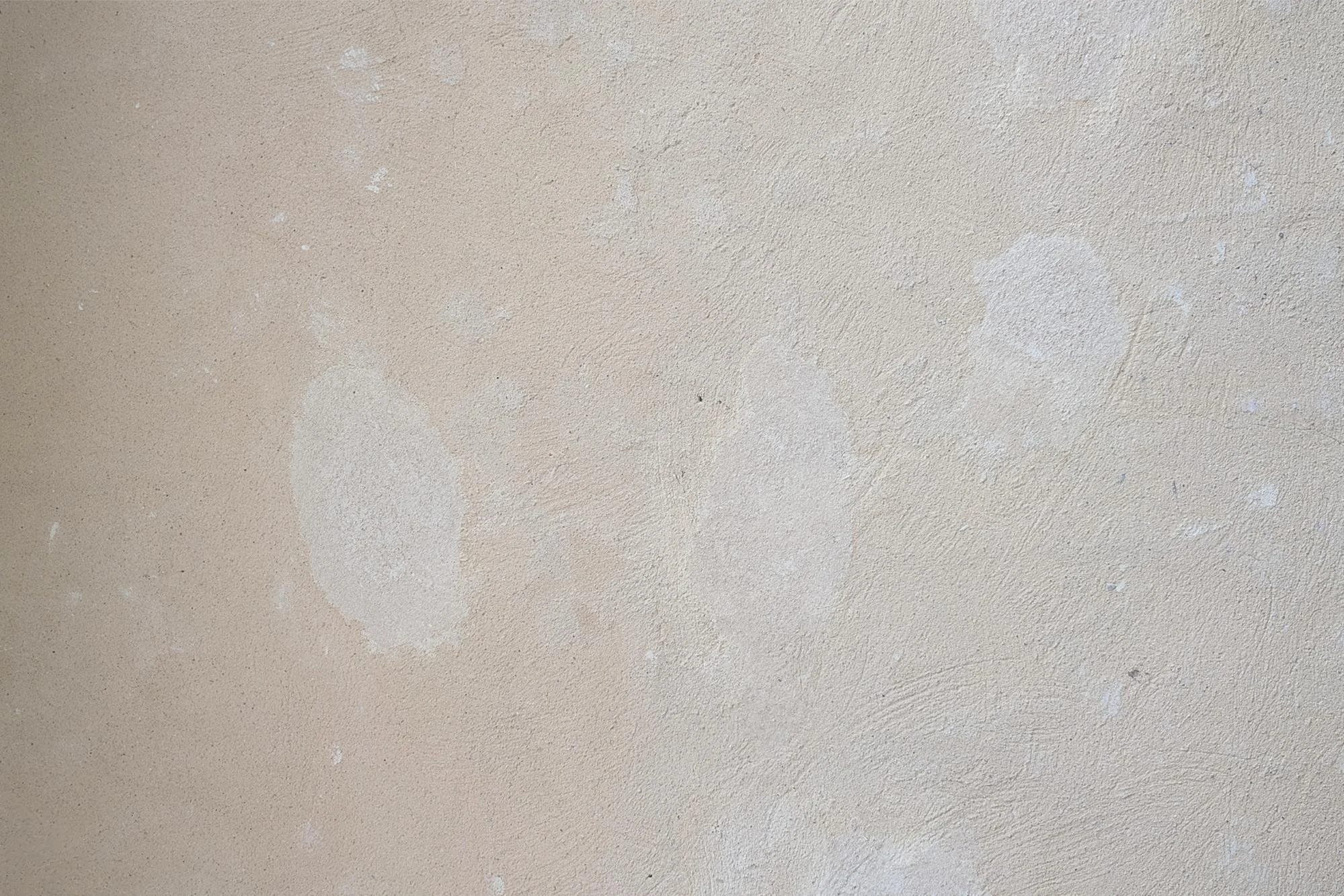
Minor cracking in a lime finish, without structural concern (left), and patched repair areas (right). The upkeep lives in the finish, not in the hemp-lime behind it. Photos: Habitat Atlas.
Is it worth our savings?
“With energy prices rising, we've been fortunate not to feel the impact. Our energy bills have stayed remarkably low.” — Loyd Hankins, UK. New self-built home, eight years.
SCORE 79 – Financial Decision Factors
Financial Decision Factors scored 79. Upfront Cost & Affordability scored 50 and holds the category down: most residents stated the price as a fact, neither praise nor complaint, and a neutral remark counts half. Some paid a modest premium. One still calls the price a barrier. Realized Financial Benefit scored 100, every remark positive: heating bills that barely register, and an energy rating that went from F or G to A or B in one UK renovation. Everyone who weighed cost against health or ecology concluded it was worth it.




“For me, it's a reflection of how you want to live. Choosing ecological materials means thinking about the planet and the future, and that's where the decision begins.” —Jean-Guy Robert, France. Restored house and music venue, ten years.
SCORE 97 – Values & Motivations
Then there is the question I would have asked wrong. In the US we are told clients will not pay extra for biogenic materials, so you sell health. Here it was the reverse. Values & Motivations scored 97. Ecology led, then chemical-free living, then building for the next generation. I would not dismiss the value proposition so easily anymore. The client who calls you already has a predisposition. Health is one of the key factors. It is not the only factor.
The question nobody at the table asked
“I feel very lucky to live in a house like this. For me, it's a privilege to live in a healthy home.” — Catherine Gern, France. Sunroom addition to a farmhouse, six years.
SCORE 88 – Reflections on Choice
Would you do it again? Reflections on Choice scored 88. Overall Satisfaction & Endorsement scored 100 because every resident who gave a verdict would make the same choice. The regrets sit in Hindsight & Lessons Learned, at 42, and all of them are about process: an experienced professional, a consultant kept on from start to finish. No one would change the wall material.
We are building
After weeks of travel and months of analyzing the data we gathered, as a household we are convinced. Building with hemp-lime is not a risk. Once our ducks are in a row, the guesthouse will be hemp-lime.
Then it dawned on me how lucky we were. I had a lab, a fellowship, and friends like Cameron McIntosh of Americhanvre, Alex Sparrow of Studio Bio, Chloe Donovan of Natural Building Systems, and Niki Vandenburgh of Dun Agro Hemp Group. What we did was the analog version of reading the reviews. Almost everyone we interviewed had done the same: a community to ask, a builder they trusted, or a hemp-lime house to visit before they committed.
Community-Driven Choice scored 100.
Bio-based products have stellar spec sheets and no review layer. If I, with my research and my network, still needed it to decide for my own family, then a prospective owner, the architect worried about liability, the lender, and the policymaker need it more. Each needs a different number of stories before they are convinced: an owner maybe ten, a financier fifty, a code official five hundred. An industry is built by demand, and architects create that demand every time we specify. That is where our power is.
Twelve people in three countries have answered the questions generated at our dinner table, and their answers are on Habitat Atlas (habitatatlas.org), free and open. Each category is scored, and behind each score is the lived experience of people who have been in these homes for years, which no spec sheet can hold. If the spec sheet is the listing, Habitat Atlas is the reviews.
I hope these stories help you the way they helped us!
If you have lived in a hempcrete or other bio-based building for at least three years, we’d love to hear from you.

The eight categories and twenty-three subcategories Habitat Atlas listens for. Figure: Habitat Atlas.
1 Yazdanseta, Arta, and Yehong Mi. 2025. "Knowledge Mapping for Advancement of Hemp-Lime Composite in the Construction Industry: A Systematic Literature Review (from 2004 to 2024)." Journal of Materials Science: Materials in Engineering 20 (1): 115. doi.org/10.1186/s40712-025-00334-4
Arta Yazdanseta, DDes, is an Assistant Professor at Rensselaer Polytechnic Institute's School of Architecture and its Center for Architecture, Science and Ecology (CASE), and the founder of Habitat Atlas. The interviews were supported by the Robert S. Brown '52 Traveling Fellowship at RPI's School of Architecture.
Please Support Our Classified Advertisers
(To find out more about advertising CLICK HERE).
Publications
NOW ON SALE! Hemp Building Directory 2026 - Guide to the International Hemp Building Industry
Hempsteads: Architectural details for hemp-lime construction, by Timothy Callahan
Architects/Design Pros/Engineers
Next Genesis Design brings natural materials into high-performance building systems and healthy homes. White Salmon, WA
Bio-based Engineering and Design at Crownjade Design & Engineering, Greeley, CO
Experienced Natural Building Engineering Services from Verdant Structural Engineers, CA
Green Builders
Naturalia Construction, Colorado-based Sustainable Construction with Hemp
Design and build your hempcrete home in Colorado’s front range with Healthy Hemp Homes
Aaron Grail Construction, No. Cal: The intersection of art, design and performance
I Grow Homes, LLC: Illinois based hemp grower and builder of healthy homes.
Evolve Construction: Providing healthy, sustainable, housing for future generations. Northern CO
Hemp Building Research and Training
Hemp Build School online and IRL for Homeowners and Professionals
Follow the Hemp Casita from Right Coast Hemp to learn more about building with hemp.
Hemp Hurd (shivs)/Hemp Fiber/ Hemp Microfiber
CannaVision, Fort Worth, TX: Home of the Pulsewave Hemp Processor
Riverdale Hemp Gin producing hemp raw materials in the Central Valley (CA)
IND HEMP: Supporting Farm Families and Rural Communities with Natural Materials Processing
E3 Agriculture: Texas plant-based materials for construction, industry, and agriculture.
East Coast Hemp Supply: Your source for hemp building materials in NC
Prairie Band Ag. Hemp Hurd Cultivating a future rooted in nature. Holton KS
Hempcrete installers/Insulation subcontractors
Americhanvre Cast Hemp: Supplies, Equipment, Experienced Hempcrete Installation
Hemp Build Network: We Make Building with Hemp Possible, New Braunfels, TX
Hemp Building Company: Hempcrete installation, supplies Lafayette, CO
Victura Hemp: Spray-applied hemp installation in New England
Hemp Batt Insulation/Supplies
Lime Binders, Plasters and Mineral Paints
US Heritage Group: Experienced Hemp Building Binder Suppliers
Hemp and Block, LLC- Hempcrete Binder
Earthaus specialty lime plasters for the health & beauty of authentic mineral finishes
Silacote Environmentally Safe Inorganic Paints (CA and Canada)
Magic Minerals hemp-lime catalyst: Proven success. Made in USA
Machine Manufacturing Companies
Quadra Concrete robotics and specialty machines in France and Phoenix, AZ USA
Hemp Wall Panel Products
Preorder your hempcrete tiny house from Sativa Building Systems
Panel solutions from Homeland Hempcrete
Hemp Hardwood and Flooring:
Hemp Blocks